
 Cart is empty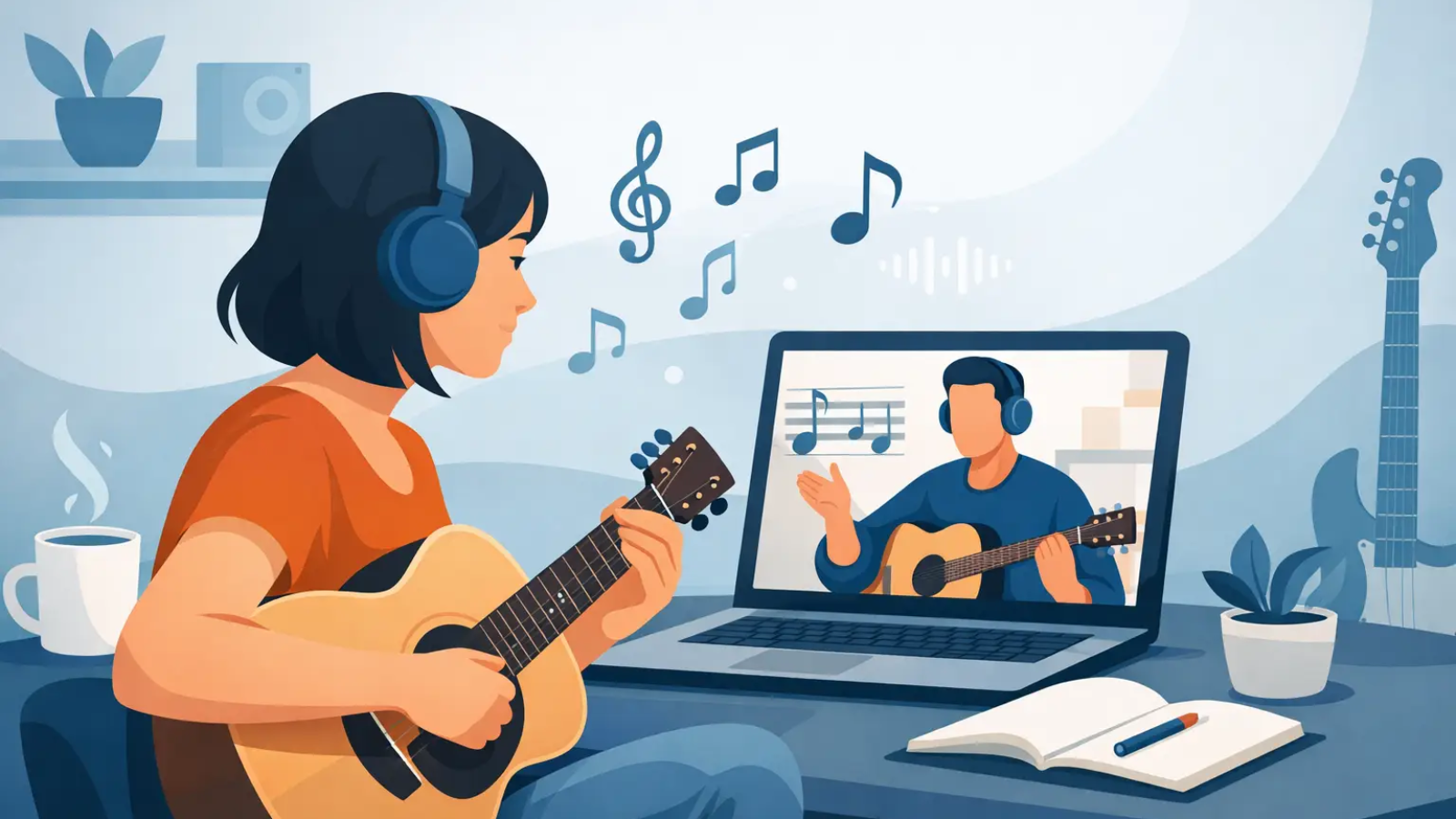
A lot of adults start music lessons with a very specific image in mind. Maybe it is finally learning the ukulele well enough to play for fun after work, returning to piano after years away, or understanding music theory instead of guessing your way through practice. Then real life steps in. Work runs late, weather changes plans, energy dips, and suddenly a goal that felt exciting starts to feel hard to fit in.
That is exactly why online music lessons for adults have become such a practical and encouraging option. When lessons are taught well, online study is not a watered-down version of in-person instruction. It can be focused, personal, and surprisingly efficient, especially for adults who need learning to fit around work, family, and other responsibilities.
Why online music lessons for adults fit real life
Adults do not usually struggle with motivation alone. More often, they struggle with consistency. You may care deeply about learning music, but if each lesson requires commuting, rearranging your whole day, or hoping the weather cooperates, it becomes much easier to postpone your progress.
Online lessons remove a lot of that friction. You can log in from home, keep your instrument already set up, and move straight into learning. That sounds simple, but it matters. When the barrier to showing up is lower, students tend to stay more regular with lessons, and regular lessons lead to better results.
There is also a comfort factor that many adults do not expect. Learning from your own space can make it easier to take risks, ask questions, and play imperfectly while you build skill. For adult beginners in particular, that sense of privacy can reduce the pressure that sometimes comes with starting something new.
This format is also well suited to adults who want lessons tailored to their pace. Some students want structure and clear weekly goals. Others want music to be a creative outlet after a busy day. A strong online teacher can build lessons around both technical development and enjoyment, which is often what keeps adult students going long term.
What makes adult lessons different from lessons for kids
Adults usually bring stronger self-awareness into the lesson. You probably know what kind of music you enjoy, how much time you realistically have to practice, and what tends to frustrate or motivate you. That is helpful, but it also means adult teaching should be more personalized.
A one-size-fits-all approach rarely works well. Adults benefit from understanding why they are doing an exercise, how a skill connects to the music they want to play, and what kind of practice method will actually fit their week. Good instruction respects that.
Adults also tend to be balancing music with many other commitments. Some weeks you may practice daily. Other weeks you may barely touch your instrument. A thoughtful teacher will help you maintain momentum without turning music into another source of guilt. Progress can still be steady even when life is full, as long as the lesson plan is realistic.
Which instruments work well online
Many instruments adapt beautifully to online learning, but the teaching approach matters. Beginner piano works especially well because posture, rhythm, note reading, and hand coordination can all be taught clearly through a camera setup. Ukulele is another strong fit for adults because it is approachable, portable, and rewarding early on.
Woodwinds like flute and clarinet can also be taught effectively online. Tone work, breathing habits, finger technique, articulation, and musical phrasing can all be addressed with careful listening and clear demonstration. In some cases, online learning even encourages students to become better independent listeners because they are more engaged in noticing their own sound.
Music theory is particularly well suited to virtual instruction. Screen sharing, notation tools, guided analysis, and interactive exercises can make concepts more visual and easier to absorb. For adults who have always wanted to understand what they are playing, this can be a major confidence boost.
The trade-off is that online lessons do ask for a bit of setup. Camera angle, lighting, and sound quality all affect how well your teacher can help you. The good news is that you do not need a studio-quality space. Usually, a quiet room, stable internet connection, and a simple device placed thoughtfully are enough.
How to tell if online lessons are actually personalized
This is where the quality gap becomes obvious. Some online lessons feel like generic check-ins. Others feel deeply tailored and engaging. The difference usually comes down to how the teacher plans, listens, and adjusts.
A personalized lesson does not just move page by page through a method book. It responds to your goals. If you are an adult beginner, your teacher should help you build strong fundamentals without making lessons feel rigid. If you are returning after years away, they should identify what has stayed with you and what needs rebuilding. If you want a balance of repertoire, technique, and theory, your lessons should reflect that balance.
You should also feel that your musical taste matters. Adults stay engaged when they work on music that means something to them. That does not mean only playing easy favorites all the time. It means using repertoire thoughtfully so that technique and expression grow together.
For bilingual learners or multilingual households, language can matter too. Being able to ask questions and receive guidance in the language that feels most natural can make learning more relaxed and effective.
What progress really looks like in online music lessons for adults
Adults sometimes underestimate how much progress is possible because they compare themselves to students who have more time or who began much earlier. But progress in music is not only about speed. It is about quality, consistency, and connection.
In practical terms, progress might look like reading music more confidently, producing a clearer tone, keeping steadier rhythm, or playing through a piece with more fluency and less hesitation. It may also show up in less visible ways, such as becoming more comfortable practicing alone, understanding how to fix mistakes, or feeling less intimidated by the instrument.
This is one reason adult lessons benefit from strong teacher feedback. Encouragement matters, but so does precision. When a teacher can identify exactly what is improving and what needs attention next, students avoid the frustrating feeling of practicing a lot without knowing whether they are moving forward.
How to make online lessons worth your time
The best results usually come from a simple, sustainable routine rather than an ambitious one that falls apart after two weeks. Adults often do better with shorter, more frequent practice sessions than with occasional long ones. Ten focused minutes can be more useful than an hour of distracted playing.
It also helps to define your goal clearly. Do you want to play for relaxation, prepare for a school ensemble as an adult learner returning to band, understand theory, or build enough confidence to perform for friends and family? The answer shapes the lesson plan. There is no single correct reason to study music, but knowing your reason gives your learning direction.
You should also expect your teacher to guide your practice, not just assign it. Clear notes, manageable goals, and specific strategies make home practice far more effective. This is especially important online, where the time between lessons plays a big role in your growth.
A trial lesson can be very helpful here. It gives you a chance to see whether the teaching style feels supportive, organized, and genuinely responsive to your needs. At Allegro Ma Non Troppo, for example, this kind of first meeting helps students find a lesson rhythm that feels both comfortable and productive.
When online is the better choice, and when it is not
Online learning is often the better choice when scheduling flexibility is essential, commuting would create stress, or you simply learn best from home. For adults with unpredictable routines, that convenience can be the difference between wishing you had lessons and actually taking them.
That said, online is not automatically ideal for every person in every situation. Some students strongly prefer the feel of sharing a room with the teacher. Others may have technology limitations or home environments that make focused learning harder. It depends on your setup, your personality, and your goals.
What matters most is not choosing the format that sounds best in theory. It is choosing the one that helps you show up consistently, stay engaged, and keep growing.
Music study as an adult does not need to be all-or-nothing. It can be flexible, thoughtful, and built around real life without losing depth or quality. If online lessons give you the space to start now instead of waiting for the perfect season, that is already a meaningful first step.
Leave A Comment