
 Cart is empty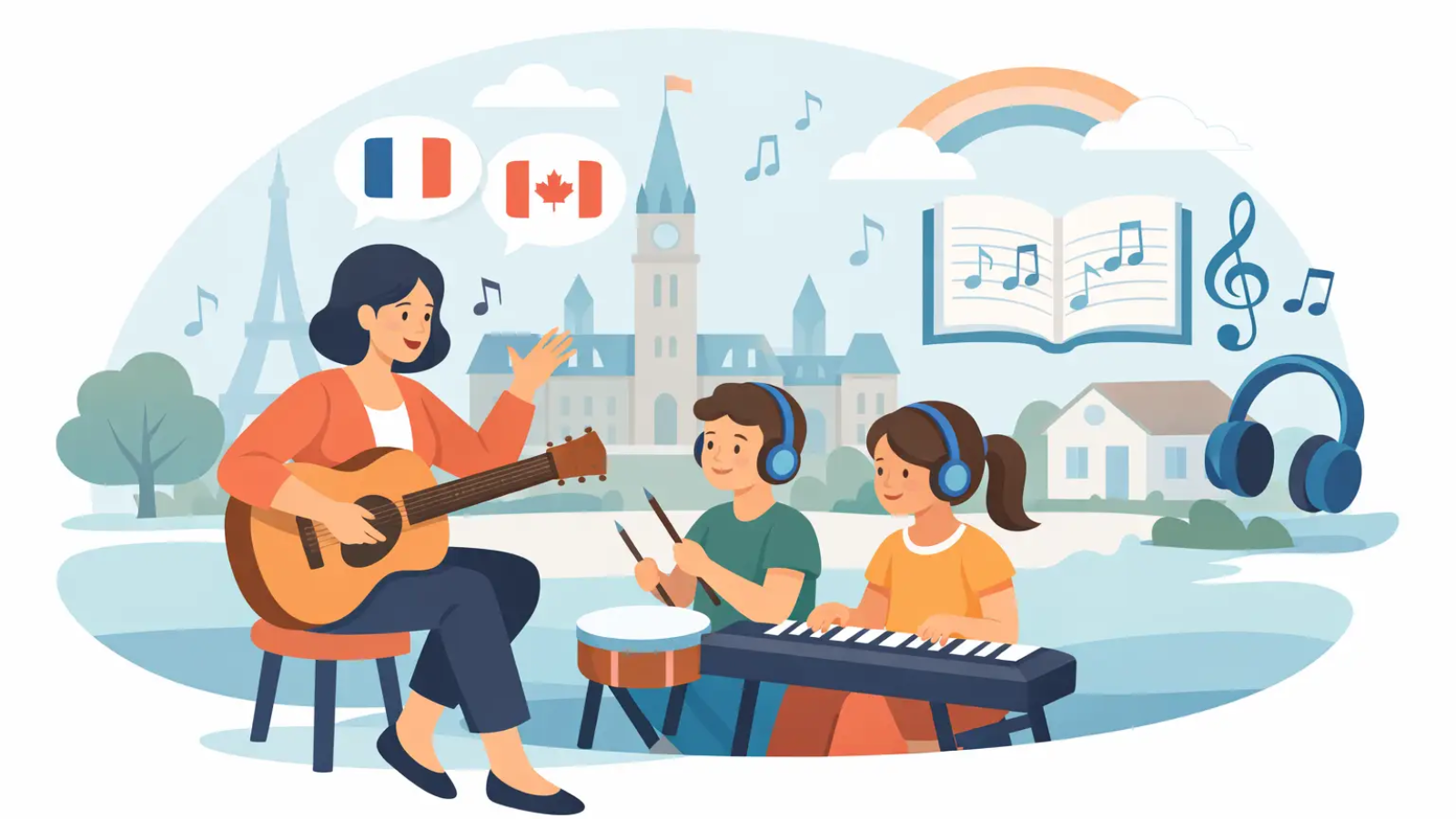
Some students open up the moment they can ask a question in the language that feels most natural. Others stay more focused when musical terms are explained in English, but encouragement comes in Spanish. That is why bilingual music lessons Ottawa families look for are about much more than convenience. They can change how comfortable, confident, and motivated a student feels from the very first lesson.
For many children, teens, and adults, music study works best when communication feels easy. If a student is translating every instruction in their head, even a well-planned lesson can feel tiring. When teaching happens in English and Spanish, there is often less hesitation, fewer misunderstandings, and more room for real musical growth. Students can spend their energy listening, practicing, and expressing themselves instead of trying to decode what the teacher means.
Why bilingual music lessons in Ottawa matter
A good music lesson is never just about notes on a page. It is also about trust, clarity, and the student feeling safe enough to make mistakes. In bilingual teaching, that foundation can be stronger because the teacher can meet the student where they are.
This matters for young beginners who need simple explanations and warm encouragement. It matters for school band students who need precise help with rhythm, tone, articulation, and performance preparation. It matters for adults who may be returning to music after years away and do not want to feel embarrassed asking basic questions. When the lesson can move naturally between English and Spanish, the student often feels more seen and more capable.
There is also a practical side. Parents want to understand goals, progress, and practice strategies. In bilingual households, communication with families can be smoother when the teacher can explain technique, assignments, and next steps in the language that makes the most sense for everyone involved.
What students gain from bilingual instruction
The biggest benefit is usually confidence. Students learn faster when they clearly understand what to do and why they are doing it. That sounds simple, but it makes a real difference. A teacher might explain posture one way in English, then rephrase it in Spanish so the idea clicks immediately. That kind of flexibility can save time and reduce frustration.
Bilingual instruction can also support stronger musical vocabulary. Students start connecting terms, concepts, and listening skills across both languages. For some learners, that helps music theory feel less abstract. For others, it simply makes lessons feel more natural and welcoming.
There is another advantage that families often notice right away. Students are more likely to stick with lessons when they enjoy the experience. Progress in music depends on consistency, and consistency depends on feeling encouraged. If the lesson environment feels personal and comfortable, practice becomes easier to maintain.
That does not mean bilingual lessons are automatically better for every student. Some learners do perfectly well in one language and do not need any switching at all. The goal is not to force a bilingual format. The goal is to teach in the way that helps each student learn best.
Bilingual music lessons Ottawa students can actually use
The best lessons are tailored, not generic. That is especially true in bilingual teaching. One student may want flute lessons with clear technical coaching and support for school ensemble music. Another may be a complete beginner on ukulele who wants fun, familiar songs and a relaxed pace. A young piano student may need short activities and lots of encouragement, while an adult clarinet student may want more structure and theory.
A personalized teacher adjusts not only the repertoire and pacing, but also the language of instruction. Some students prefer a mostly English lesson with a few Spanish explanations. Others are more comfortable with the opposite. Some families want parent communication in Spanish while the student studies in English. These details matter because they shape how easily learning fits into daily life.
That same personalized approach is important for music theory. Theory can either support progress or become something students dread. When it is taught clearly and connected to the student’s instrument, it becomes much more useful. In a bilingual setting, theory can be explained with patience and precision so students understand how rhythm, notation, scales, and harmony apply to the music they are actually playing.
Online or in person – which works better?
For many Ottawa families, the answer is it depends on the season, the schedule, and the student. In-person lessons can be wonderful for hands-on guidance, especially for young beginners who benefit from a structured studio environment. It can be easier to observe posture, breathing, hand position, and tone production in real time when teacher and student are in the same room.
Online lessons, though, are often better than people expect. They remove travel time, winter weather stress, and the rush that can make music lessons feel like one more thing to squeeze into the week. Students can learn from home, keep their routine simpler, and often arrive more relaxed and ready to focus. For busy families, that flexibility can be the difference between starting lessons and putting them off.
The right teacher knows how to make either format effective. Online instruction needs clear pacing, thoughtful demonstrations, and strong communication. In-person instruction needs the same care, with the added benefit of shared physical space. Neither format is automatically superior. What matters most is whether the lesson is engaging, consistent, and designed around the student.
What to look for in a bilingual music teacher
Credentials matter, but so does teaching style. A skilled musician is not always a skilled teacher, and a bilingual speaker is not always able to explain musical concepts clearly. Families should look for someone who can combine strong training with real pedagogy, patience, and responsiveness.
A good bilingual teacher listens closely. They notice when a student is confused but too shy to say so. They know when to simplify, when to challenge, and when to shift approach. They also understand that progress is not linear. Some weeks are exciting and productive. Other weeks are slower because school, work, or family life gets busy. The right teacher keeps momentum going without making students feel pressured.
It also helps to find a teacher who builds lessons around the student’s interests. Technical work is essential, but students stay motivated when they can connect that work to music they enjoy. A tailored lesson might include tone exercises, rhythm drills, sight reading, and a favorite song or school piece. That balance keeps learning serious without making it feel rigid.
When bilingual lessons are especially valuable
There are certain situations where bilingual instruction can make an immediate difference. Beginners often benefit because so much of early learning depends on simple, clear explanations. School band students benefit when they need targeted support for auditions, festivals, chair placements, or concert repertoire and want that coaching delivered in a language they fully understand.
Families with mixed language preferences also tend to appreciate bilingual lessons. A child might be more comfortable speaking English while a parent prefers discussing scheduling, practice habits, and progress in Spanish. Bilingual teaching creates a bridge that helps everyone stay involved.
Adults can benefit just as much. Many adult learners want a welcoming environment where they can ask questions freely, rebuild confidence, and enjoy the process. Being able to communicate naturally makes that easier.
A more personal way to learn music
At its best, music education should feel both structured and human. Students need guidance, technique, and honest feedback. They also need encouragement, creativity, and room to grow at their own pace. Bilingual teaching supports that balance because it makes lessons more responsive to the person in front of the teacher.
In Ottawa, personalized instruction in English and Spanish can help remove barriers that have little to do with talent and everything to do with communication, comfort, and consistency. That is one reason many families choose a student-centered studio like Allegro Ma Non Troppo, where private lessons are shaped around each learner’s goals, schedule, and musical interests.
If you are looking for a lesson experience that feels clear, supportive, and genuinely tailored, bilingual instruction is worth serious consideration. Sometimes the right teacher is not just the one who knows music well. It is the one who helps you feel understood while you learn it.
Leave A Comment