
 Cart is empty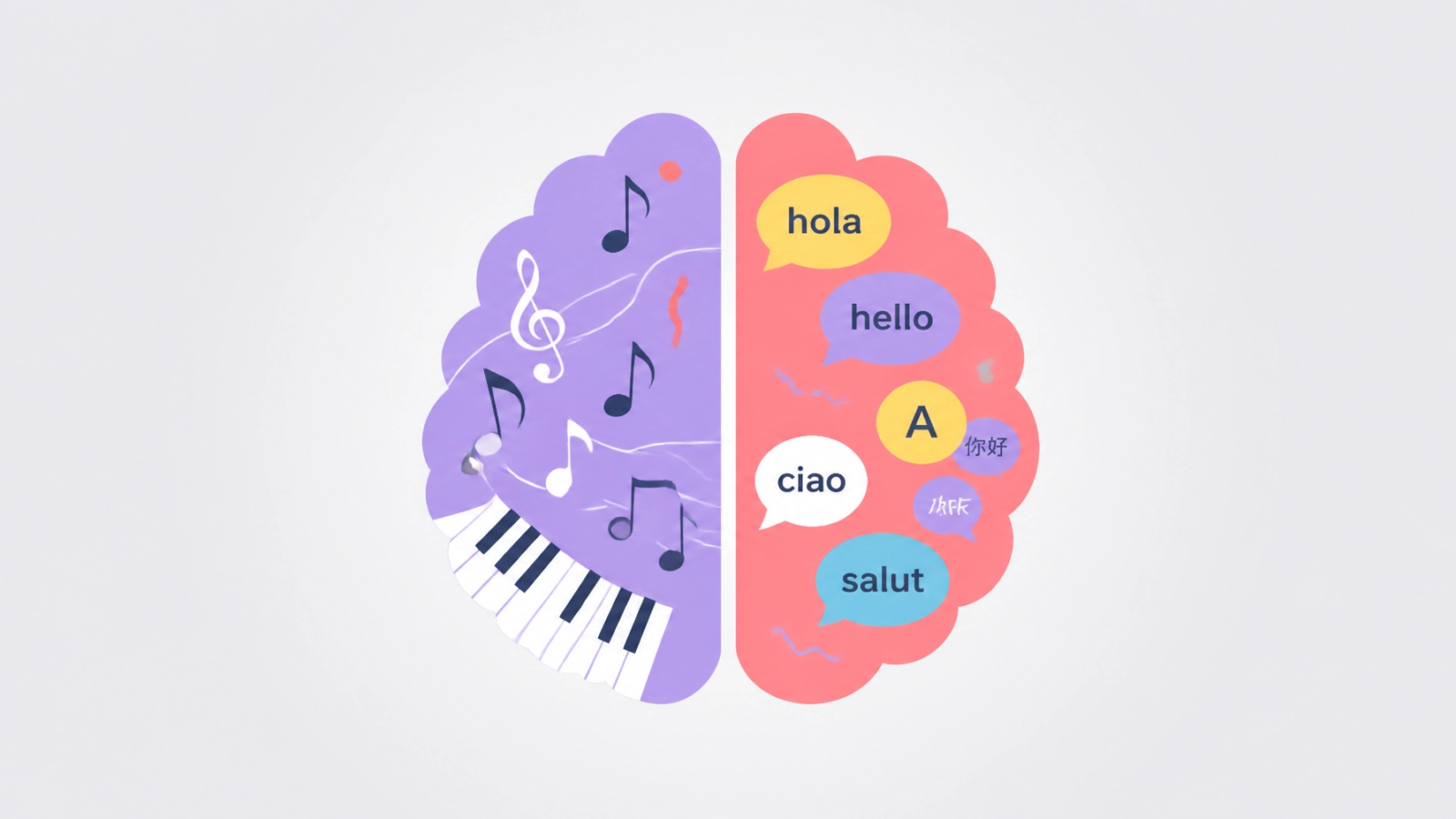
Cognitive reserve refers to the brain's ability to improvise and find alternate ways of getting a job done. It is the resilience of your mind against the inevitable age-related changes and pathologies that occur within the cerebral architecture. Research indicates that specific lifestyle enrichments, such as learning a second language or mastering a musical instrument, act as significant contributors to this reserve. When you engage in bilingual music lessons, you are not merely acquiring two distinct skills; you are participating in a dual-domain cognitive workout that optimizes neural connectivity and enhances executive function through synergistic pathways.
At Allegro Ma Non Troppo, we facilitate this high-level cognitive development by offering bilingual instruction in English and Spanish across all our programs, including piano lessons Ottawa and online flute lessons. By integrating linguistic and musical training, we provide a pedagogical framework designed to maximize your neurological potential.
The Bilingual Advantage: Strengthening the Executive Control System
The management of two linguistic systems requires constant monitoring and inhibition. When you speak one language, your brain must actively suppress the other to prevent interference. This process engages the frontoparietal control network, specifically the anterior cingulate cortex and the dorsolateral prefrontal cortex. This constant "mental gymnastics" leads to a more efficient executive control system, which governs tasks such as attention shifting, working memory, and conflict resolution (Bialystok et al., 2012).
In the context of music lessons Ottawa, adding a bilingual layer means your brain is processing complex auditory signals while simultaneously navigating the syntax and vocabulary of a second language. This dual-tasking reinforces the neural pathways responsible for executive control. Evidence from neuroimaging studies suggests that bilingual individuals possess greater white matter integrity in the corpus callosum, the bridge that facilitates communication between the two hemispheres of the brain. By opting for bilingual music theory lessons online, you are essentially training your brain to be more adaptable and resilient.
Musical Training: A Catalyst for Structural Neuroplasticity
Musical instruction is one of the few activities that engages almost every area of the brain simultaneously. Whether you are enrolled in beginner piano lessons or practicing with our flute lessons Ottawa, your brain is integrating multisensory information: visual (reading notation), motor (fine finger movements), and auditory (frequency monitoring). This leads to measurable structural changes in the brain, a phenomenon known as neuroplasticity.
Research published in journals such as Nature Reviews Neuroscience has demonstrated that long-term musical training increases the volume of grey matter in the primary motor cortex and the auditory cortex. Furthermore, musicians often exhibit a larger planum temporale, a region involved in complex auditory processing. When you participate in kids music lessons Ottawa, you are capitalizing on high levels of early-childhood plasticity, establishing a foundation of neural efficiency that persists throughout your life. The act of learning an instrument like the clarinet or the ukulele requires precise motor control and rhythmic synchronization, both of which stimulate the cerebellum and the basal ganglia.

Synergistic Effects: Why Bilingual Music Lessons Amplify Cognitive Resilience
The convergence of bilingualism and music education creates a "scaffolding" effect. While each activity independently builds cognitive reserve, their combination likely provides additive, if not synergistic, benefits. This is because both domains demand high levels of auditory discrimination and executive control, yet they recruit slightly different neural networks. By training in both, you create a more distributed and redundant network of neural connections.
For example, when you take online clarinet lessons in a bilingual environment, your brain must differentiate between the subtle phonetic nuances of Spanish and English while also distinguishing between the micro-intervals and timbres of your instrument. This cross-domain enrichment enhances your ability to filter out background noise, a skill known as auditory scene analysis. This is particularly beneficial for maintaining cognitive function as you age, as the ability to process speech in noisy environments is often one of the first functions to decline.
- Enhanced conflict monitoring through linguistic suppression
- Increased grey matter density in the prefrontal cortex
- Improved auditory-to-motor mapping through instrumental practice
- Greater neural efficiency in the frontoparietal attention network
The Role of Auditory Processing and Linguistic Transfer
The relationship between music and language is rooted in shared acoustic parameters, such as pitch, timing, and timbre. The "Operative Hypothesis" suggests that musical training improves the brain’s sensitivity to these acoustic features, which in turn facilitates language acquisition and processing. This is known as linguistic transfer. When you engage in bilingual music lessons, you are leveraging this transfer in real-time.
For students enrolled in our music theory lessons online, the study of intervals and scales reinforces the perception of prosody and intonation in speech. Similarly, the rhythmic training found in our ukulele lessons Ottawa can improve phonological awareness, which is the ability to recognize and manipulate the sounds of language. This intersection is a primary reason why we emphasize bilingualism at Allegro Ma Non Troppo; it is a scientifically-backed method to accelerate both musical and linguistic fluency while simultaneously building a robust cognitive reserve.

Longitudinal Protection: Delaying the Onset of Cognitive Decline
One of the most compelling reasons to build cognitive reserve is its role in delaying the clinical symptoms of neurodegenerative diseases. Studies conducted at institutions like York University have shown that bilingualism can delay the onset of Alzheimer’s symptoms by an average of four to five years (Craik, Bialystok, & Freedman, 2010). Similarly, lifelong musical engagement is associated with higher cognitive performance in older adults and a reduced risk of dementia.
By starting with beginner piano lessons or flute lessons Ottawa today, you are essentially making a long-term investment in your brain's health. The cognitive reserve built through these activities allows the brain to compensate for pathology by recruiting alternative neural circuits. This means that even if the physical markers of aging are present, the functional impact on your daily life is significantly mitigated. The bilingual component of our instruction at Allegro Ma Non Troppo adds an extra layer of neuroprotection, ensuring that your brain remains sharp, flexible, and resilient.
Implementing Cognitive Enrichment at Allegro Ma Non Troppo
Our approach to music education is designed to be as effective as it is accessible. We offer a specialized environment where you can learn from master-level teachers who are experts in both their instruments and the pedagogical application of bilingualism. Whether you prefer the comfort of our Ottawa studio or the flexibility of our online lessons, our curriculum is tailored to your specific cognitive and musical goals.
We provide a variety of lesson formats to accommodate different learning stages and schedules:
- Private lessons in flute, clarinet, piano, ukulele, and music theory
- Flexible durations: 30, 45, or 60 minutes
- Specialized support for school band students to enhance academic performance
- Group workshops that foster social-emotional development and collaborative learning
Our bilingual instruction is available in English and Spanish, making our studio a unique hub for the diverse community in Ottawa. By choosing to learn in a second language, you are actively participating in the creation of a more connected and efficient brain.

Logistics and Educational Accessibility
We believe that high-quality, scientifically-informed music education should be accessible to everyone. To support this, we offer several financial incentives to help you begin your journey toward building cognitive reserve without unnecessary stress.
Our pricing structure is transparent and designed to reward commitment:
- Free trial lesson: $0.00
- 30-minute lesson bundle (10 lessons):
$450.00$400.00 - 45-minute lesson bundle (10 lessons):
$675.00$600.00 - 60-minute lesson bundle (10 lessons):
$900.00$800.00 - Family Plan: Savings for 3 or more members participating in lessons
These options ensure that whether you are looking for kids music lessons Ottawa or adult enrichment, there is a plan that fits your needs. Our online lessons provide the same level of bilingual expertise and cognitive stimulation as our in-person sessions, allowing you to learn from any location with a stable internet connection.
The evidence is clear: the combination of musical training and bilingualism is one of the most effective ways to enhance your brain's architecture and build a lasting cognitive reserve. At Allegro Ma Non Troppo, we are dedicated to helping you achieve these neurological milestones through expert instruction and a welcoming, professional environment.
Leave A Comment