
 Cart is empty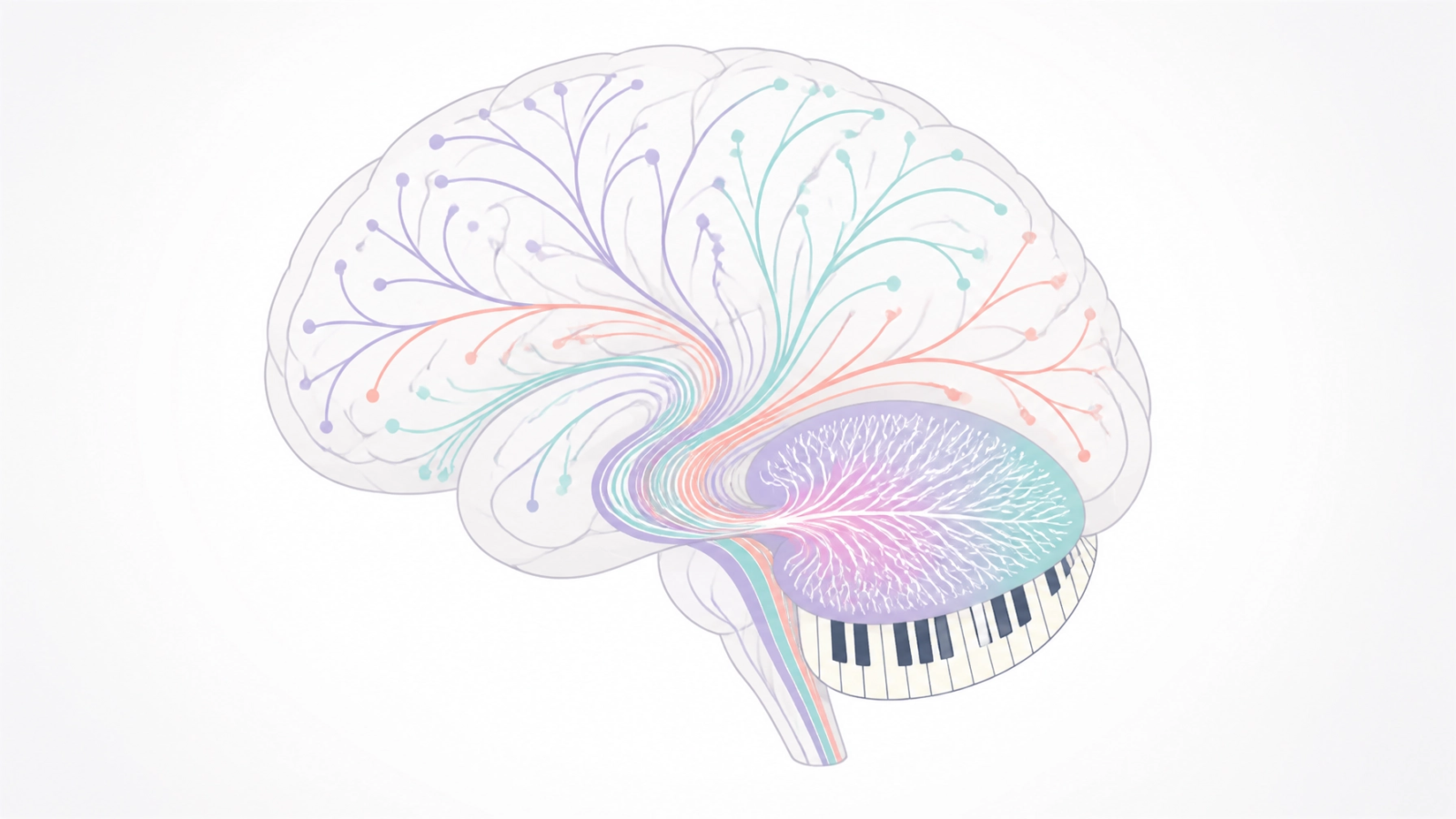
The human brain is a dynamic organ characterized by its ability to reorganize itself in response to external stimuli and specialized training. This phenomenon, known as neuroplasticity, is the cornerstone of cognitive development and skill acquisition. Recent advancements in neuroimaging techniques, such as magnetic resonance imaging and diffusion tensor imaging, have allowed researchers to observe the profound structural changes that occur when individuals engage in beginner piano lessons. Unlike many other cognitive activities, piano performance requires the simultaneous integration of visual, auditory, and motor information, creating a unique environment for cortical reorganization.
The Structural Adaptation of the Primary Motor Cortex
One of the most immediate areas of the brain to undergo change during the initial phases of musical training is the primary motor cortex, specifically the precentral gyrus. This region is responsible for the planning and execution of voluntary movements. When you begin piano lessons Ottawa, your brain must learn to coordinate ten fingers with independent movements and varying degrees of pressure.
Research conducted by Hyde et al. (2009) and published in the Journal of Neuroscience observed that after only fifteen months of keyboard training, children showed significant structural brain changes in the primary motor area compared to a control group. These changes were not merely functional; they involved an increase in gray matter volume. This expansion suggests that the brain allocates more neural resources to manage the complex motor demands of the instrument. The structural mapping of the hand area in the motor cortex becomes more refined, allowing for greater dexterity and precision.

Auditory Cortex Development and Frequency Perception
The temporal lobe, housing the primary auditory cortex, is equally sensitive to the demands of music training. As you progress through beginner piano lessons, your auditory system must learn to differentiate between subtle variations in pitch, timbre, and rhythm. This process, known as auditory processing, involves a complex hierarchy of neural filters.
Studies by Schlaug et al. (2005) have indicated that the Heschl’s gyrus, the site of the primary auditory cortex, exhibits greater volume in individuals who practice musical instruments regularly. For beginners, this structural shift begins with the strengthening of synaptic connections that facilitate frequency discrimination. By engaging in music theory lessons online, students learn to connect these auditory sensations with symbolic notation, further reinforcing the neural pathways between the temporal and frontal lobes. This level of auditory refinement has been shown to improve verbal memory and linguistic syntax processing, highlighting the cross-domain benefits of musical engagement.
Prefrontal Cortex and the Enhancement of Executive Function
The prefrontal cortex is the seat of executive function, encompassing abilities such as working memory, cognitive flexibility, and inhibitory control. Piano performance is a high-level executive task; it requires the player to maintain a sequence of notes in working memory while simultaneously monitoring for errors and planning the next phrase.
A study from Harvard University suggests that the rigorous demands of learning an instrument can lead to increased cortical thickness in the lateral prefrontal cortex. This region acts as a hub, linking musical structure to motor output. When students participate in kids music lessons Ottawa, they are effectively training their brains to manage complex instructions and multi-tasking scenarios. This cognitive scaffolding provides a foundation for improved academic performance and emotional regulation, as the prefrontal cortex also plays a critical role in the top-down modulation of the limbic system.

White Matter Integrity and Hemispheric Connectivity
While gray matter volume refers to the density of neuronal cell bodies, white matter represents the myelinated axons that facilitate communication between different brain regions. One of the most significant neurological findings in music research involves the corpus callosum, the large bundle of white matter fibers that connects the left and right hemispheres.
Because piano playing requires bimanual coordination, it necessitates rapid communication between the two halves of the brain. Longitudinal studies have shown that early musical training can lead to an increase in the size and organization of the corpus callosum, particularly in the anterior regions. This increased connectivity, or neural plasticity, ensures that motor signals and sensory feedback are processed with higher efficiency. Similar benefits are observed in other wind instruments, where online flute lessons or online clarinet lessons require precise breath control and finger coordination, further optimizing the brain's internal communication networks.
Multi-sensory Integration and the Parietal Lobe
The parietal lobe is responsible for integrating sensory information from various parts of the body, including proprioception and spatial awareness. In the context of piano lessons Ottawa, the parietal cortex must translate visual information from a musical score into spatial movements on the keyboard.
This visual-motor-auditory loop is a hallmark of musical expertise. Research indicates that beginner piano lessons trigger structural changes in the intraparietal sulcus, an area involved in the processing of numerical information and spatial orientation. By learning to navigate the geography of the keyboard without constant visual confirmation, students enhance their somatosensory map. This multimodal integration is why music lessons are often recommended for developing motor skills and spatial-temporal reasoning in both children and adults.

The Longitudinal Value of Specialized Instruction
At Allegro Ma Non Troppo, our pedagogical approach is rooted in the understanding of these neurological principles. We provide a structured environment that facilitates optimal brain development through expert instruction. Our bilingual music lessons allow for the additional cognitive reserve associated with dual-language learning, further challenging the brain’s plasticity.
Whether you are seeking flute lessons Ottawa, ukulele lessons Ottawa, or piano training, our master-level teachers utilize evidence-based methods to ensure that your technical progress is matched by cognitive growth. The flexibility of our scheduling allows you to integrate this intensive training into your lifestyle with minimal friction.
Transparent Enrollment and Logistics
We believe in providing clear, evidence-based information regarding our services and pricing structures to ensure accessibility for the Ottawa community. Our lessons are available in various durations to suit different developmental stages and attention spans.
- 30 Minute Lesson: $35
- 45 Minute Lesson: $52.50
- 60 Minute Lesson: $70
We offer several financial incentives to support long-term musical and neurological development:
- Family Plan: Families with 3 or more members enrolled receive a 10% discount on every lesson. For a standard 30-minute session, the rate is reduced from $35 to $31.50.
- Lesson Bundles: Students who commit to their progress through bundle purchases can save 5% on 5-lesson packages or 10% on 10-lesson packages.
Our lessons are held at our professional Ottawa studio or can be accessed globally through our online platform. We prioritize a personalized experience, offering a free trial lesson to assess the student's current cognitive and musical baseline before committing to a full curriculum.
Leave A Comment