
 Cart is empty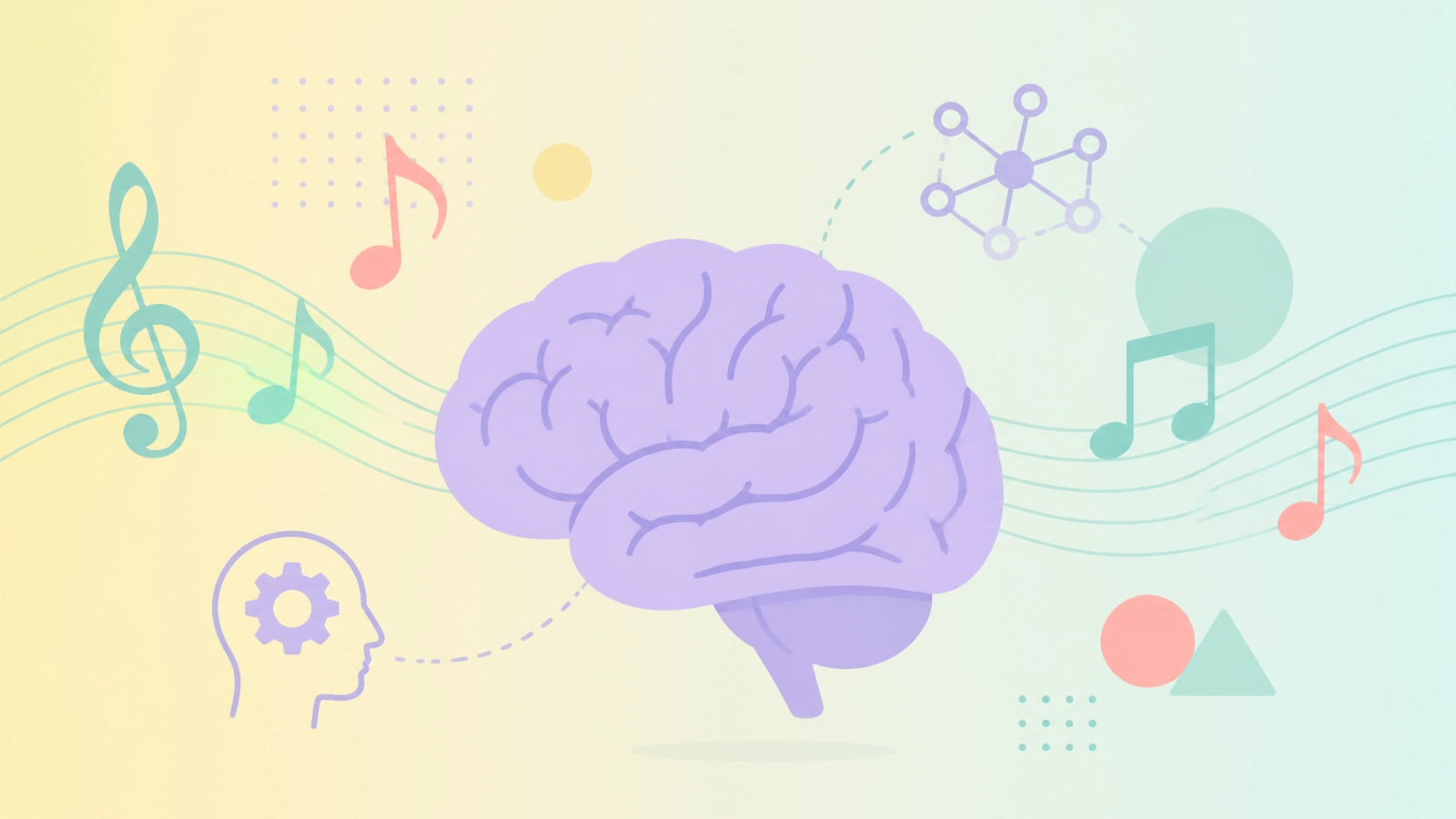
The study of music theory is often perceived as a secondary adjunct to performance. However, recent developments in cognitive neuroscience and pedagogy indicate that the formal analysis of musical structure is a primary catalyst for accelerated learning and neural development. For students engaged in music lessons Ottawa, the integration of online theory instruction serves as a foundational pillar for technical proficiency and interpretive depth. This guide examines the scientific mechanisms through which music theory optimizes the brain for high-level performance across all instruments, including piano lessons Ottawa and flute lessons Ottawa.
The Cognitive Architecture of Music Theory
Music theory is the systematic study of the patterns, structures, and systems that govern musical composition. From a neurological perspective, learning theory involves the synchronization of several high-level cognitive processes. When you analyze a complex harmonic progression or decode a rhythmic structure, you are engaging in a form of symbolic processing that mirrors mathematical and linguistic computation.
This process facilitates the development of what researchers call a mental representation of music. Instead of merely reacting to notes on a page, a student trained in theory can predict melodic trajectories and harmonic resolutions. This predictive coding reduces the cognitive load during performance, allowing the executive functions of the brain to focus on nuance, expression, and technical precision. At Allegro Ma Non Troppo, our music theory lessons Ottawa are designed to build this structural understanding from the first session, ensuring that every note you play resonates with a deep comprehension of its functional role within the piece.
Neural Plasticity and the Theory of Harmony
The human brain is remarkably adaptable, a characteristic known as neural plasticity. Intensive musical training, particularly the analytical rigor required for music theory, has been shown to increase the density of white matter in the corpus callosum. This enhancement facilitates faster communication between the left and right hemispheres of the brain, which is essential for the multi-sensory integration required in music.

By studying the science of harmony and counterpoint, you provide your brain with a structured framework for categorizing auditory information. This is not merely an academic exercise; it has practical implications for how quickly you can master new repertoire. For instance, a student taking clarinet lessons Ottawa who understands the relationship between intervals and scales will find technical passages far more intuitive. The brain recognizes familiar patterns rather than individual, disconnected pitches, leading to more efficient motor response and memory consolidation.
Enhancing Auditory Processing through Symbolic Decoding
A critical component of music theory is ear training, or aural skills. This discipline bridges the gap between the abstract symbols on a page and the physical experience of sound. Research in auditory processing indicates that individuals with theory training possess superior frequency discrimination and a more refined ability to detect errors in pitch and rhythm.
This precision is particularly vital for wind instrument players. In our flute lessons Ottawa, we emphasize the connection between theoretical knowledge and intonation control. When you understand the mathematical basis of intervals, your brain can more accurately guide the physical adjustments required for perfect pitch. This feedback loop between the auditory cortex and the motor system is a hallmark of master-level musicianship.
Executive Function and the Architecture of Music
Executive functions: which include working memory, cognitive flexibility, and inhibitory control: are the higher-order processes that allow us to manage complex tasks. Music theory is an exceptional workout for these functions. To analyze a four-part chorale or a symphonic score, one must hold multiple streams of information in working memory simultaneously while applying a set of rigorous analytical rules.
Studies have demonstrated that students who engage in regular music theory study show marked improvements in academic performance, particularly in spatial-temporal reasoning and logical deduction. Whether you are pursuing ukulele lessons or advanced music theory lessons, the cognitive benefits transcend the practice room, enhancing your ability to process information in diverse professional and academic environments.
Efficiency of Digital Instruction in Theoretical Pedagogy
The transition to online lessons has revolutionized the way music theory is taught. While performance requires physical proximity for technical adjustments, the abstract and visual nature of theory makes it exceptionally suited for digital platforms. Online instruction allows for the use of interactive notation software, real-time visual analysis, and a wealth of digital resources that can be tailored to the individual pace of the student.

The flexibility of our online curriculum ensures that students can access master-level instruction from the comfort of their homes, eliminating geographical barriers and maximizing the time available for study. This environment is particularly conducive to the focused, analytical thinking required for theory. For busy families in Ottawa, our flexible scheduling: including 30, 45, and 60-minute options: provides a sustainable model for long-term musical development.
Bilingual Instruction and Phonological Awareness
At Allegro Ma Non Troppo, we offer instruction in both English and Spanish. This bilingual approach provides an additional layer of cognitive stimulation. Learning music theory in two languages forces the brain to engage in constant code-switching and linguistic mapping, which further enhances neural plasticity and phonological awareness.

The terminology of music theory: terms like "cadence," "sincopación," "harmony," and "armonía": shares roots across languages, creating a rich semantic network. For bilingual students or those looking to expand their linguistic horizons, this dual-language approach provides a unique advantage in auditory discrimination and global communication skills.
Mastery and Scaffolding in Music Education
Our teaching philosophy is rooted in the concept of instructional scaffolding. This involves breaking down complex theoretical concepts into manageable building blocks, ensuring that each new level of understanding is built upon a solid foundation. Our master-level teachers provide the necessary support to move students from basic note-reading to advanced structural analysis.

This structured approach is essential for preventing the frustration often associated with learning music. By ensuring that you understand the "why" behind the music, we empower you to become an independent learner. This is particularly beneficial for school band students in Ottawa who require specialized support to excel in their academic ensembles.
Logistical Transparency and Accessibility
Professional music education should be accessible and transparent. We offer a variety of options to accommodate different goals and budgets. Our pricing structure is designed to reward commitment and support families:
- Trial Lesson: $20 for 30 minutes (a 50% reduction from the standard $40 rate)
- 30-Minute Lessons: $40 per session
- 45-Minute Lessons: $53 per session
- 60-Minute Lessons: $66 per session
- Lesson Bundles: 5% discount on 10 lessons; 10% discount on 20 lessons
- Family Plan: 15% discount for families with 3 or more members
These options provide a clear path for students to progress from their first piano lessons Ottawa to advanced theoretical mastery. Our bilingual staff is available to discuss your specific goals and help you select the most effective lesson plan for your needs.
Conclusion
The pursuit of music theory is not a detour from performance; it is the most direct path to musical excellence. By engaging with the structural science of sound, you optimize your brain for technical precision, interpretive depth, and lifelong cognitive health. Whether you choose to join us at our Ottawa studio or through our comprehensive online platform, you will receive expert guidance that prioritizes your individual growth and academic success.
Leave A Comment