
 Cart is empty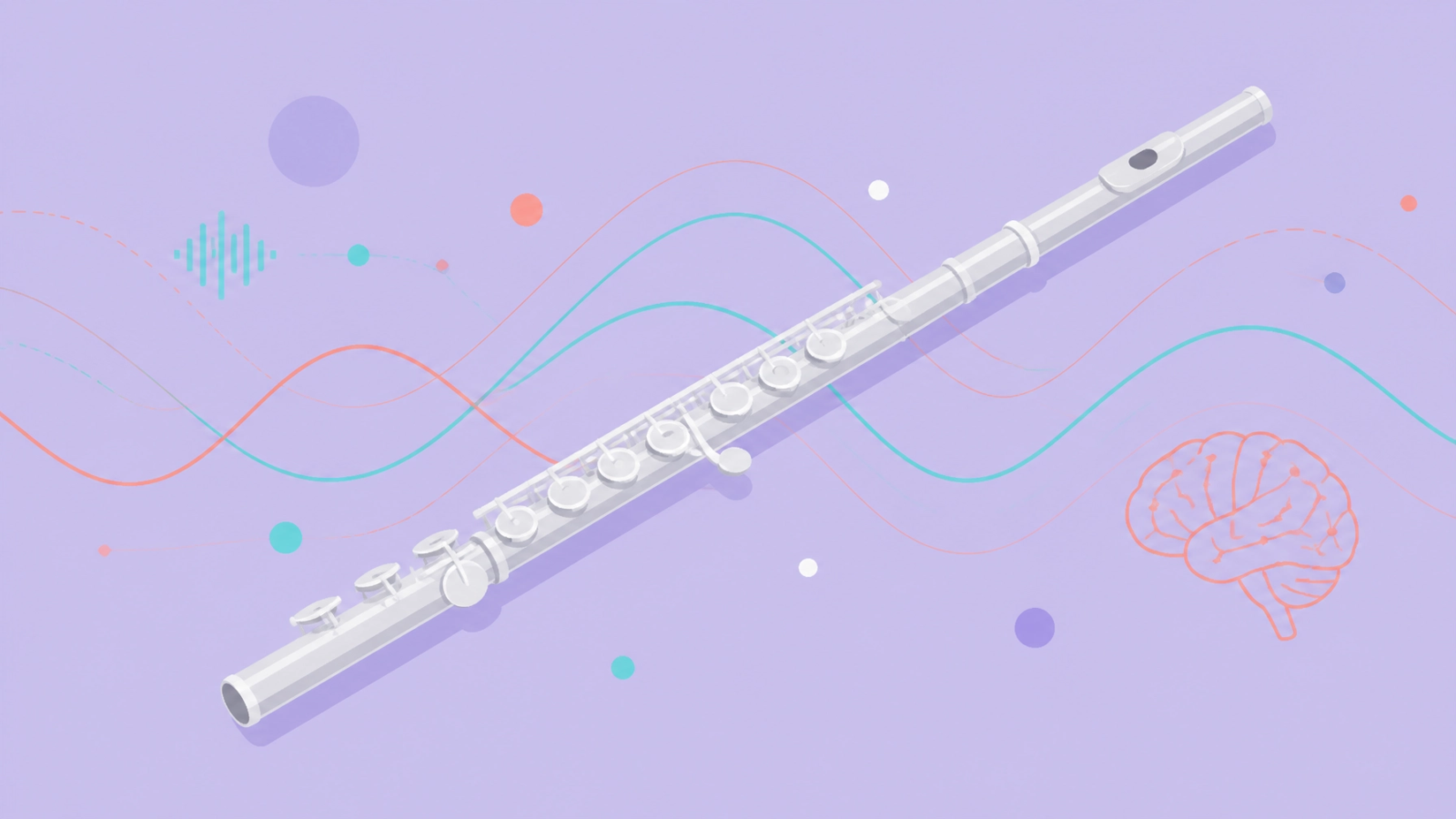
Neuroplasticity, the fundamental capacity of the brain to reorganize its structure and function in response to environmental stimuli and specialized training, serves as the biological foundation for musical acquisition. While general musical education is known to induce significant cortical changes, the specific physiological and cognitive demands of wind instruments, particularly the flute, trigger unique neural adaptations. Through sustained engagement in online flute lessons, students facilitate a complex orchestration of neural connectivity that enhances both auditory processing and motor execution. This article examines the evidence-based mechanisms through which flute instruction optimizes the cerebral architecture.
The Biological Basis of Neuroplasticity in Flute Instruction
The acquisition of instrumental proficiency is not merely a matter of repetitive physical practice; it is a profound process of neural remodeling. Research indicates that long-term instrumental training leads to measurable structural modifications in primary motor cortex, cerebellum, and Heschl’s gyrus (Zatorre & Herholz, 2012). For individuals seeking music lessons Ottawa, understanding this biological shift is critical for setting realistic developmental expectations.
The process involves both functional and structural changes. Functional changes refer to the recruitment of additional neural resources to handle the complex multitasking required by the instrument, such as reading musical notation while managing airflow and finger movements. Structural changes involve the physical growth of gray matter density and the strengthening of white matter tracts that connect disparate brain regions. In the context of flute lessons Ottawa, these adaptations are highly specialized to the unique biomechanics of the instrument.

Somatosensory Reorganization: Focus on Mouth and Finger Dexterity
The flute requires an exceptional degree of coordination between the fine motor skills of the fingers and the somatosensory control of the mouth, or the embouchure. Neuroimaging studies have demonstrated that wind instrument players exhibit distinct structural modifications in mouth-related somatosensory brain areas (Schwencke et al., 2021). This cortical reorganization is the result of thousands of micro-adjustments made to the lips, tongue, and jaw to produce varied timbres and precise pitches.
- The primary motor cortex undergoes expansion in the regions dedicated to the hands and face.
- Sensory feedback loops between the fingertips and the auditory cortex are strengthened, allowing for instantaneous correction of pitch and rhythm.
- The cerebellum, which manages motor timing and sequencing, shows increased efficiency in wind players compared to non-musicians.
At Allegro Ma Non Troppo, our kids music lessons Ottawa are designed to leverage this period of peak neural plasticity. By introducing specialized wind training during childhood, we facilitate the development of a highly refined somatosensory map that serves the student throughout their academic and personal life.
Enhancing White Matter Integrity and Hemispheric Communication
The communicative efficiency between the left and right hemispheres of the brain is significantly enhanced by musical training. The corpus callosum, the primary white matter tract connecting the two hemispheres, has been found to be larger and more organized in musicians who begin training before the age of seven (Schlaug et al., 1995). This is particularly relevant for flutists, who must integrate the logical, rhythmic processing of the left hemisphere with the melodic and emotional nuances processed by the right.
Furthermore, the arcuate fasciculus, a tract that connects auditory and motor regions, shows increased integrity in those who study wind instruments. This pathway is essential for the auditory-motor integration necessary to translate a visual note on a page into a physical breath and finger movement. Students enrolled in music theory lessons online alongside their instrumental studies further reinforce these connections, as the theoretical understanding of music provides a cognitive framework that supports neural efficiency.

The Role of the Insula in Breath Control and Interoception
One of the most specialized aspects of flute pedagogy is the management of respiratory physiology. Unlike keyboard or string instruments, the flute is powered by the player’s internal biological systems. Recent research has highlighted that wind instrument training is associated with altered connectivity between the thalamus, putamen, and the insula (Schwencke et al., 2021). The insula is a critical hub for interoception: the brain's awareness of the internal state of the body, including heart rate and breath.
The constant monitoring and regulation of breath required during online flute lessons train the brain to maintain high levels of interoceptive awareness. This not only improves musical performance but has been linked to improved emotional regulation and stress management. By refining the circuits that link motor timing and internal bodily sensations, flutists develop a high-level executive control over their physiological responses.
The Efficacy of the Digital Environment for Cognitive Scaffolding
The transition to digital platforms for music education offers unique advantages for neural connectivity. The online environment allows for a controlled, distraction-free setting that is often more conducive to the deep focus required for neuroplastic change. Our online flute lessons utilize high-fidelity audio and visual tools to provide the precise feedback necessary for auditory-motor refinement.
- Flexibility in scheduling allows for more frequent, shorter practice sessions, which is superior for long-term memory consolidation compared to infrequent, long sessions.
- The comfort of the home environment reduces the cortisol levels that can inhibit learning, allowing for more efficient neural processing.
- Digital resources integrated into the lessons, such as visual tuners and rhythmic tracking software, provide immediate objective data that scaffolds the learning process.
Our bilingual music lessons, offered in both English and Spanish, provide an additional layer of cognitive challenge. Learning music in a second language, or alongside one, promotes cognitive reserve and enhances the executive functions of the prefrontal cortex, such as shifting attention and inhibitory control.

Practical Implementation and Pedagogy at Allegro Ma Non Troppo
Allegro Ma Non Troppo is committed to providing a scientific and personalized approach to music education. Our instructors, all of whom hold Master-level degrees, utilize pedagogical models that prioritize the gradual build-up of technical and cognitive skills. We offer a transparent pricing structure designed to facilitate long-term commitment, which is essential for achieving the neuroplastic benefits discussed above.
- Free Trial Lesson: A 30-minute introductory session to assess student goals and baseline skills.
- Individual 30-Minute Lessons: 44.00 per session.
- Individual 45-Minute Lessons: 66.00 per session.
- Individual 60-Minute Lessons: 88.00 per session.
- Lesson Bundles: Discounts available for pre-purchasing 5 or 10 sessions.
- Family Plan: 10% discount for families with 3 or more members enrolled.
For those interested in other wind instruments, we also provide online clarinet lessons, which offer similar benefits in fine motor skill development and respiratory control. All our programs, including ukulele lessons Ottawa and beginner piano lessons, are grounded in the same evidence-based principles of cognitive development and motor learning.

The pursuit of musical excellence on the flute is a transformative journey for the brain. By optimizing neural connectivity through specialized training, students not only master an instrument but also enhance the very biological systems that govern their cognitive and motor capabilities.
Leave A Comment