
 Cart is empty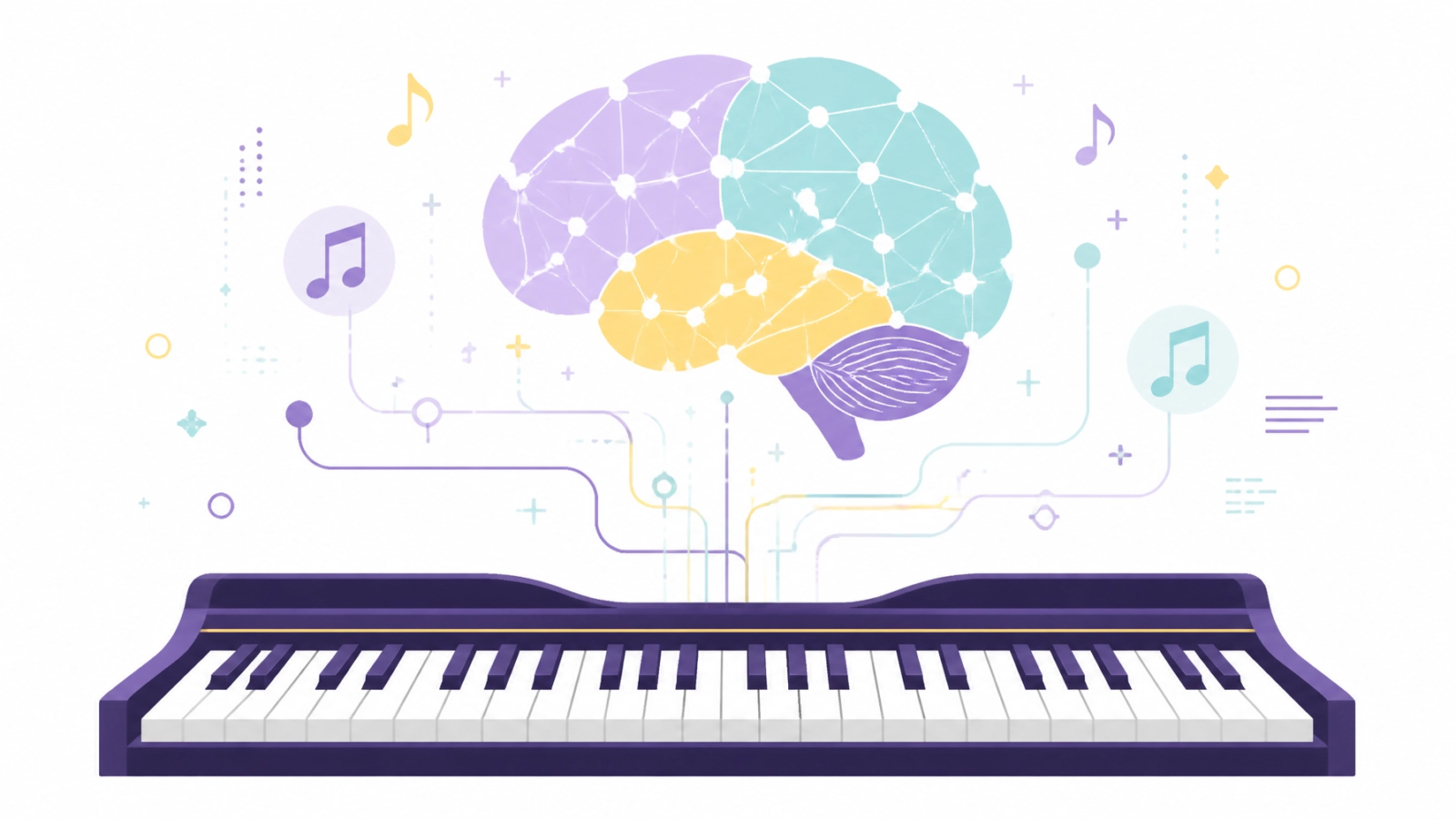
The human brain possesses a remarkable capacity for adaptation known as neuroplasticity. When you begin the journey of learning a musical instrument, you are not merely acquiring a cultural skill; you are engaging in a rigorous form of cognitive and physical training that physically remodels the cerebral cortex. Beginner piano lessons serve as a prime example of how multimodal stimulation: combining auditory, visual, and motor inputs: can drive structural changes in the brain. At Allegro Ma Non Troppo, we provide the expert guidance necessary to facilitate these neurological developments through our music lessons Ottawa.
Structural Plasticity in the Primary Motor Cortex
The primary motor cortex (M1) is responsible for the planning and execution of voluntary movements. Piano performance requires an unprecedented level of finger independence and bimanual coordination. Scientific observation via structural Magnetic Resonance Imaging (MRI) has demonstrated that even short-term training can lead to measurable changes in this region.
In a landmark study published in The Journal of Neuroscience, researchers Hyde et al. (2009) tracked six-year-old children over fifteen months of keyboard instruction. The results indicated a significant increase in cortical thickness in the right primary motor cortex of the group receiving lessons. This anatomical growth correlated directly with improvements in fine motor sequencing and coordination. When you enroll in piano lessons Ottawa, your brain begins to allocate more neural real estate to the motor commands required for intricate finger movements, a process often described as cortical remapping.

Auditory Cortex Adaptation and Frequency Perception
Learning the piano is as much about listening as it is about playing. The brain must learn to map specific physical gestures to precise auditory frequencies. This process takes place primarily in the auditory cortex, specifically in Heschl’s gyrus.
The Hyde et al. (2009) study also identified structural thickening in the right Heschl’s gyrus in beginner students. This region is critical for processing musical pitch and melody discrimination. As you progress through beginner piano lessons, your auditory system becomes more refined, allowing for better frequency perception. This neurological advantage often transfers to other areas of life, such as improved speech processing in noisy environments. At our studio, we supplement this development with music theory lessons online, ensuring that the cognitive understanding of sound mirrors the physical ability to produce it.
White Matter Integrity and the Corpus Callosum
Beyond the gray matter of the cerebral cortex, piano training significantly impacts the white matter: the fatty insulation (myelin) that facilitates communication between different brain regions. One of the most critical structures for a pianist is the corpus callosum, the large bundle of nerve fibers connecting the left and right hemispheres of the brain.
Research by Steele et al. (2013) published in The Journal of Neuroscience highlights a sensitive period for musical training, typically before the age of seven. Children who start kids music lessons Ottawa during this window show enhanced white-matter organization in the corpus callosum. This increased connectivity supports the rapid exchange of information between hemispheres, which is essential for the bimanual coordination required to play different rhythms and melodies with each hand simultaneously. This structural optimization of the brain’s communication highways provides a foundation for complex cognitive processing that lasts well into adulthood.

Multimodal Integration and the Temporal Gyri
Piano playing is a multisensory experience. You must read musical notation (visual), translate those symbols into finger movements (motor), and immediately assess the resulting sound (auditory). This requires seamless integration across different sensory modalities.
Evidence from neuroimaging shows that beginner training leads to changes in the left inferior and middle temporal gyri. These areas are involved in auditory-motor integration, acting as a bridge between what you hear and how you move. This scaffolding of sensory information is a key component of executive function. Whether you are taking online flute lessons or clarinet lessons Ottawa, the ability to integrate diverse streams of information is a transferable cognitive skill that enhances academic and professional performance.
Executive Function and Cognitive Reserve
The benefits of music education extend beyond the technical mastery of an instrument. Engaging with music theory and performance strengthens executive functions, including working memory, cognitive flexibility, and inhibitory control. These functions are primarily regulated by the prefrontal cortex.
For adult beginners, the neurological impact is equally profound. A study from the University of Bath (2022) found that just eleven weeks of piano training in adults improved multisensory processing and reduced symptoms of stress and depression. The cognitive load required to manage rhythm, pitch, and technique simultaneously acts as a form of resistance training for the brain. For those interested in diverse linguistic environments, our bilingual music lessons offer an additional layer of cognitive challenge, further increasing what researchers call cognitive reserve: the brain’s ability to improvise and find alternate ways of getting a job done.

Practical Logistics and Curricula at Allegro Ma Non Troppo
Our pedagogical approach is rooted in evidence-based methods that prioritize both structural brain development and student engagement. We offer flexible learning environments, including online lessons and in-person instruction at our Ottawa studio. Our instructors hold Master-level qualifications and are experts in tailoring lessons to the unique neurological and physical needs of each student.
We offer several instruments including:
- online flute lessons and flute lessons Ottawa
- online clarinet lessons and clarinet lessons Ottawa
- ukulele lessons Ottawa
- music theory lessons online
Our pricing structure is designed to be transparent and accessible, offering significant value for long-term commitment:
- Free Trial Lesson: $0
- Individual 30-minute lesson: $35
- Bundle of 10 lessons (30 minutes):
$350$332.50 - Bundle of 10 lessons (45 minutes):
$450$427.50 - Bundle of 10 lessons (60 minutes):
$600$570 - Family Plan (3+ members): 10% discount on all lessons, e.g., 30 minutes at
$35$31.50
We provide a streamlined scheduling system with 30, 45, and 60-minute options to accommodate the varying attention spans and goals of our students. All students benefit from personalized instruction and specialized support for school band requirements.
Conclusion
The decision to start beginner piano lessons is an investment in the structural and functional health of your brain. From the thickening of the motor cortex to the optimization of the corpus callosum, the neurological evidence is clear: musical training is one of the most effective ways to drive positive neuroplastic changes. Whether you are looking for kids music lessons Ottawa or an adult seeking a new cognitive challenge, the experts at Allegro Ma Non Troppo are here to guide your development.
Leave A Comment