
 Cart is empty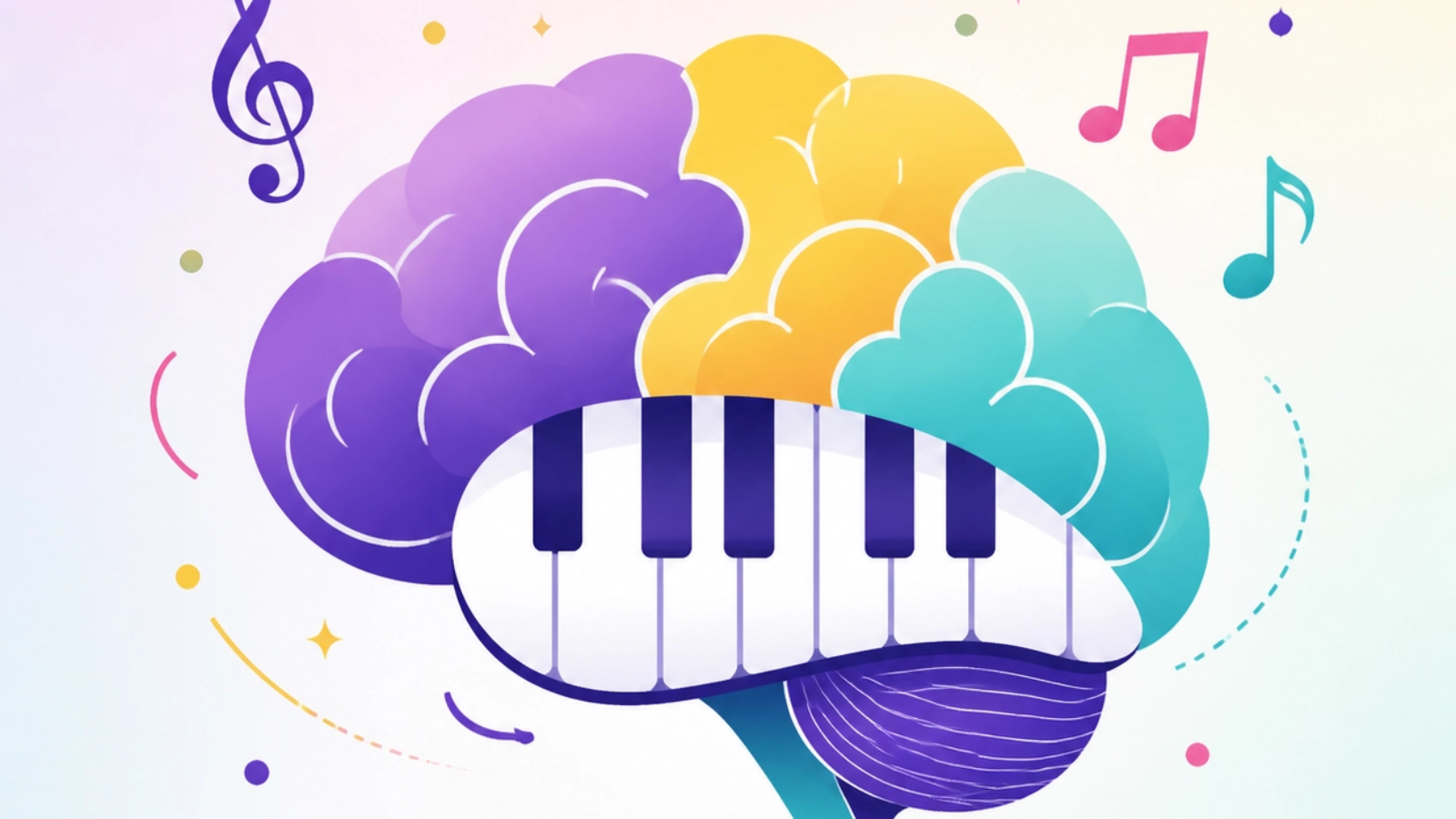
The human brain possesses an extraordinary capacity for structural reorganization in response to environmental stimuli and skill acquisition. This phenomenon, known as neural plasticity, is perhaps most profoundly demonstrated through the study of musical training. Recent advancements in neuroimaging, particularly magnetic resonance imaging (MRI) and functional MRI (fMRI), have allowed researchers to quantify the specific anatomical changes that occur when an individual begins piano instruction. For those seeking piano lessons Ottawa, the decision to engage with the instrument is not merely an artistic pursuit but a significant intervention in cortical development and interhemispheric connectivity.
Research conducted by neuroscientists at Harvard University and the Boston Conservatory has demonstrated that as little as fifteen months of consistent keyboard training can induce measurable structural changes in the developing brains of children. These changes are not generalized; rather, they are highly specific to the neural circuits required for the complex motor and auditory demands of the piano. By examining the cerebral cortex: the outer layer of the brain responsible for higher-order functions: scientists have identified significant increases in gray matter density and cortical thickness in regions associated with fine motor control and auditory processing.
Use-Dependent Plasticity and the Motor Cortex
The primary motor cortex (M1), located in the precentral gyrus, is the epicentre of voluntary movement control. Playing the piano requires a high degree of bimanual coordination, where each hand performs independent but synchronized movements. This demand necessitates a sophisticated level of motor sequencing and sensory-motor integration. Longitudinal studies indicate that beginner piano lessons lead to a rapid expansion of the cortical representation of the fingers in the motor cortex.

In the early stages of learning, the brain recruits a broad network of motor areas, including the supplementary motor area (SMA) and the premotor cortex (PMA), to manage the novelty of the tasks. As the student progresses from conscious gesture to automatism: a process often referred to as muscle memory: the neural representations become more efficient. Evidence suggests that long-term musical training leads to a reduction in the number of active voxels required for a specific movement, indicating that the motor system has become more specialized and energetically efficient. This structural scaffolding is essential for the high-precision tasks required in music lessons Ottawa.
- The primary motor cortex experiences use-dependent reorganization to accommodate fine finger dexterity.
- The supplementary motor area facilitates the sequencing of complex rhythmic patterns.
- Premotor regions optimize the translation of visual stimuli (sheet music) into motor commands.
- Structural changes in these areas are detectable via MRI within months of starting lessons.
Auditory Cortex Expansion and Frequency Perception
The auditory system undergoes equally significant structural remodeling during piano training. The primary and secondary auditory cortices must learn to discriminate subtle differences in pitch, timbre, and harmonic structure. This intensive auditory processing leads to an increase in cortical thickness in bilateral auditory structures. A study published in the journal NeuroImage demonstrated that older adults who began piano lessons in later life showed significant increases in cortical thickness in their auditory cortices, proving that the aging brain remains highly plastic.
This neuroanatomical growth supports enhanced melodic and rhythmic discrimination. The brain becomes more adept at tracking temporal patterns and mapping sounds to specific motor actions. This bi-directional feedback loop: where the ear guides the hand and the hand produces the sound: is a hallmark of effective musical pedagogy. Furthermore, the rigorous study of music theory lessons online complements this physical training by providing a cognitive framework for auditory perception, further reinforcing the structural changes in the temporal lobes.

- Auditory training increases gray matter density in Heschl’s gyrus, the primary site of sound processing.
- Enhanced neural connectivity between the auditory and motor cortices facilitates real-time performance adjustments.
- Structural plasticity in the auditory system improves frequency perception and signal-to-noise ratio in speech.
- These benefits are observable in students of all ages, from children to seniors.
Interhemispheric Connectivity and the Corpus Callosum
One of the most remarkable findings in the neuroscience of music is the impact on the corpus callosum: the thick bundle of nerve fibers that connects the left and right cerebral hemispheres. Piano playing is a quintessentially bimanual task, requiring constant communication between the hemispheres to coordinate independent hand movements. This demand places a unique load on the corpus callosum, leading to structural growth in the regions that facilitate this interhemispheric transfer.

The longitudinal study of children receiving keyboard lessons found that those who practiced consistently showed a significantly larger corpus callosum compared to a control group after only fifteen months. This anatomical difference is linked to superior performance in tasks requiring bimanual coordination and complex sensory-motor integration. For families considering kids music lessons Ottawa, this research highlights the developmental advantages of musical training in optimizing neural connectivity. The ability of the hemispheres to communicate efficiently is a critical component of executive function and overall cognitive resilience.
- Growth in the corpus callosum enhances the speed and efficiency of interhemispheric communication.
- Improved callosal connectivity is correlated with better performance in non-musical bimanual tasks.
- The anterior portion of the corpus callosum, which links the motor cortices, is particularly responsive to early piano training.
- These structural adaptations provide a neurobiological basis for the superior coordination observed in pianists.
Longitudinal Evidence: From Childhood to Gerontology
The scientific literature establishes that while the magnitude of plasticity may be greatest during sensitive periods in childhood, the brain remains capable of structural change throughout the lifespan. For instance, while ukulele lessons Ottawa or online flute lessons also offer cognitive benefits, the piano’s requirement for complex ten-finger coordination and linear pitch representation provides a unique neurological stimulus.
Recent studies have explored the efficacy of bilingual music lessons in further enhancing cognitive reserve. When musical training is delivered in a second language, the brain must manage additional layers of semantic and syntactic processing, potentially leading to even more robust neural connectivity. Similarly, students participating in flute lessons Ottawa or online clarinet lessons benefit from different forms of cortical specialization, particularly in regions governing respiratory control and precise oral-motor coordination.
The cumulative evidence suggests that the structural remodeling of the brain is use-dependent and dose-dependent. Consistency in practice is the primary driver of these anatomical changes. Even thirty minutes of weekly structured instruction, combined with regular practice, is sufficient to trigger the processes of synaptogenesis and myelin remodeling that underpin cortical growth.

Conclusion: The Clinical and Academic Implications
The structural changes induced by beginner piano lessons have far-reaching implications for academic performance and clinical health. By optimizing the architecture of the motor, auditory, and connective regions of the brain, music training builds a foundation for enhanced executive function, attention, and sensory processing. These benefits are not merely theoretical; they are grounded in decades of rigorous peer-reviewed research from institutions such as MIT and the Max Planck Institute for Human Cognitive and Brain Sciences.
The Ottawa studio of Allegro Ma Non Troppo provides an environment where these scientific principles are applied through expert pedagogical scaffolding. Whether you are seeking to improve cognitive function in your child or maintain neural plasticity in adulthood, the piano remains one of the most effective tools for brain remodeling. The journey from a beginner’s first note to the complex coordination of a full sonata is, at its core, a journey of physical and structural transformation within the cerebral cortex.
Leave A Comment