
 Cart is empty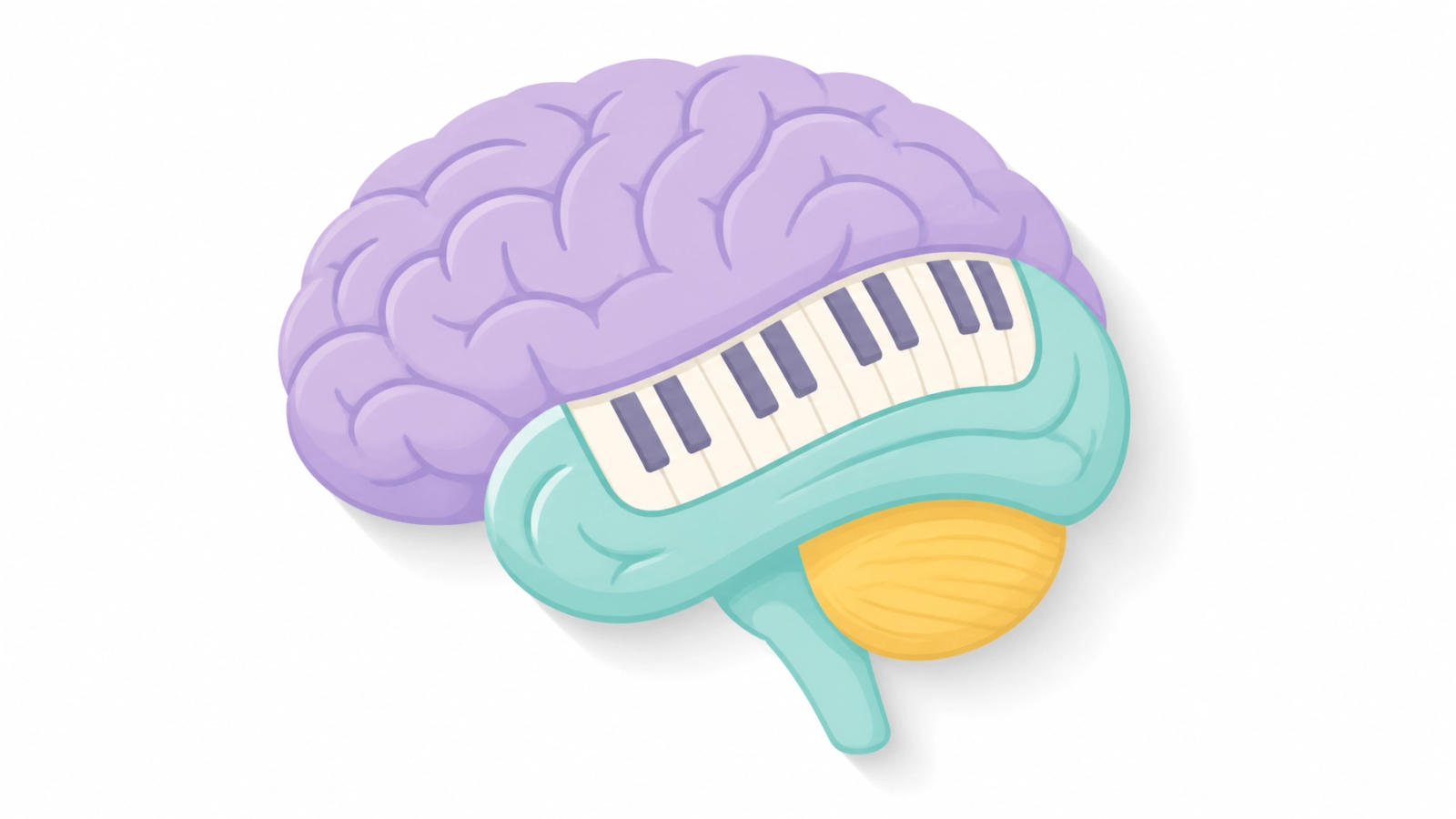
The human brain possesses an intrinsic capacity for structural reorganization in response to environmental stimuli, a phenomenon formally recognized as neuroplasticity. While various cognitive and physical activities can induce neural changes, the acquisition of musical skills, specifically through beginner piano lessons, serves as one of the most potent catalysts for cortical remodeling. Research in neuroscience demonstrates that the complex demands of piano performance: requiring simultaneous auditory processing, fine motor control, and visual translation: trigger measurable changes in the architecture of the cerebral cortex. This article examines the evidence-based structural transformations that occur within the brain during the initial stages of musical training.
The Physiological Response to Initial Piano Exposure
Traditional views of neuroplasticity often suggested that structural changes required years of intensive practice. However, contemporary neuroimaging studies have revealed that the brain begins to remodel itself almost immediately upon the introduction of new musical tasks. A study by Tavor et al. (2020) utilized diffusion MRI to observe novices before and after as few as two 45-minute piano sessions. The researchers identified a reduction in mean diffusivity within the left premotor cortex and the bilateral superior cerebellum after the very first lesson. These findings indicate rapid microstructural organization within regions responsible for motor planning and temporal precision.

For residents seeking piano lessons Ottawa, this rapid remodeling underscores the importance of high-quality instruction from the onset. When a student engages in beginner piano lessons, they are not merely learning a hobby; they are initiating a biological shift. This process, often referred to as an expansion phase, involves the recruitment of a broader pool of neural circuits to manage the cognitive load of translating musical notation into physical movement. Over time, as proficiency increases, the brain undergoes a renormalization phase, where these circuits become more efficient and refined.
Auditory Cortical Thickness and Pitch Discrimination
One of the most significant areas of structural change is the auditory cortex, specifically Heschl’s gyrus. This region is the primary site for processing acoustic information. A randomized controlled trial published in PubMed examined 134 musically naïve older adults over a six-month period of piano training. The results showed a significant increase in cortical thickness in the left Heschl’s gyrus and the bilateral superior temporal sulcus compared to a control group that focused on music listening without performance.
The increase in cortical thickness represents an enrichment of the neuropil, including neurons, glia, and dendritic branching. This structural enhancement directly correlates with improved speech-in-noise perception and fine pitch discrimination. These benefits are not exclusive to seniors; similar patterns are observed in kids music lessons Ottawa, where early exposure to structured sound helps accelerate the maturation of the auditory system.

The pedagogical approach at Allegro Ma Non Troppo emphasizes this auditory-motor feedback loop. Whether a student is involved in online flute lessons or online clarinet lessons, the brain must constantly compare the intended sound with the produced sound, a process that relies heavily on the structural integrity of the temporal lobes. This rigorous auditory training is a cornerstone of our music lessons Ottawa.
Bimanual Coordination and Structural Connectivity of the Corpus Callosum
The piano is unique among many instruments because it requires high levels of independent yet coordinated movement of both hands. This bimanual requirement places immense demand on the corpus callosum, the primary white-matter tract that facilitates communication between the left and right hemispheres of the brain. Longitudinal studies, including those conducted by researchers at Harvard and Boston-based institutions, followed children for 15 months of keyboard instruction and found significant structural changes in the corpus callosum compared to non-musical control groups.
These changes in white-matter integrity, characterized by increased fractional anisotropy, suggest more efficient interhemispheric transfer of information. This connectivity is vital not only for piano but also for other instruments offered in our studio, such as ukulele lessons Ottawa and flute lessons Ottawa. The ability to synchronize diverse motor outputs is a transferable skill that improves general executive function and motor control.
- Increased gray matter density in the primary motor cortex.
- Enhanced myelination of the corticospinal tract.
- Accelerated maturation of prefrontal and parietal cortices.
- Improved synchronization of neural firing across hemispheres.
Multi-Sensory Integration in Beginner Piano Instruction
Learning to play the piano involves a complex mapping of visual symbols to physical actions and auditory results. This multi-sensory integration is a key driver of plasticity in the parietal cortex, which acts as a hub for combining sensory data. When students engage in music theory lessons online, they are building the cognitive framework necessary to decode these symbols efficiently.
The integration of visual and motor systems is particularly evident in the lingual gyrus, a region of the brain involved in score reading. Studies have shown that even after two sessions of piano training, there is increased microstructural organization in this area. This suggests that the brain is rapidly creating a somatosensory map that links the sight of a note on a page to a specific finger movement on the keyboard. This high-level cognitive processing is enhanced further in our bilingual music lessons, where students process instruction in two languages, potentially increasing their cognitive reserve.

Implications for Academic and Executive Function
The structural changes induced by piano training often extend beyond the music room. By strengthening the prefrontal cortex, music lessons help improve executive functions such as working memory, cognitive flexibility, and inhibitory control. These are the same neural pathways used for logical-mathematical reasoning and complex problem-solving.
In a community-focused environment like Ottawa, providing access to music lessons Ottawa ensures that both children and adults have the opportunity to optimize their neural connectivity. The structured nature of our curriculum, which includes 30, 45, and 60-minute sessions, allows for the consistent, repetitive stimulation required to move from the expansion phase of plasticity to the more permanent renormalization phase.
The logistical flexibility of our studio also addresses potential barriers to learning. By offering both in-person and online options, we ensure that the environmental conditions are conducive to the deep focus required for cortical remodeling. Our Family Plan further supports this by encouraging multi-member participation, which can foster a supportive home environment for sustained musical practice.
- 30 Minute Lessons: Recommended for young beginners to maintain high levels of focused attention.
- 45 Minute Lessons: Ideal for intermediate students developing complex motor pathways.
- 60 Minute Lessons: Best for advanced students and adults seeking intensive neural stimulation.
Through evidence-based pedagogy and personalized instruction, Allegro Ma Non Troppo facilitates the structural brain changes that lead to lifelong cognitive benefits. The science is clear: the beginner piano experience is a transformative neurological event that reshapes the cerebral cortex, providing a foundation for enhanced auditory processing, motor coordination, and executive function.
Leave A Comment