
 Cart is empty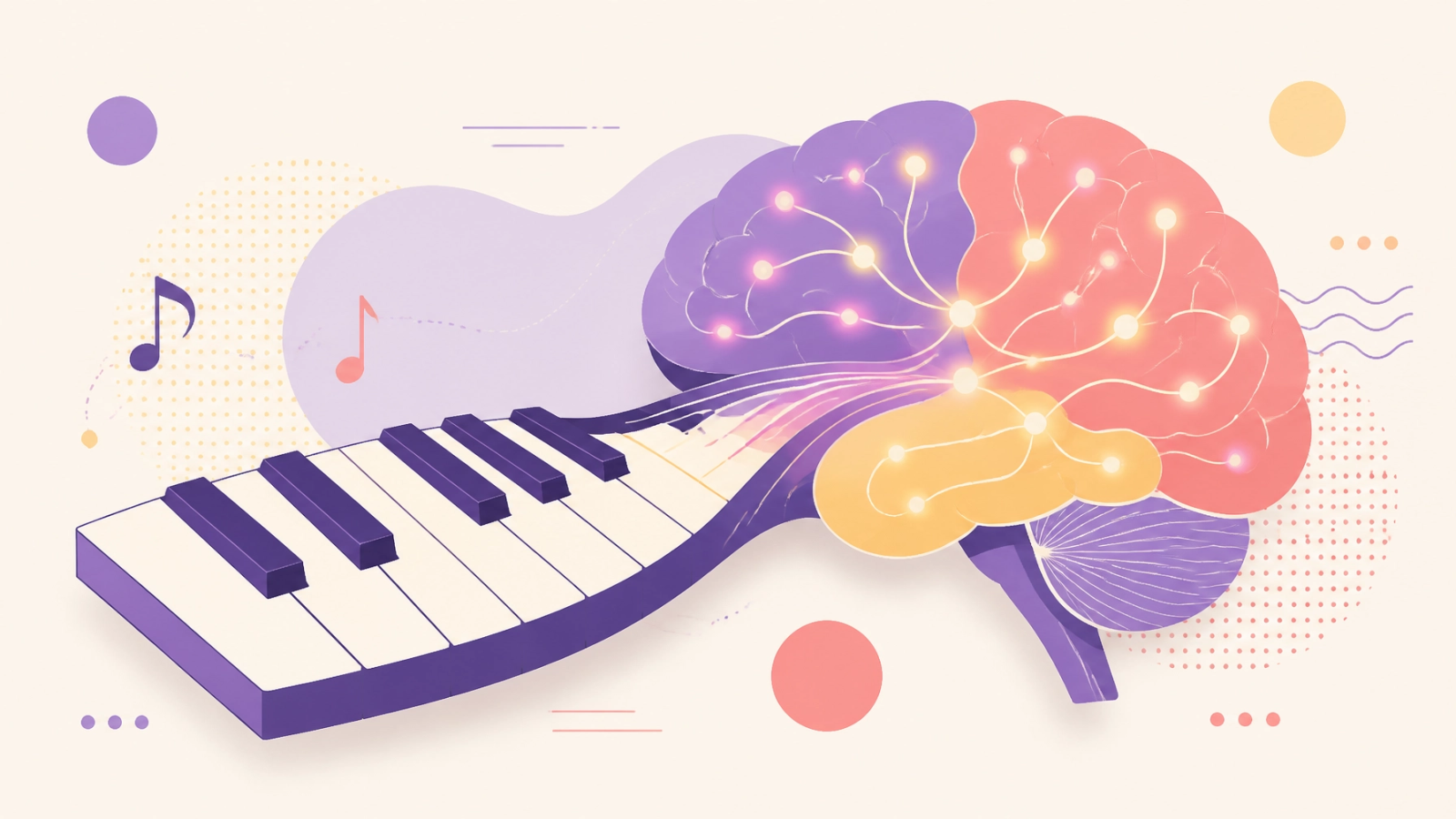
The initiation of musical training, specifically through beginner piano lessons, serves as a significant catalyst for neuroplasticity within the human brain. While historically much focus has been placed on the brains of professional virtuosos, contemporary neuroscience has shifted its gaze toward the initial stages of learning. Research indicates that the transition from a non-musician to a novice involves rapid and measurable structural remodeling of the cerebral cortex. This process, driven by the intense multisensory and motor demands of piano performance, enhances cognitive function through the optimization of neural circuitry.
Understanding these changes requires an examination of the brain through the lens of experience-dependent plasticity. When you engage with a musical instrument, the brain does not merely activate existing pathways; it physically alters its architecture to accommodate new specialized skills. This article explores the scientific evidence supporting cortical structural changes during the early phases of piano instruction and their broader implications for cognitive development.
Rapid Functional Reorganization in the Early Stages
The cerebral cortex demonstrates a remarkable capacity for change even within the first weeks of training. Research utilizing magnetoencephalography (MEG) has identified functional reorganization in the auditory cortex after only brief periods of exposure to musical stimuli. A study by Lappe et al. (2008) demonstrated that non-musicians who underwent short-term musical training showed significantly enhanced mismatch negativity (MMN) responses. This suggests that the auditory cortex becomes rapidly tuned to detect minute differences in pitch and melodic contour, reflecting a sharpening of auditory representations before long-term structural changes are fully realized.
This initial phase is characterized by the strengthening of existing synaptic connections and the recruitment of additional neurons to process complex musical information. For those pursuing piano lessons in Ottawa or online, this means that the cognitive benefits of music begin to manifest almost immediately. The brain prioritizes the processing of relevant musical features, laying the foundation for more permanent structural modifications.

Structural Remodeling of the Motor and Auditory Cortex
As training progresses from weeks into months, the brain undergoes more profound structural changes. Longitudinal MRI studies have provided clear evidence of increased cortical thickness and grey matter volume in specific regions associated with piano playing. One of the most cited studies in this field, conducted by Hyde et al. (2009), followed children who received 15 months of instrumental instruction. The results revealed significant structural growth in the primary motor cortex, the premotor cortex, and the superior temporal gyrus: the primary site of auditory processing.
These structural adaptations are directly correlated with the specific demands of the piano. The requirement for independent finger movement and complex bimanual coordination necessitates a reorganization of the motor homunculus. The regions of the cortex responsible for controlling the hands and fingers expand and become more densely interconnected. This anatomical shift is not limited to children; a 2022 study published in the Annals of the New York Academy of Sciences reported similar increases in cortical thickness in older adults who began learning an instrument late in life. This reinforces the conclusion that beginner piano lessons are a potent stimulator of cortical plasticity across the entire lifespan.
Multimodal Integration and White-Matter Connectivity
Piano performance is inherently a multimodal task, requiring the simultaneous integration of visual, auditory, and somatosensory information. You must read notation (visual), translate it into precise motor actions (somatosensory/motor), and monitor the resulting sound (auditory). This complex interaction necessitates robust communication between distant cortical regions.
Neuroimaging research has shown that musical training strengthens the white-matter tracts that facilitate this communication. The corpus callosum, the large bundle of nerve fibers connecting the left and right hemispheres, often shows increased volume in individuals who practice piano. This enhancement supports better interhemispheric transfer of information, which is critical for the bimanual coordination required to play separate parts with the left and right hands. Furthermore, frontotemporal networks involved in auditory-motor integration and sequencing show increased connectivity, allowing for more efficient execution of musical tasks.

Cognitive Benefits and Executive Function
The structural changes observed in the motor and auditory cortices have significant carryover effects on general cognitive function. The intense focus and discipline required for piano practice engage high-level executive functions, which are governed primarily by the prefrontal cortex. These functions include working memory, cognitive flexibility, and inhibitory control.
Research suggests that the neural plasticity induced by beginner piano lessons extends to the frontoparietal control networks. Longitudinal studies have shown that students enrolled in regular music lessons demonstrate improved academic performance, particularly in areas requiring spatial-temporal reasoning and mathematical logic. By refining the brain's ability to process sequences and patterns, music theory lessons online and practical instrument training provide a scaffolding for broader intellectual growth. These benefits are particularly pronounced in children, where musical training can influence the developmental trajectory of executive functions, but they remain relevant for adults seeking to maintain cognitive reserve.
Specialized Support and Accessibility in Ottawa
At Allegro Ma Non Troppo, we facilitate these neurological developments through a pedagogical approach that is grounded in expert instruction and scientific understanding. Our programs are designed to optimize the learning experience by providing personalized support that aligns with the brain's natural plastic processes. We offer a variety of options to suit diverse needs, including:
- Piano lessons in Ottawa at our specialized studio.
- Online piano lessons for those who prefer the environmental advantages of learning from home.
- Specialized music theory lessons online to enhance logical-mathematical reasoning.
- Support for other instruments including online flute lessons and online clarinet lessons.
- Bilingual instruction in English and Spanish to further stimulate cognitive flexibility.
Our teaching staff consists of Master-level educators who understand how to structure lessons to promote efficient neural adaptation. We emphasize a fun and personalized approach, ensuring that students remain engaged, which is a critical factor in driving neuroplastic change.
Logistics and Enrollment Information
We believe that high-quality music education should be accessible and transparent. Our flexible scheduling and pricing structures are designed to accommodate the needs of busy families and individuals. We offer lessons in 30, 45, and 60-minute increments to match the attention span and goals of the student.
Our current pricing and discount structures are as follows:
- Individual lessons are priced competitively based on duration.
- Lesson bundles offer significant savings for committed students.
- The Family Plan provides a discount for 3 or more members, making it easier for families to learn together.
- We offer a free trial lesson to allow you to experience our teaching methodology without initial commitment.
The comfort and flexibility of our online platform address common pain points such as travel time and scheduling conflicts, allowing for a more consistent practice routine, which is essential for achieving the cortical structural changes discussed.

Summary of Findings
The evidence from neuroscience is definitive: beginner piano lessons trigger a complex cascade of structural and functional changes in the brain. From the rapid functional tuning of the auditory cortex to the long-term structural remodeling of the motor and associative regions, music training is one of the most effective ways to enhance neural connectivity and cognitive function. Whether you are looking for kids music lessons Ottawa or are an adult seeking a new cognitive challenge, the benefits of piano training are supported by rigorous scientific data.
By choosing a professional environment like Allegro Ma Non Troppo, you ensure that your musical journey is guided by expertise and a commitment to excellence in music education.
Leave A Comment