
 Cart is empty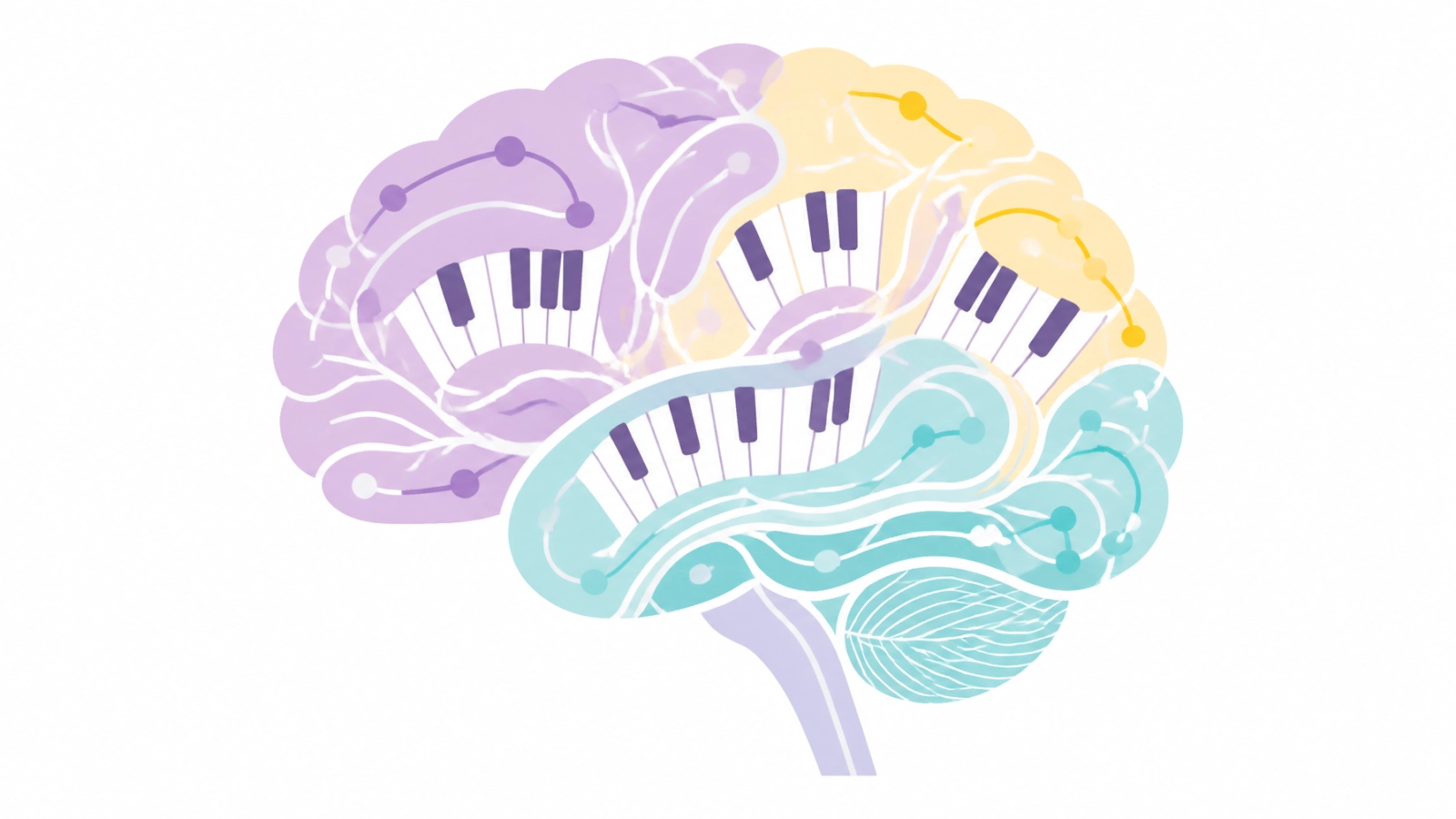
The human brain is characterized by its remarkable capacity for structural and functional reorganization in response to environmental stimuli, a phenomenon known as neuroplasticity. When you engage in beginner piano lessons, you are not merely acquiring a recreational skill; you are initiating a complex sequence of neurological adaptations within the cerebral cortex. Recent longitudinal research from institutions such as Harvard and MIT has demonstrated that even short-term instrumental training can lead to measurable changes in the density of grey and white matter.
This article examines the scientific underpinnings of how piano training serves as a catalyst for cortical development. By analyzing the intersection of motor control, auditory processing, and executive function, you will gain a deeper understanding of the biological transformations occurring within your central nervous system during the early stages of musical instruction.
The Motor Cortex and Precision Kinematics

The primary motor cortex, located in the precentral gyrus, is responsible for the execution of voluntary movements. Piano performance requires an unprecedented level of fine motor coordination and finger independence. As you practice five-finger patterns and scales, your brain undergoes a process of cortical map expansion.
Research has shown that daily practice of simple one-hand exercises leads to an enlargement of the cortical areas controlling the flexor and extensor muscles of the fingers. This expansion is not merely temporary; it reflects a functional reorganization where more neurons are recruited to manage the precision required for keyboard navigation.
- The somatosensory cortex also adapts, providing enhanced tactile feedback from your fingertips to the brain.
- This increased neural efficiency allows for the transition from conscious, effortful movement to automatism.
- Mastery of these motor sequences is essential for advancing to more complex repertoire in piano lessons Ottawa.
Auditory Processing and the Temporal Lobe

Your ability to perceive and interpret sound is rooted in the temporal lobe, specifically within Heschl’s gyrus. Beginner piano lessons require you to constantly monitor pitch, rhythm, and timbre, which sharpens your auditory processing capabilities.
Studies utilizing electrophysiology have identified that pianists exhibit approximately 25 percent greater cortical activation for piano tones compared to non-musicians. This heightened sensitivity is a result of neural plasticity; the brain prioritizes resources for sounds that have gained behavioral relevance through training. This effect is particularly pronounced when instruction begins during sensitive periods of development, often addressed in kids music lessons Ottawa.
- Passive listening does not produce the same cortical reorganization as active playing.
- Training enhances mismatch negativity responses, a neurological marker of auditory discrimination.
- Improved frequency perception often translates to better speech processing and linguistic syntax recognition.
Strengthening Interhemispheric Connectivity through the Corpus Callosum

The piano is uniquely demanding because it necessitates the simultaneous use of both hands, often performing independent rhythmic and melodic lines. This bimanual coordination is facilitated by the corpus callosum, the primary white-matter tract connecting the left and right hemispheres of the brain.
Longitudinal imaging has revealed that individuals who undergo consistent musical training show increased white-matter volume in the anterior segments of the corpus callosum. This structural change optimizes the speed of interhemispheric communication, allowing for the seamless integration of motor commands and sensory feedback across both sides of the body.
- Enhanced connectivity between the motor regions of each hemisphere supports superior bimanual dexterity.
- These adaptations are observable even in adult learners, though the magnitude of change is often higher in younger students.
- Integrated music theory lessons provide the cognitive scaffolding necessary to support this physical coordination.
Executive Function and the Prefrontal Cortex

Executive functions, including working memory, cognitive flexibility, and inhibitory control, are governed by the prefrontal cortex. Learning the piano is a high-level cognitive task that requires you to decode musical notation, maintain tempo, and plan upcoming movements simultaneously.
This multimodal integration forces the prefrontal cortex to operate at high efficiency. Over time, the cognitive load required for these tasks strengthens the neural pathways associated with attention and impulse control. This is one reason why beginner piano lessons are often recommended for improving academic performance and focus in both children and adults.
- Piano training requires constant error monitoring and correction, which activates the anterior cingulate cortex.
- The demand for sustained attention during practice sessions builds cognitive reserve.
- These benefits extend to other instruments, such as those taught in online flute lessons or online clarinet lessons, due to the shared neural requirements of musical discipline.
Structural Plasticity: Grey and White Matter Density
The macroscopic changes in the brain resulting from piano training involve both grey matter (the cell bodies of neurons) and white matter (the axonal connections between them). In the primary motor and somatosensory regions, pianists show greater grey matter volume, reflecting a denser network of local connections.
White matter integrity is also significantly affected. Studies using diffusion tensor imaging (DTI) have shown higher fractional anisotropy in the internal capsule and other motor-related tracts of pianists. This indicates a more organized and myelinated structural network, which results in faster and more efficient neural transmission. For older adults, these structural changes can even stabilize the fornix: a critical memory-related tract: potentially delaying age-related cognitive decline.
The Pedagogical Approach at Allegro Ma Non Troppo
Allegro Ma Non Troppo provides an environment designed to optimize these neurological outcomes. Our instructors, holding Master-level qualifications, utilize evidence-based pedagogical models to ensure that each student receives the appropriate level of challenge and support. We offer bilingual instruction in English and Spanish, which further enhances cognitive flexibility through the mechanism of linguistic transfer.
Whether you are seeking music lessons Ottawa at our local studio or prefer the flexibility of online lessons, our curriculum is structured to maximize cortical development. We offer flexible scheduling and lesson bundles designed to provide the consistency required for neural reorganization.
- Trial Lesson: 30 minutes for $0 (Regularly $35)
- 30 Minute Lessons: Recommended for young beginners focusing on foundational motor skills.
- 45 Minute Lessons: Ideal for intermediate students developing complex coordination.
- 60 Minute Lessons: Best for advanced study and deep cognitive engagement.
- Family Plan: Savings for 3 or more members, encouraging community-based learning.
Our Ottawa studio serves as a hub for musical excellence, providing specialized support for school band students and offering ukulele lessons Ottawa alongside our core woodwind and piano offerings. The integration of performance opportunities and workshops ensures that the sensory-motor skills developed in practice are tested in real-world scenarios, further solidifying the neural pathways you have built.
Leave A Comment