
 Cart is empty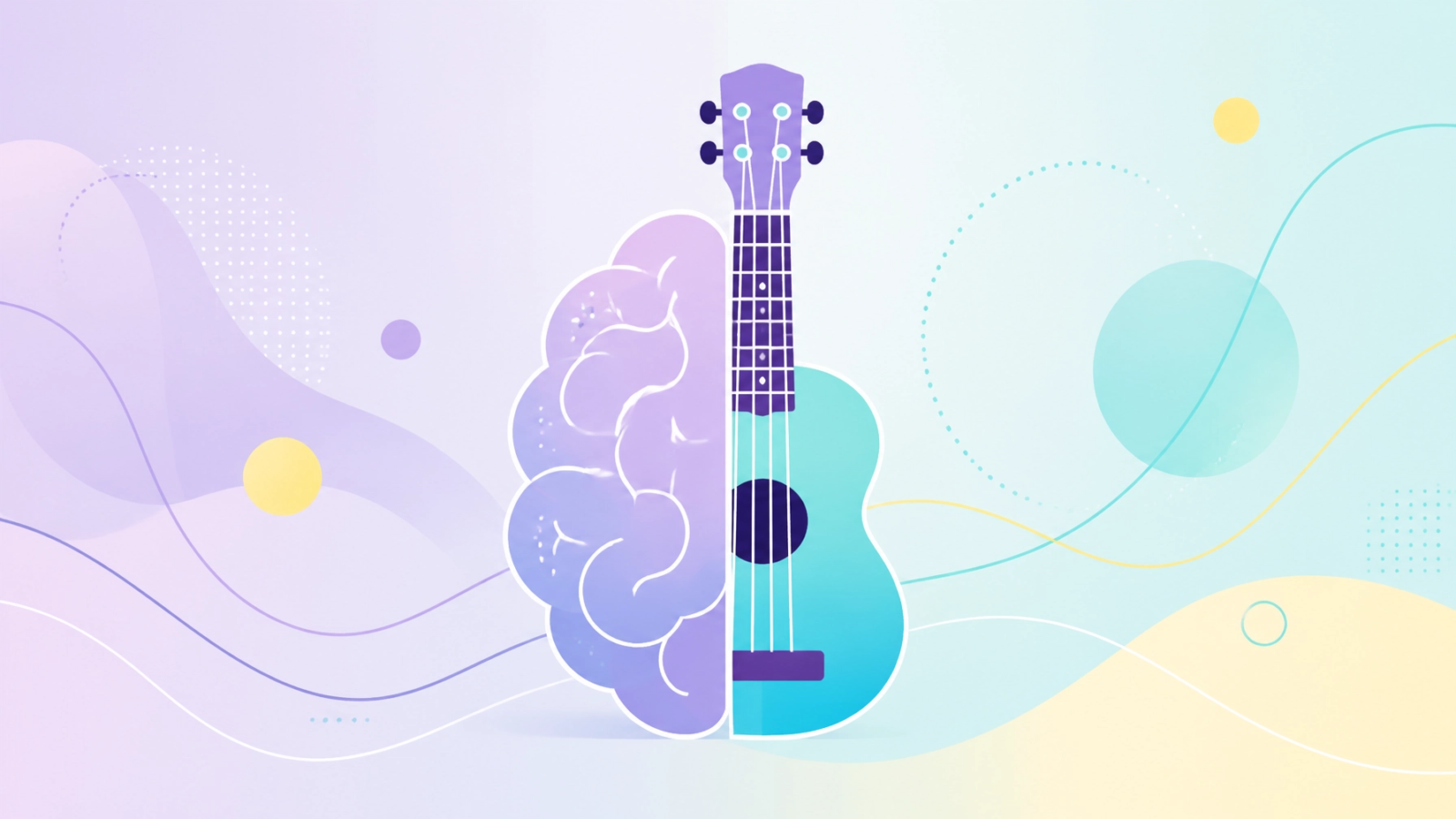
Neural plasticity, or neuroplasticity, refers to the physiological capacity of the nervous system to alter its structure and function in response to environmental stimuli and experiential learning. While often associated with recovery from injury, this process is the foundational mechanism for skill acquisition and cognitive development. In the context of musical training, the brain undergoes significant cortical reorganization, particularly when engaging with an instrument as physically and cognitively demanding as the ukulele.
As the first installment of the Music & Neuroscience Science Expansion Series, this article examines the empirical evidence regarding how ukulele lessons Ottawa facilitate specialized neural adaptations. By integrating auditory, motor, and visual inputs, students participate in a high-intensity cognitive exercise that reshapes the brain's architecture across the lifespan.
Multisensory-Motor Integration and Cortical Reorganization

The primary driver of neural change during ukulele practice is the requirement for precise multisensory-motor integration. When you play a chord, your brain must simultaneously process visual symbols from notation or music theory lessons online, execute complex motor sequences in the left-hand fingers, and monitor the resulting auditory output for pitch and rhythmic accuracy.
Research led by neuroscientists such as Gottfried Schlaug has demonstrated that musicians often exhibit increased gray matter volume in the primary motor cortex and the cerebellum. This is a direct result of the continuous feedback loop between motor intention and auditory result. In ukulele training, the specific demands of bimanual coordination: where the left hand manages fretting and the right hand controls strumming or plucking: force the motor cortex to create more robust neural representations. Over time, these pathways undergo myelination, a process that increases the speed and efficiency of neural signal transmission, leading to what is commonly known as muscle memory.
Auditory Processing and Timbre-Specific Tuning

The auditory cortex undergoes significant functional refinement through musical training. Studies indicate that the brain's response to sound is not generic; rather, it becomes highly specialized to the timbre of the instrument being studied. Electrophysiological research suggests that long-term musical practice enhances the neural encoding of pitch and timing.
For individuals enrolled in online music lessons or studio-based programs, this translates to heightened auditory discrimination. The brain learns to filter background noise more effectively and identifies subtle variations in frequency and rhythm. This auditory plasticity has been shown to provide cross-domain benefits, improving speech perception and language processing, particularly in children whose brains are in a state of rapid developmental flux.
Enhancement of Executive Function and Cognitive Flexibility

Executive function encompasses a set of cognitive processes including working memory, attentional control, and cognitive flexibility. Learning the ukulele requires the constant application of these functions. For instance, transitioning between a C major chord and a G7 chord necessitates rapid motor planning and the inhibition of previous finger positions.
A randomized controlled trial involving the ukulele demonstrated significant improvements in cognitive flexibility and reduced anxiety in participants with neurological conditions. The study observed that active participation in learning the instrument provided a level of cognitive engagement that surpassed passive music listening. This suggests that the act of learning: scaffolding new skills upon existing ones: is the catalyst for neuroplastic change. By constantly challenging the brain with new repertoire and technical exercises, students maintain a high level of neural engagement that supports long-term brain health and academic performance.
Interhemispheric Coordination and the Corpus Callosum

The coordination required to play string instruments facilitates communication between the left and right hemispheres of the brain. This communication is mediated by the corpus callosum, a large bundle of nerve fibers. Peer-reviewed studies have consistently found that musicians who begin training at a young age possess a larger and more developed corpus callosum than non-musicians.
This structural difference is attributed to the necessity of bimanual synchronization. On the ukulele, the left and right hands must work in perfect temporal harmony while performing entirely different tasks. This bilateral integration is not only essential for musical proficiency but also enhances general processing speed and motor control. Whether you are pursuing flute lessons or clarinet lessons, the brain-wide benefits of instrumental study are rooted in this fundamental neural connectivity.
Scientific Pedagogy and Instructional Logistics
Allegro Ma Non Troppo provides an instructional environment designed to maximize these neuroplastic benefits. Our curriculum is evidence-based, focusing on a structured progression that ensures cognitive load is managed effectively through pedagogical scaffolding. Lessons are available in person at our Ottawa studio or through our digital platform for those preferring a remote environment.
Our commitment to accessibility and expert instruction is reflected in our logistics:
- Bilingual Instruction: Available in both English and Spanish to accommodate the diverse linguistic needs of the community.
- Flexible Scheduling: Sessions are offered in 30, 45, and 60-minute durations to fit varying attention spans and schedules.
- Specialized Support: Instruction tailored for school band students to supplement institutional music programs.
- Trial Accessibility: Every new student is eligible for a free trial lesson to assess the instructional fit.
Pricing transparency is a priority for our families. We offer competitive rates with strategic savings for long-term commitment:
- Single Lesson (Trial):
$35.00$0.00 - Bundle of 4 Lessons (30 min): $140.00
- Bundle of 10 Lessons (30 min):
$350.00$315.00 (10% discount) - Family Plan: 15% discount for families with 3 or more members enrolled.
The environmental advantages of our Ottawa studio include a controlled, distraction-free space optimized for auditory focus. Conversely, our online lessons provide the benefit of a familiar home environment, which can lower the threshold for cognitive fatigue and allow for more frequent, shorter practice sessions that are highly effective for consolidating neural pathways.
Leave A Comment