
 Cart is empty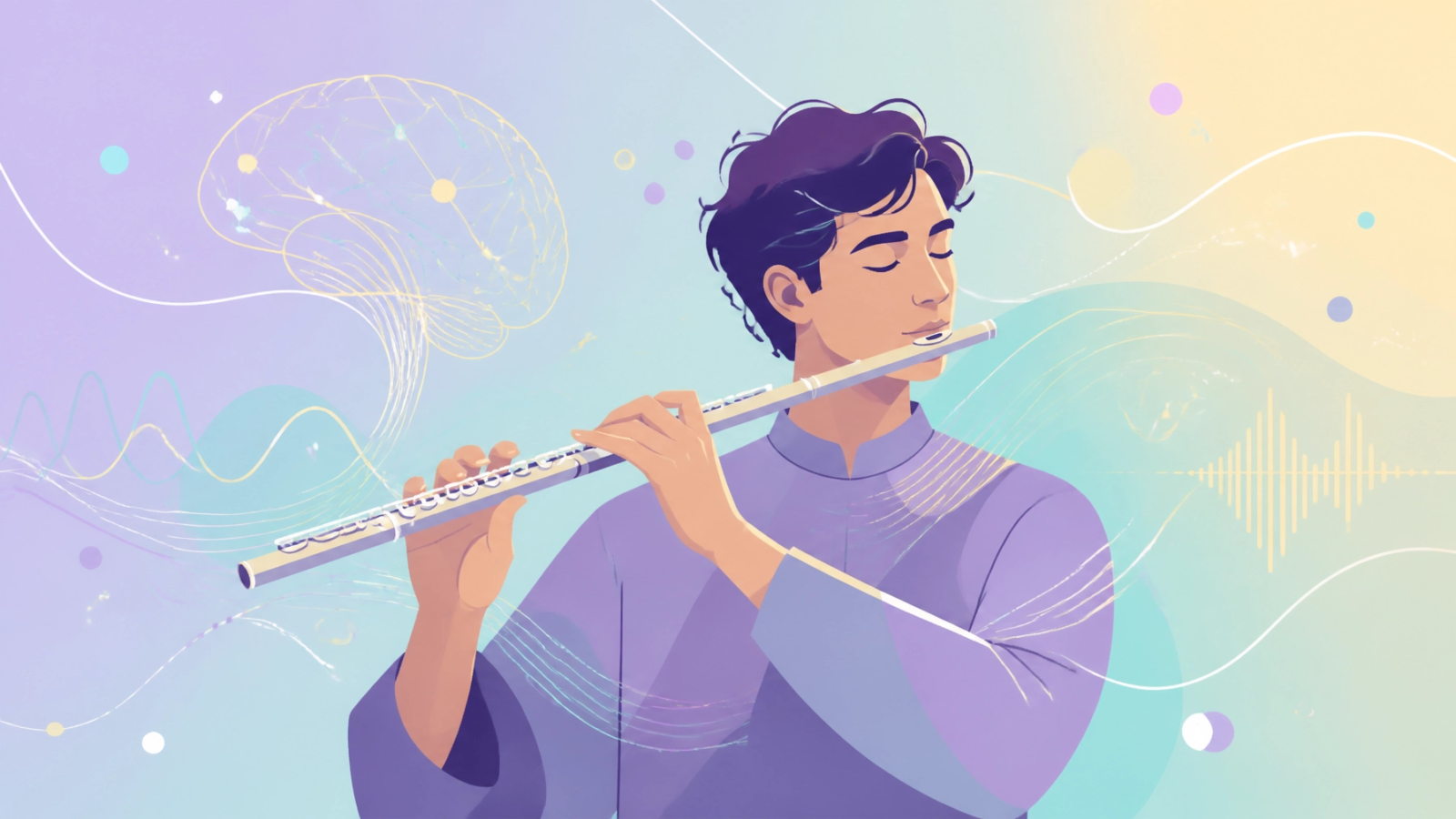
The acquisition of musical expertise is often viewed through the lens of auditory processing and cognitive memory. However, the physiological foundation of high-level performance rests upon a less conspicuous faculty: the quiet sense. This term encompasses proprioception: the awareness of the position and movement of the body: and interoception: the perception of internal physiological states. To master an instrument is to refine these sensory systems until the boundary between the musician and the apparatus dissolves into a seamless feedback loop.
In this final installment of our Science Expansion Series, we examine the neuroscientific mechanisms of biofeedback and proprioception. By understanding how the brain maps the body in space, you can leverage evidence-based strategies to accelerate motor learning and achieve a higher state of technical resonance.
The Neurobiology of Proprioception in Musicians
Proprioception is the product of sensory input from mechanoreceptors located in muscles, tendons, and joints. These receptors provide the central nervous system with constant data regarding limb position and force. For a student engaged in ukulele lessons Ottawa, this system allows the fingers to find a chord shape without visual confirmation.
Research by Rosenkranz et al. (2005) suggests that musical training fundamentally reorganizes the sensorimotor cortex. Their studies using transcranial magnetic stimulation (TMS) revealed that professional musicians possess more refined sensorimotor representations than non-musicians. This neuroplasticity is driven by the high-frequency repetitive movements required during practice, which effectively sharpen the brain's internal map of the fingers and hands.
The work of Altenmüller and Gruhn further highlights that this specialized somatosensory-motor integration is a hallmark of musical mastery. Their research demonstrates that expert musicians show lower tactile and proprioceptive perception thresholds. In practical terms, your brain becomes more sensitive to the minute pressures and angles of your instrument, allowing for the micro-adjustments necessary for perfect intonation and tone.

Biofeedback and the Optimization of Motor Control
Biofeedback is a therapeutic and educational technique that utilizes electronic monitoring of a physiological function to train someone to acquire voluntary control of that function. In the context of music pedagogy, biofeedback serves as a bridge between implicit bodily sensations and explicit conscious control.
Musicians often struggle with excess muscle tension, which acts as noise within the motor system, hindering fluidity and speed. Electromyography (EMG) biofeedback has been shown to be an effective tool for identifying and reducing this tension. Studies conducted by researchers such as LeVine and Irvine indicate that providing musicians with real-time auditory or visual feedback of their muscle activity leads to significant reductions in EMG levels and increased comfort.
- Musicians can use biofeedback to monitor and regulate heart rate variability, which is closely linked to performance anxiety.
- EEG neurofeedback can help students achieve an optimal state of flow by training the brain to maintain specific alpha and theta wave patterns.
- Real-time visual feedback of posture and alignment helps prevent repetitive strain injuries.
At Allegro Ma Non Troppo, we integrate these principles into our online flute lessons, where instructors guide students to observe their physical alignment and breathing patterns to ensure a tension-free performance. By making the invisible visible, biofeedback accelerates the scaffolding of complex motor skills.
Interoceptive Accuracy and Performance Regulation
Interoception is the sense of the internal state of the body, including heartbeat, respiration, and gastrointestinal sensations. While proprioception tells you where your arm is in space, interoception tells you how your body is reacting to the environment. High interoceptive accuracy: the ability to precisely perceive these internal signals: is correlated with better emotional regulation.
For the performer, interoceptive accuracy is a critical component of managing stage fright. When you perceive an increased heart rate as a signal of readiness rather than a sign of fear, you shift your physiological state into a productive harmony. Scientific literature suggests that musicians who engage in body-awareness practices, such as deep diaphragmatic breathing or mindfulness-based stress reduction, develop superior interoceptive accuracy.
This heightened awareness allows for more precise control over the autonomic nervous system. By regulating your breath and heart rate, you create a stable internal environment that supports the fine motor demands of music theory lessons online and practical performance alike.

Practical Applications for the Modern Learner
Translating these scientific insights into daily practice requires a deliberate and structured approach. Mastery is not merely the result of repetition, but the result of attentive, feedback-rich engagement with the instrument.
- Practice in front of a mirror to provide visual biofeedback on your posture and hand positions.
- Record your sessions to analyze the relationship between your physical movements and the resulting sound.
- Use slow-motion practice to increase the flow of proprioceptive input to the brain, allowing for more refined sensorimotor mapping.
- Incorporate breathing exercises before and during practice to stabilize the autonomic nervous system.
Whether you are studying at our Ottawa studio or participating in our online programs, the focus remains on developing a sophisticated level of body awareness. Our Master-level teachers are trained to identify the subtle physical cues that indicate tension or misalignment, providing the expert guidance necessary to refine your internal feedback loops.
Transparency in Learning and Logistics
At Allegro Ma Non Troppo, we believe that high-level music education should be accessible and transparent. Our logistical framework is designed to provide you with the flexibility needed to integrate music into your life, while maintaining a rigorous focus on cognitive and motor development.
- Trial Lesson: A complimentary 30-minute session to evaluate our teaching methodology.
- 30 Minute Lessons: ~~~$42.00~~~ 37.00 per lesson when purchased in a bundle.
- 45 Minute Lessons: ~~~$59.00~~~ 52.00 per lesson when purchased in a bundle.
- 60 Minute Lessons: ~~~$75.00~~~ 66.00 per lesson when purchased in a bundle.
- Family Plan: Savings are available for households with 3 or more members participating in our programs.
Our scheduling is flexible, offering both in-person and online options to accommodate your environmental needs and ensure the comfort of your learning space.

Conclusion: The Path to Resonance
The journey toward musical mastery is a continuous refinement of the senses. By leveraging the principles of proprioception and biofeedback, you transform the act of playing an instrument into a sophisticated exercise in neural plasticity and self-regulation. The quiet sense: the internal dialogue between your brain and your body: is the foundation upon which all technical proficiency and artistic expression are built.
As you conclude this Science Expansion Series, we invite you to apply these neuroscientific insights to your own musical journey. By grounding your practice in the realities of human physiology and cognitive development, you ensure that every note you play resonates with clarity and purpose.
Leave A Comment