
 Cart is empty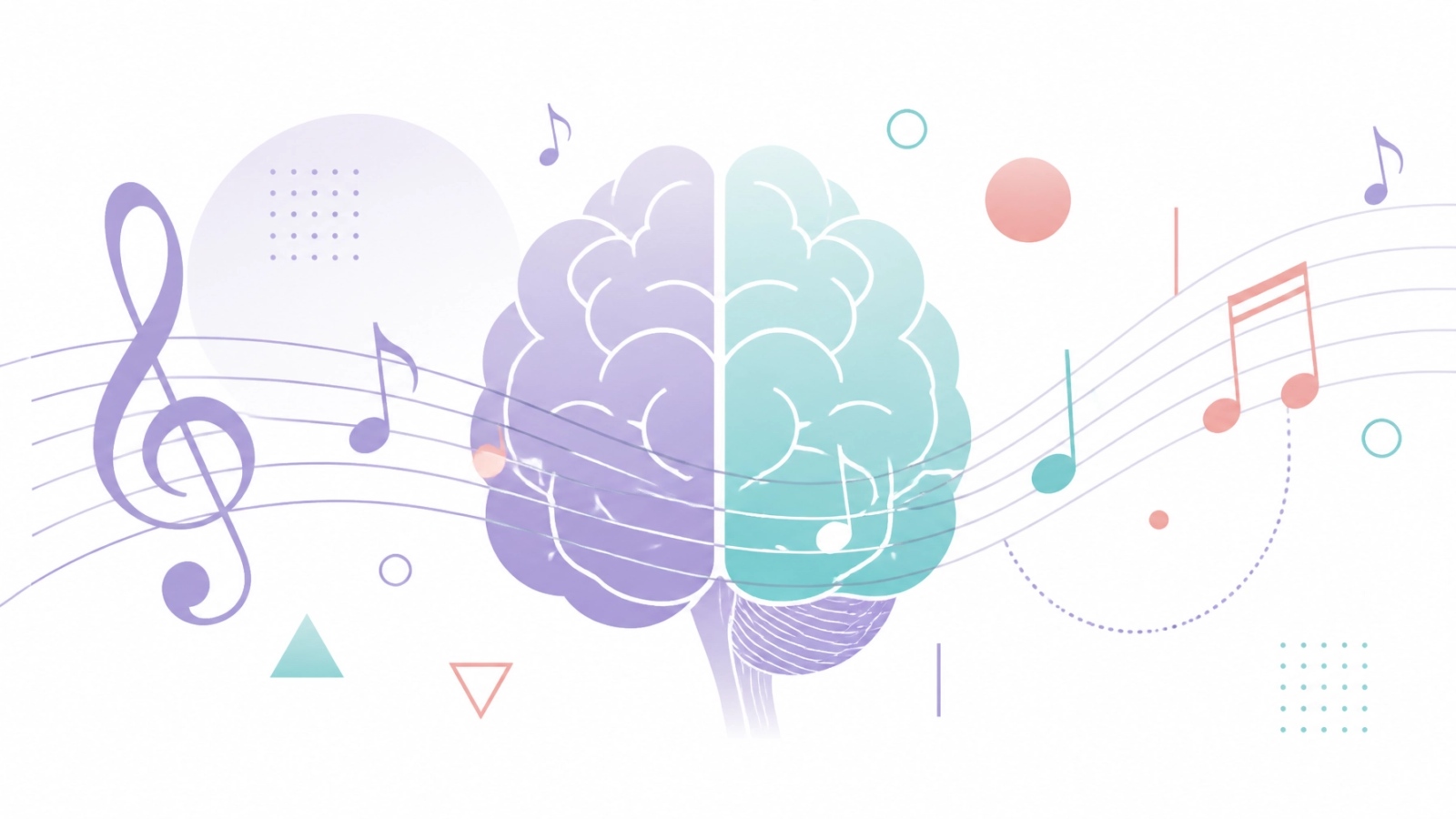
The study of music is often perceived through the lens of performance, yet the underlying cognitive mechanisms are rooted in the rigorous discipline of music theory. When you engage in harmonic analysis, you are not merely identifying chords on a page; you are participating in a complex cognitive exercise that restructures the neural pathways responsible for auditory processing and executive function. At Allegro Ma Non Troppo, our master-level instructors emphasize that understanding the internal logic of sound is essential for developing high-level musicianship and enhancing cognitive reserve.
Recent advances in neuroscience have demonstrated that the brain is highly plastic, meaning it can reorganize itself in response to intensive training. Music theory serves as a cognitive scaffolding that allows the brain to transition from passive listening to active, analytical decoding. This transformation is particularly evident in the way the auditory cortex processes frequency, timbre, and temporal patterns. By studying music theory lessons, students in Ottawa and online develop a more sophisticated auditory architecture that benefits both musical and non-musical tasks.
The Neural Mechanics of Harmonic Analysis
Harmonic analysis requires the brain to track multiple streams of information simultaneously. As you analyze a score for the flute or clarinet, your auditory system must identify the fundamental pitch of each note, recognize its harmonic relationship to the tonic, and predict the next progression based on learned tonal schemas. This process is not instantaneous; it relies on auditory short-term memory and the ability to detect statistical regularities in musical structures.
Research indicates that the brain treats harmonic surprises: such as a deceptive cadence or a sudden modulation: similarly to syntactic violations in language. When the expected resolution of a chord progression is delayed or altered, the prefrontal cortex engages in error detection and conflict monitoring. This constant cycle of expectation and resolution trains the brain to handle complex, rule-based systems. For students who choose our bilingual music lessons, this cognitive load is further enhanced as the brain navigates between English and Spanish instruction, fostering even greater neural plasticity.

Auditory Processing and Noise Robustness
One of the most significant benefits of studying music theory is the enhancement of auditory scene analysis. This is the brain’s ability to separate and identify individual sound sources within a complex acoustic environment. Individuals with advanced training in music theory often exhibit superior noise robustness, also known as the cocktail party effect. This is because the brain has been trained to focus on specific harmonic partials and timbre characteristics while inhibiting irrelevant background noise.
In a professional setting or a crowded classroom, this refined auditory processing allows for better communication and attention. By decomposing complex chords into their constituent intervals during piano lessons, students are effectively training their brains to filter and organize sound more efficiently. This skill is particularly valuable for school band students who must maintain their part while surrounded by dozens of other instruments. The theoretical understanding of how their instrument fits into the larger harmonic context provides the mental clarity needed to perform accurately under pressure.
Enhancing Executive Function and Inhibitory Control
Executive function refers to a set of cognitive processes that include working memory, cognitive flexibility, and inhibitory control. These are the "CEO" functions of the brain, located primarily in the prefrontal cortex. Harmonic analysis is an ideal exercise for these functions because it requires high-level symbolic reasoning and pattern recognition.
When analyzing a difficult passage, a student must:
- Maintain the current harmonic context in working memory while scanning ahead.
- Inhibit the impulse to play by ear, instead relying on the theoretical structure.
- Shift between different layers of analysis, such as melody, harmony, and rhythm.
- Resolve conflicts when the input does not match the expected pattern.
This mental gymnastics strengthens the same neural circuits used for mathematics, formal logic, and complex problem-solving. For adults, this keeps the brain engaged and resilient, while for teens, it provides a developmental advantage during a period of significant prefrontal cortex maturation. Our online lessons make this high-level training accessible to anyone, ensuring that the cognitive benefits of music theory can be integrated into a busy modern lifestyle.

The Overlap Between Harmonic Syntax and Language
The parallels between music theory and linguistic grammar are profound. Both systems rely on hierarchical structures and the recursive application of rules. Studies using electroencephalography (EEG) have shown that the brain processes a "grammatical" error in a musical phrase: such as a misplaced chord: in the same area that processes a grammatical error in a sentence.
This overlap suggests that training in music theory can support language skills, including vocabulary acquisition and phonological awareness. In our bilingual environment, where we offer instruction in both English and Spanish, students experience a unique form of cognitive enrichment. Navigating musical terminology in two languages reinforces the brain's ability to categorize and retrieve information, leading to improved cognitive flexibility. Whether you are a beginner or an intermediate learner, this structured approach ensures that you are building a robust foundation for both musical and linguistic fluency.

Structured Learning and Cognitive Scaffolding
Effective music education is built on the principle of instructional scaffolding. This involves providing structured support that is gradually removed as the learner gains independence. Our Master-level teachers at Allegro Ma Non Troppo utilize this pedagogical approach to ensure that complex theoretical concepts are broken down into manageable, data-driven units.
We prioritize a personalized experience that respects the tastes and goals of each individual while maintaining a high standard of academic excellence. Our Ottawa studio and online platforms provide an optimal environment for this focused work, offering the comfort and flexibility necessary for deep cognitive engagement. By focusing on the structural and cognitive aspects of music, we move beyond superficial learning to provide a truly transformative educational experience.
Program Logistics and Professional Enrollment
Allegro Ma Non Troppo provides transparent pricing and flexible scheduling to accommodate the needs of serious students and families. We believe that professional music education should be accessible and clearly structured.
- Free Trial Lesson: We offer an initial consultation at no cost to ensure a proper fit between student and instructor.
- Individual Lesson Options: Choose from 30, 45, or 60 minute sessions depending on the depth of study required.
- Lesson Bundles: We provide discounts on bundled sessions to encourage consistent, long-term progress.
- Family Plan: For families with 3 or more members enrolled, we offer specialized savings to support community-wide learning.
- Specialized Support: We provide targeted assistance for students in school bands, focusing on both performance and theory requirements.
Our instruction is available in-person at our Ottawa studio or through our highly effective online platform. All lessons are taught by expert, Master-level teachers who are dedicated to your cognitive and musical development.

The integration of harmonic analysis into your musical practice is more than a requirement for examinations; it is a gateway to a more efficient and capable brain. By engaging with the fundamental structures of music, you are refining your auditory processing, strengthening your executive functions, and building a cognitive architecture that will serve you throughout your life.
Leave A Comment