
 Cart is empty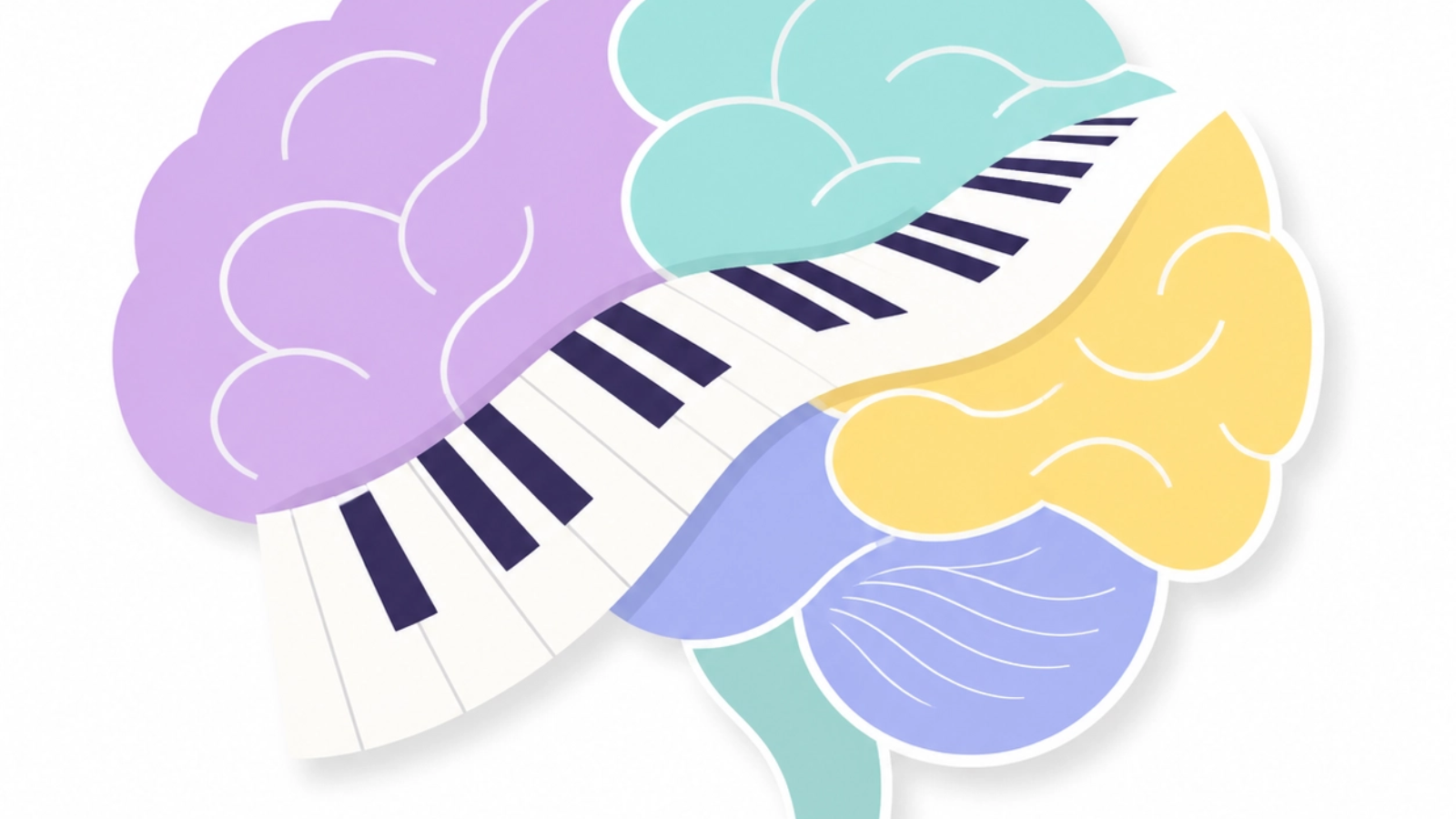
The ability to translate a complex set of visual symbols into precise motor movements in real time is one of the most cognitively demanding tasks a human can perform. For those pursuing piano lessons Ottawa, understanding the underlying neural mechanisms of sight-reading provides a framework for more efficient practice and long-term skill acquisition. Scientific research into the neuroscience of music reveals that expert sight-reading is not merely a talent but a result of systematic neural plasticity and the integration of multiple cortical networks.
Neural Specialization and the Music Reading Network
Research utilizing Positron Emission Tomography (PET) and Functional Magnetic Resonance Imaging (fMRI) has demonstrated that the brain processes musical notation through a distributed cortical network that is distinct from the networks used for verbal reading. While language processing primarily engages the left hemisphere’s temporal and frontal regions, music reading recruits a specialized mosaic of areas across both hemispheres, including the occipital, parietal, and frontal cortices.
Studies of professional pianists indicate that the translation of notation into movement involves the dorsal stream of visual processing, which is responsible for spatial awareness and the mapping of visual stimuli to motor actions. This specialization is so distinct that clinical cases of alexia without amusia have been documented, where individuals lose the ability to read words but retain the ability to read musical scores. This neurological independence underscores the value of structured music lessons Ottawa for developing unique cognitive pathways.
The Eye-Hand Span and Visual Anticipation
One of the most significant indicators of expertise in piano performance is the eye-hand span (EHS). This metric refers to the temporal or spatial distance between the notes the eyes are currently fixating on and the notes the hands are currently playing. While a novice pianist typically fixates on the notes they are playing at that exact moment, expert pianists maintain an anticipatory span.

Peer-reviewed eye-tracking studies suggest the following regarding EHS:
- Expert pianists generally maintain an EHS of 6 to 7 notes, whereas beginners average 3 to 4 notes.
- The EHS is a flexible strategy rather than a fixed capacity; it expands during simpler passages and contracts during high-density, complex musical sections.
- Expert readers utilize fewer and shorter fixations, performing rapid zigzag eye movements to sample both the treble and bass staves efficiently.
- Professional sight-readers process notation in chunks or patterns rather than individual notes, allowing them to predict upcoming harmonic progressions.
This anticipatory processing allows the brain to prepare motor programs in advance, reducing the cognitive load during performance and ensuring a fluid execution of the music.
Motor Planning and Executive Function
Once visual information is parsed, the brain must convert these symbols into precise motor commands. This process involves the pre-motor cortex and the supplementary motor area, which are responsible for sequencing and timing. In expert pianists, the cerebellum plays a crucial role in the automation of these sequences, allowing for high-velocity execution with minimal conscious effort.

The motor system must manage bimanual coordination, which requires the inhibition of mirror movements and the development of independent control for each hand. Neural plasticity resulting from years of practice leads to an increase in the volume of the corpus callosum, the white matter tract that connects the two hemispheres, facilitating faster communication between the motor regions controlling the left and right hands.
For students enrolled in piano lessons Ottawa, this motor development is scaffolded through technical exercises and repertoire that gradually increase in complexity. This progression ensures that the motor programs become deeply encoded, freeing up executive function for higher-level interpretative decisions.
Auditory-Motor Integration and Predictive Processing
A critical component of expert sight-reading is the link between the visual score and auditory imagery. Expert musicians often report hearing the music in their “mind’s ear” before the keys are even pressed. This phenomenon, known as auditory-motor integration, involves the co-activation of the auditory cortex and the motor systems.

This predictive processing serves several functions:
- It allows the performer to detect errors in real time by comparing the actual sound produced with the predicted sound.
- It facilitates the preparation of the motor system based on the expected tonal and rhythmic outcome.
- It enables the musician to maintain the structural integrity of the piece even when faced with unexpected technical challenges.
The development of these predictive models is a primary focus of music theory lessons, where students learn the underlying grammar of music to better anticipate patterns in notation.
The Cognitive Advantage of Bilingualism and Music
At Allegro Ma Non Troppo, we provide bilingual music lessons in both English and Spanish. Emerging research in cognitive neuroscience suggests a significant overlap between the neural mechanisms used for language and those used for music. Both domains require the processing of hierarchical structures, pitch discrimination, and rhythmic timing.

Bilingual individuals often demonstrate enhanced executive function and neural plasticity, which may provide a unique advantage when learning an instrument. The ability to switch between linguistic codes may correlate with the cognitive flexibility required to switch between different musical styles or to manage the dual-task demands of sight-reading. By offering instruction in English and Spanish (lecciones de música bilingües), we support the cognitive development of the Ottawa community in a way that respects and utilizes their linguistic backgrounds.
Academic and Practical Logistics
Our approach to music education is rooted in pedagogical excellence and logistical transparency. We offer a range of services designed to accommodate diverse learning needs:
- Private lessons in flute, clarinet, piano, ukulele, and music theory.
- Flexible session lengths: 30, 45, and 60 minutes.
- Specialized support for school band students to enhance academic performance.
- Expert instruction from Master-level teachers.
Pricing and Scheduling Transparency:
- Introductory Free Trial: $0.00
- 30-Minute Lesson: $35.00
- 45-Minute Lesson: $52.50
- 60-Minute Lesson: $70.00
- Family Plan: Savings for 3 or more members.
- Bundle Discounts: Reduced rates are available for pre-purchased lesson packages (e.g., pay for 10, receive a percentage discount reflected in the final total).
We offer both online lessons for those prioritizing environmental comfort and in-person instruction at our Ottawa studio. Our scheduling system is designed to be proactive and instructional, ensuring that students and families can integrate music education into their busy lives without friction.
The study of piano sight-reading offers a window into the remarkable adaptability of the human brain. By engaging the visual, motor, and auditory systems in a highly coordinated manner, students can experience the profound benefits of neural plasticity and cognitive enhancement.
Leave A Comment