
 Cart is empty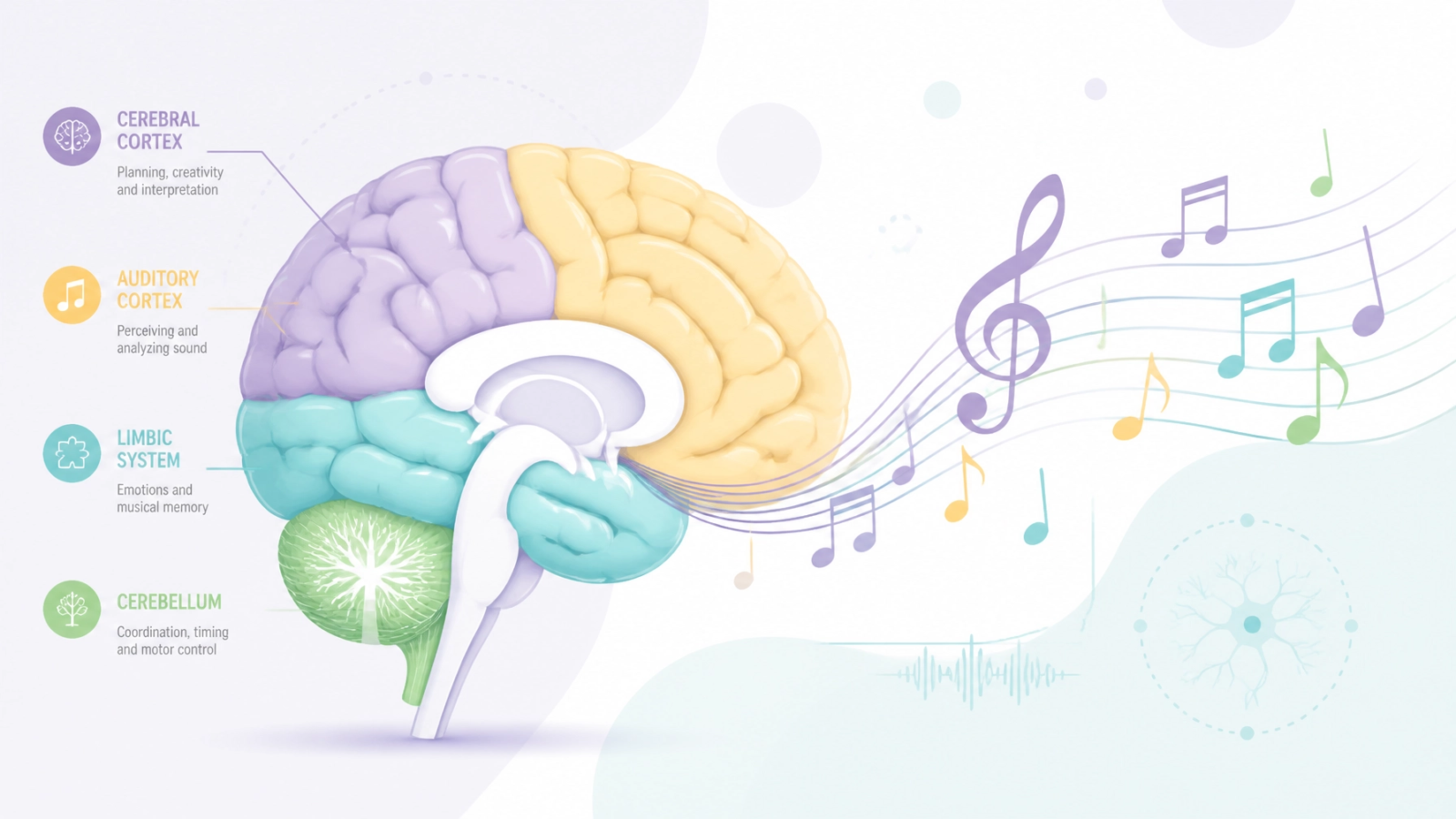
Introduction to Auditory Aging and the Cognitive Reserve Hypothesis
As you navigate the natural continuum of aging, perceptual systems undergo structural and functional transformations. One of the most common cognitive challenges reported by older adults is the difficulty of processing speech in complex acoustic environments, such as a crowded room or a busy street. This auditory processing hurdle is not merely a peripheral ear limitation; it reflects central nervous system changes in how the brain parses competing acoustic streams.
To counteract these age-related declines, neuroscientists study cognitive reserve, a concept describing the resilience of mental processes against neuropathological damage or normal structural aging. Engaging in complex, cognitively demanding lifelong activities builds neural scaffolding that allows you to maintain high functional performance despite physiological aging. Among these activities, instrumental music training stands out as one of the most comprehensive catalysts for neural plasticity. When you study an instrument, you engage auditory, motor, and executive control networks simultaneously, fostering long-term adaptations that resonate far beyond the practice room.
Overview of the 2025 PLOS Biology Study
Recent neuroimaging research published in PLOS Biology by researchers Zhang, Ross, Du, and Alain provides compelling functional magnetic resonance imaging evidence regarding how lifelong musical engagement alters brain function in aging. The study investigated the neural mechanisms underlying speech-in-noise perception in three distinct cohorts: older musicians with extensive long-term training, older non-musicians, and young non-musicians.
Participants completed a syllable identification task embedded in varying levels of background noise while researchers recorded functional magnetic resonance imaging data. The experimental design isolated how the brain manages auditory attention and speech decoding under degraded acoustic conditions. The findings offer profound insights into how musical practice alters brain connectivity and efficiency over decades of life.

Main Findings and the Hold-Back Upregulation Hypothesis
Behavioral results demonstrated that older musicians consistently outperformed older non-musicians in speech-in-noise perception tasks, achieving accuracy levels remarkably close to those of young adults. To explain this protective effect, the researchers examined task-induced functional connectivity across neural networks.
Older non-musicians exhibited a compensatory upregulation of neural activity and functional connectivity within the bilateral auditory dorsal stream. This over-activation indicates that aging brains often need to recruit extra neural resources to perform tasks that once required minimal effort. However, this upregulation frequently correlates with reduced efficiency and poorer behavioral outcomes.
In contrast, older musicians showed significantly less task-induced functional connectivity upregulation in these auditory pathways. Their neural connectivity patterns closely resembled those of young adults. This phenomenon supports the hold-back upregulation hypothesis. The cognitive reserve accumulated through long-term instrumental practice prevents inefficient neural over-activation, preserving youth-like network architecture and processing efficiency. Whether you focus on mastering flute lessons or refining your technique through clarinet lessons, the sustained cognitive demands of instrumental study help maintain optimal neural efficiency.
Implications for Adult Learners and Instrumental Study
The implications of this research extend directly to adult learners considering musical education later in life. While the study observed lifelong musicians, contemporary neuroscience confirms that neural plasticity remains active throughout adulthood. Engaging in structured musical learning stimulates auditory working memory, fine motor coordination, and executive control functions.
- Building cognitive reserve through deliberate practice protects auditory processing pathways from age-related degradation.
- Mastering complex motor patterns in piano lessons reinforces sensorimotor integration across hemispheres.
- Cultivating melodic and rhythmic fluency via ukulele lessons enhances auditory attention and temporal resolution.
- Studying structural rules through music theory lessons strengthens abstract reasoning and working memory capacity.
When you commit to regular practice, you establish enduring structural adaptations that support cognitive longevity and efficient sensory processing.

Connection to Bilingual Instruction and Comprehensive Training in Ottawa
At Allegro Ma Non Troppo, our educational philosophy aligns with evidence-based cognitive research. We recognize that learning music and acquiring a second language share overlapping neural mechanisms, particularly regarding executive control and auditory processing flexibility.
Our studio in Ottawa provides specialized bilingual instruction in English and Spanish, delivered by expert, Master-level teachers. En Allegro Ma Non Troppo, ofrecemos instrucción bilingüe en inglés y español para maximizar los beneficios cognitivos de la educación musical. Combining bilingual cognitive engagement with rigorous instrumental pedagogy amplifies the neurocognitive benefits of study. Furthermore, we understand that adult and family schedules require environmental flexibility. You can choose between comfortable online lessons from your home or in-person sessions at our Ottawa studio, ensuring your learning environment supports your personal comfort and schedule.
Logistical Framework and Transparent Pricing Structure
We are committed to total transparency regarding our instructional formats and pricing models. We offer flexible session lengths of 30, 45, and 60 minutes tailored to your cognitive goals and scheduling needs.
- 30-minute lessons: $35 per lesson
- 45-minute lessons: $48 per lesson (most popular)
- 60-minute lessons: $63 per lesson
- Lesson bundles are available in 2-lesson, 3-lesson, and 4-lesson options with discounts that reduce the per-lesson cost.
- Families benefit from our Family Plan, which provides a 10% discount for three or more enrolled members.
- Every prospective student begins with a complimentary trial lesson to evaluate teaching compatibility before committing to a regular schedule.

To begin your structured journey in cognitive reserve development and musical mastery, review our scheduling options and connect with our pedagogical team.
References
Zhang L, Ross B, Du Y, Alain C. Long-term musical training can protect against age-related upregulation of neural activity in speech-in-noise perception. PLoS Biol. 2025;23(7):e3003247. doi:10.1371/journal.pbio.3003247
Leave A Comment