
 Cart is empty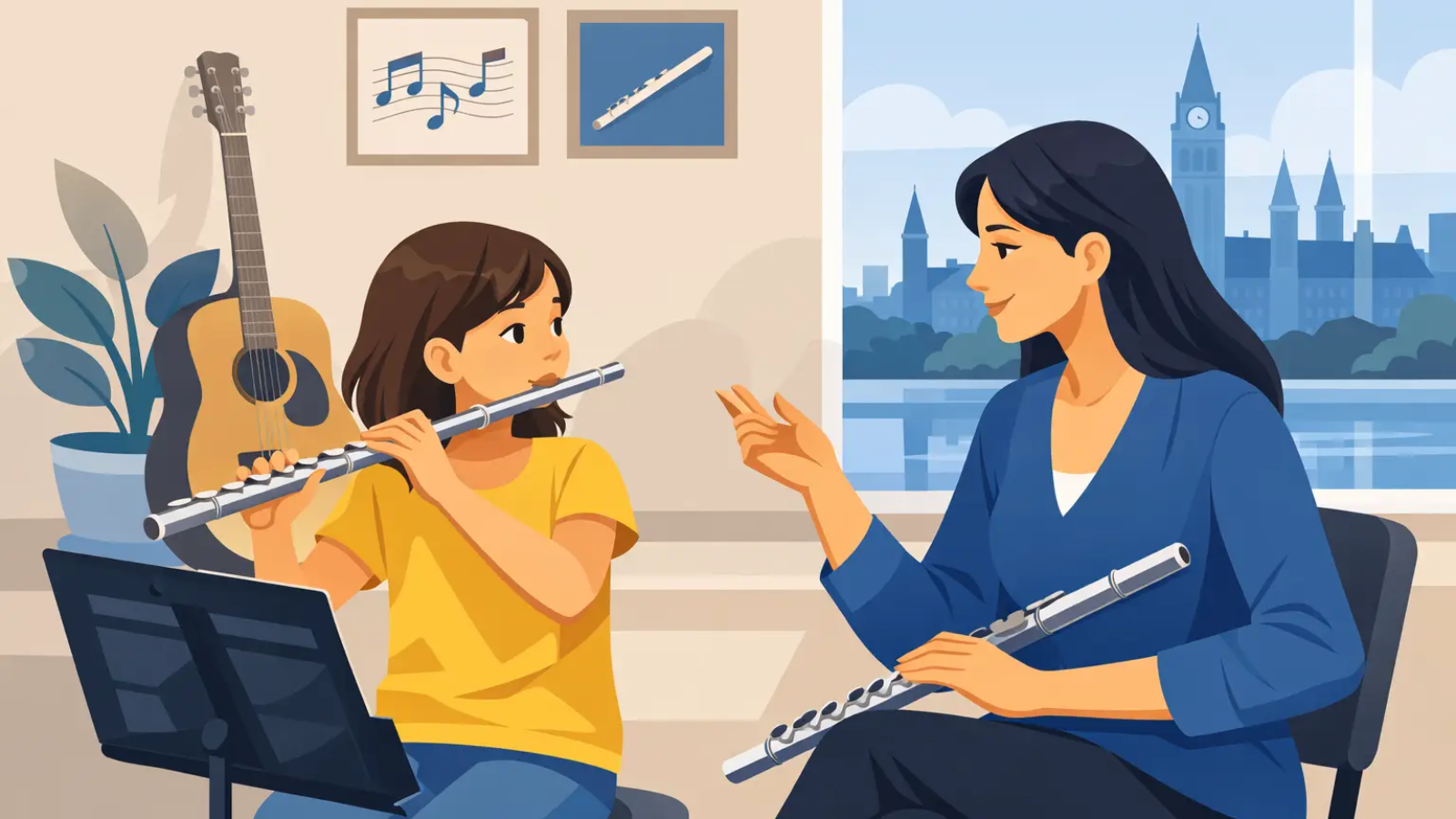
Many students do not continue with the flute because the learning experience does not align with their lifestyle, goals, or preferred way of learning.That is why private flute lessons Ottawa families choose tend to work best when they are flexible, personalized, and genuinely enjoyable from the start.
Flute is a beautiful instrument, but it can also feel surprisingly demanding in the early stages. Tone production takes patience. Breath support takes guidance. Reading music while managing posture, embouchure, and finger coordination can feel like a lot at once. With the right teacher, though, that challenge becomes motivating instead of overwhelming.
Why private flute lessons in Ottawa make such a difference
In a group setting, everyone moves at the same pace whether that pace suits them or not. Some students need more time to build a clear first sound. Others are ready to move quickly into repertoire, articulation, and expressive playing. Private flute lessons in Ottawa give students room to develop at the pace that helps them grow with confidence.
That matters for beginners, but it matters just as much for students who already play in school band or community ensembles. A flutist preparing for a concert, festival, or audition often needs focused feedback on very specific things – breath control, tuning, tone color, phrasing, rhythm accuracy, or performance nerves. Those details can get missed in broader classroom instruction, especially when a band director is balancing an entire ensemble.
Private lessons also create consistency. If a student has been feeling stuck, the issue is often not effort. It is usually a mismatch between what they are practicing and what they actually need next. A tailored lesson plan helps each practice session feel more productive.
Who benefits from private flute lessons Ottawa teachers offer?
The short answer is almost everyone, but the reason varies by student.
Young beginners often need a warm, patient introduction that makes the instrument feel approachable. They benefit from lessons that balance structure with fun and include simple routines they can repeat at home. Teen students often want a mix of skill-building and repertoire they actually enjoy playing, especially if they are balancing school, extracurriculars, and band commitments.
Adults are sometimes the most relieved to discover that lessons do not need to feel rigid or intimidating. Some are returning after years away from music. Others are starting for the first time and want thoughtful instruction without pressure. Private lessons make it easier to ask questions, revisit fundamentals, and build confidence without comparison.
Families also benefit when instruction is organized around real life. A studio that offers more than one lesson format, clear scheduling options, and family discounts can make music study feel sustainable instead of stressful.
What personalized flute instruction should actually include
Personalized teaching is more than adjusting the tempo of a lesson. It means shaping instruction around the student in front of you.
For one student, the focus may be on building a stable embouchure and producing a consistent tone. For another, it may be on improving articulation, expanding range, or preparing school repertoire. Some students are highly motivated by classical pieces, while others stay engaged through film music, folk tunes, or lighter contemporary selections. Good teaching respects those differences without sacrificing technique.
A strong private lesson usually combines fundamentals with musical expression. Students need posture, breathing, hand position, finger technique, rhythm reading, and tone work. But they also need to feel like they are making music, not just doing exercises. When repertoire is chosen around a student’s age, level, and interests, progress tends to happen faster because the student wants to come back to the instrument.
Music theory can also play an important supporting role. For some learners, understanding note relationships, rhythm patterns, key signatures, and phrasing makes everything feel clearer. It is not about making lessons more academic than necessary. It is about giving students tools that help them play more fluently and independently.
In-person or online flute lessons?
This is one of the most common questions, and the honest answer is that it depends on the student.
In-person lessons are especially helpful for very young beginners, students who benefit from direct physical modeling, and players who are still learning how to set up posture and hand position comfortably. Being in the same room can also help a teacher respond immediately to subtle issues in alignment, breathing, and sound production.
Online lessons, on the other hand, can be an excellent fit for busy families, adult learners, and students who want to avoid travel time, weather issues, or complicated weekly logistics. A well-structured virtual lesson can still provide detailed instruction, clear demonstrations, and meaningful progress. Many students actually practice more consistently when the lesson format makes attendance easier.
The best choice is not always permanent. Some students begin in person and later switch to online for convenience. Others do the reverse. Flexibility matters because routines change throughout the school year.
Support for school band students
School band students often need a very specific kind of help. They may already receive music instruction at school, but they still need individual guidance to strengthen weak spots and feel more prepared. That is where private study becomes especially valuable.
A private flute teacher can help students clean up difficult passages, improve tone projection, prepare for seating auditions, and work through festival or competition material with more detail than a classroom setting usually allows. Lessons can also address ensemble skills indirectly by improving tuning awareness, counting accuracy, breathing plans, and confidence under pressure.
This kind of support is not only for advanced players. Students who are new to band often improve quickly when they have a dedicated space to ask questions they might not ask in class. Even thirty or forty-five minutes of focused weekly attention can change how capable they feel in rehearsal.
Bilingual and welcoming instruction matters
For some Ottawa families, being able to learn in English or Spanish is more than a nice extra. It makes lessons more comfortable, more precise, and more inclusive.
Music has its own language, and beginners are already processing a lot of new information. When explanations can happen in the language a student or parent is most comfortable with, communication becomes easier and trust builds faster. That can be especially helpful for younger students and families who want to stay involved in home practice.
A welcoming teaching environment matters just as much. Students learn better when they feel encouraged, not judged. That does not mean lowering standards. It means teaching with clarity, patience, and respect while still expecting steady growth.
What to look for in a flute teacher
If you are comparing options for private flute lessons Ottawa offers, look beyond availability alone. A good teacher should have strong musicianship and pedagogy, but also the ability to adapt.
You want someone who can teach fundamentals clearly, explain problems in a way that makes sense, and choose repertoire that keeps the student engaged. Experience with different age groups is important because a six-year-old beginner, a high school band student, and an adult hobbyist all need a different approach.
It also helps to find a teacher who offers practical flexibility. Session lengths, online and in-person options, and a free trial lesson can make it easier to find the right fit before committing. For families with more than one child in lessons, family pricing can make a real difference over time.
At Allegro Ma Non Troppo, that student-centered approach is part of what makes lessons feel both professional and personal. The goal is not simply to cover material. It is to help each student build skill, confidence, and a lasting connection to music.
The best lessons feel motivating, not intimidating
Flute study should absolutely develop discipline, but discipline grows best when students can hear their own improvement and enjoy the process. That is why the right lesson environment feels encouraging from the first meeting. Students need goals, feedback, and technique. They also need curiosity, creativity, and moments of real musical satisfaction.
A free trial lesson can be a smart first step because it gives the student a chance to experience the teacher’s style, ask questions, and see whether the format feels comfortable. Sometimes the right fit is obvious right away. Sometimes a family needs to talk through scheduling, goals, and lesson length before deciding. That is normal.
If you are looking for flute instruction, the best next step is not to search for the most intense program or the fastest promise. It is to find teaching that meets the student where they are and helps them move forward with clarity, enjoyment, and confidence. That is when music becomes something a student wants to keep making.
Leave A Comment