
 Cart is empty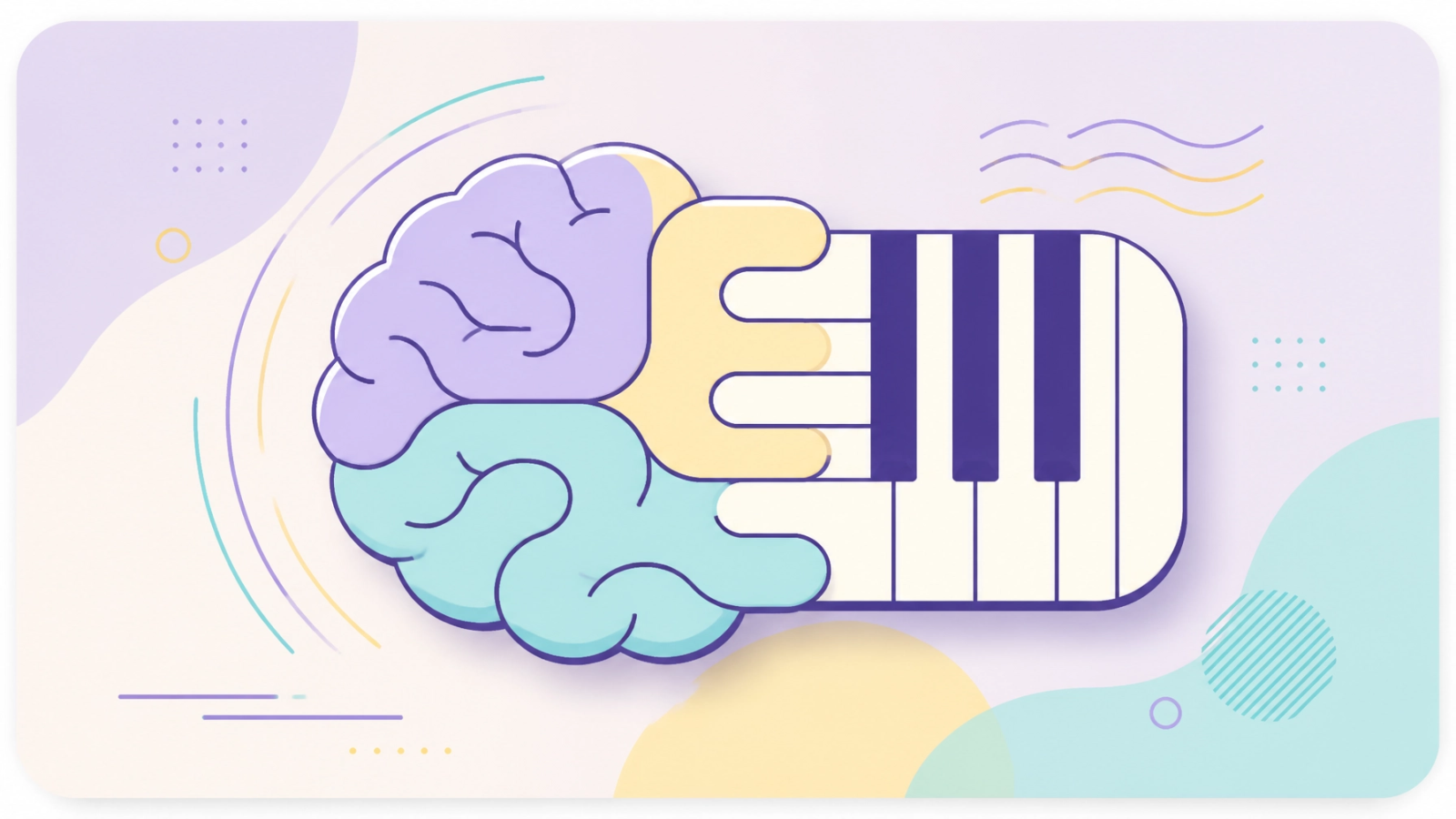
Introduction: The Neuroplasticity of Musical Acquisition
The human brain is a highly adaptive organ, capable of profound structural and functional reorganization in response to environmental demands and skill acquisition. This phenomenon, known as neural plasticity, is perhaps nowhere more evident than in the study of individuals engaging in beginner piano lessons. When you sit at a keyboard, your central nervous system begins an intricate process of multimodal integration, requiring the simultaneous processing of visual, auditory, and motor information.
Research in the field of cognitive neuroscience has demonstrated that even short-term musical training can lead to measurable changes in the cerebral cortex. This article serves as an authoritative guide to the neurological shifts observed when a student commences piano training, moving beyond the anecdotal to examine the empirical evidence provided by modern neuroimaging techniques such as voxel-based morphometry (VBM) and diffusion tensor imaging (DTI). For those seeking piano lessons in Ottawa, understanding these structural changes provides a compelling scientific rationale for the commitment required in the early stages of learning.
Quantitative Cortical Remodeling: The Motor System
The primary motor cortex (M1), located in the precentral gyrus, is responsible for the execution of voluntary movements. Piano performance demands a level of bimanual coordination and finger independence that is rare in daily activities. Consequently, the motor system undergoes significant structural enlargement.
In a landmark longitudinal study, Hyde et al. (2009) investigated the effects of fifteen months of instrumental music training on six-year-old children. The researchers observed that the group receiving piano-like instruction showed significantly greater increases in cortical thickness and volume within the primary motor cortex compared to the control group. These structural changes were not merely decorative; they correlated directly with improvements in fine motor dexterity.
The bimanual nature of piano playing forces the motor regions of both hemispheres to work in concert. This requirement fosters an expansion of the motor representation of the hands, a phenomenon often described as the expansion of the hand-knob region in the precentral gyrus. For students engaged in beginner piano lessons, this structural adaptation is the biological foundation of technical proficiency.

Auditory Processing and Heschl’s Gyrus
While the hands are busy with mechanical execution, the auditory system is engaged in sophisticated frequency discrimination and temporal processing. The primary auditory cortex, situated in Heschl’s gyrus within the temporal lobe, serves as the hub for these activities.
Scientific evidence suggests that musical training increases the gray matter volume in Heschl’s gyrus. Gaser and Schlaug (2003) compared the brain structures of professional musicians, amateur musicians, and non-musicians. Their findings revealed a clear dose-response relationship: professionals exhibited the greatest gray matter volume in auditory regions, followed by amateurs, while non-musicians showed the least. This indicates that as you progress from beginner piano lessons to more advanced levels, your brain continues to sculpt itself to accommodate the higher demands of auditory analysis.
This refinement of auditory processing is not localized to the piano. It also enhances the neural connectivity required for other disciplines, such as online flute lessons or online clarinet lessons, where pitch and timbre discrimination are paramount. The skills learned at the piano act as a foundational scaffolding for the broader auditory system.
Inter-hemispheric Connectivity and the Corpus Callosum
One of the most remarkable structural changes associated with piano training is found in the corpus callosum, the large bundle of white matter fibers that facilitates communication between the left and right cerebral hemispheres. Because piano playing requires high levels of inter-manual coordination, the demand for rapid information transfer between the two motor cortices is immense.
Studies have consistently shown that musicians who begin their training early exhibit a larger anterior corpus callosum. This structural expansion allows for more efficient cross-talk between the hemispheres. In a pedagogical context, this explains why kids music lessons in Ottawa are so effective; during periods of high developmental plasticity, the brain is particularly receptive to the structural reinforcement of these critical communication pathways.

The Role of Myelination and White Matter Integrity
Beyond the expansion of gray matter, the efficiency of the brain is determined by the integrity of its white matter. White matter consists of myelinated axons that act as the electrical wiring of the brain. Myelin is a fatty sheath that insulates these axons, significantly increasing the speed of neural transmission.
Through intensive practice, the repetitive firing of neural circuits triggers increased myelination. This process is essential for the transition from conscious, labored movement to the automatism required for fluid performance. Whether you are pursuing music theory lessons online or practicing scales at home, the physiological result is a more robust and faster neural network. This enhancement of white matter integrity is a core component of the cognitive benefits associated with musical study.
Executive Function and Cognitive Transfer
The benefits of piano lessons extend far beyond the auditory and motor domains. The cognitive demands of reading musical notation, maintaining rhythmic accuracy, and planning complex finger sequences engage the prefrontal cortex, the seat of executive function.
Executive functions include:
- Inhibitory control (the ability to stop or change a planned action)
- Working memory (holding and manipulating information in mind)
- Cognitive flexibility (switching between different rules or tasks)
The development of these higher-order cognitive skills through music is referred to as far transfer. This means that the structural changes in the brain caused by piano practice can improve performance in non-musical areas, such as mathematical reasoning and verbal fluency. This is why many families seeking bilingual music lessons in Ottawa prioritize the piano; the cognitive reserve built through this training provides a lifelong advantage.

Long-term Neurological Benefits and Age-Dependent Plasticity
It is a common misconception that structural brain changes are reserved for the young. While the brain is most plastic during childhood, neurogenesis and cortical reorganization continue throughout adulthood. Adult students taking ukulele lessons in Ottawa or starting piano later in life still experience significant neurological benefits.
In older adults, piano training has been shown to counteract age-related cognitive decline by strengthening the neural networks involved in memory and attention. This proactive approach to brain health is a key reason why music education is a vital component of a healthy lifestyle at any age.
Logistical Considerations for Optimizing Neural Change
To maximize the structural adaptations discussed, the quality and consistency of instruction are critical. Allegro Ma Non Troppo provides an environment designed to facilitate these neurological milestones through expert-led, personalized curricula.
Our logistical framework is designed for transparency and academic rigor:
- Expert Instruction: Lessons are taught by Master-level teachers specializing in instrumental pedagogy.
- Flexible Modalities: Students may choose between online or in-person sessions at our Ottawa studio to accommodate their specific learning environments.
- Duration Options: Sessions are offered in 30, 45, and 60-minute increments to match the student’s cognitive endurance and goals.
- Financial Accessibility: We offer various plans to ensure continuity of study, which is the primary driver of neuroplasticity.
Our pricing structure reflects our commitment to long-term musical development:
- Single Trial Lesson: $0 (Free of charge)
- 30-Minute Lesson Bundle:
$160$150 per month - 45-Minute Lesson Bundle:
$220$200 per month - 60-Minute Lesson Bundle:
$280$250 per month - Family Plan: Savings for households with 3 or more members.
By choosing a structured pedagogical path, you ensure that the hours spent at the instrument result in the most efficient and robust structural brain changes possible.
Conclusion
The transition from a beginner to a proficient pianist is not merely a change in skill; it is a fundamental transformation of the brain’s architecture. From the thickening of the motor cortex to the strengthening of the corpus callosum and the enhancement of white matter integrity, the evidence is clear: piano lessons are a powerful tool for cognitive and neurological development. Whether you are interested in music lessons in Ottawa for your child or seeking a new cognitive challenge for yourself, the science of neuroplasticity supports the profound impact of this musical journey.
Leave A Comment