
 Cart is empty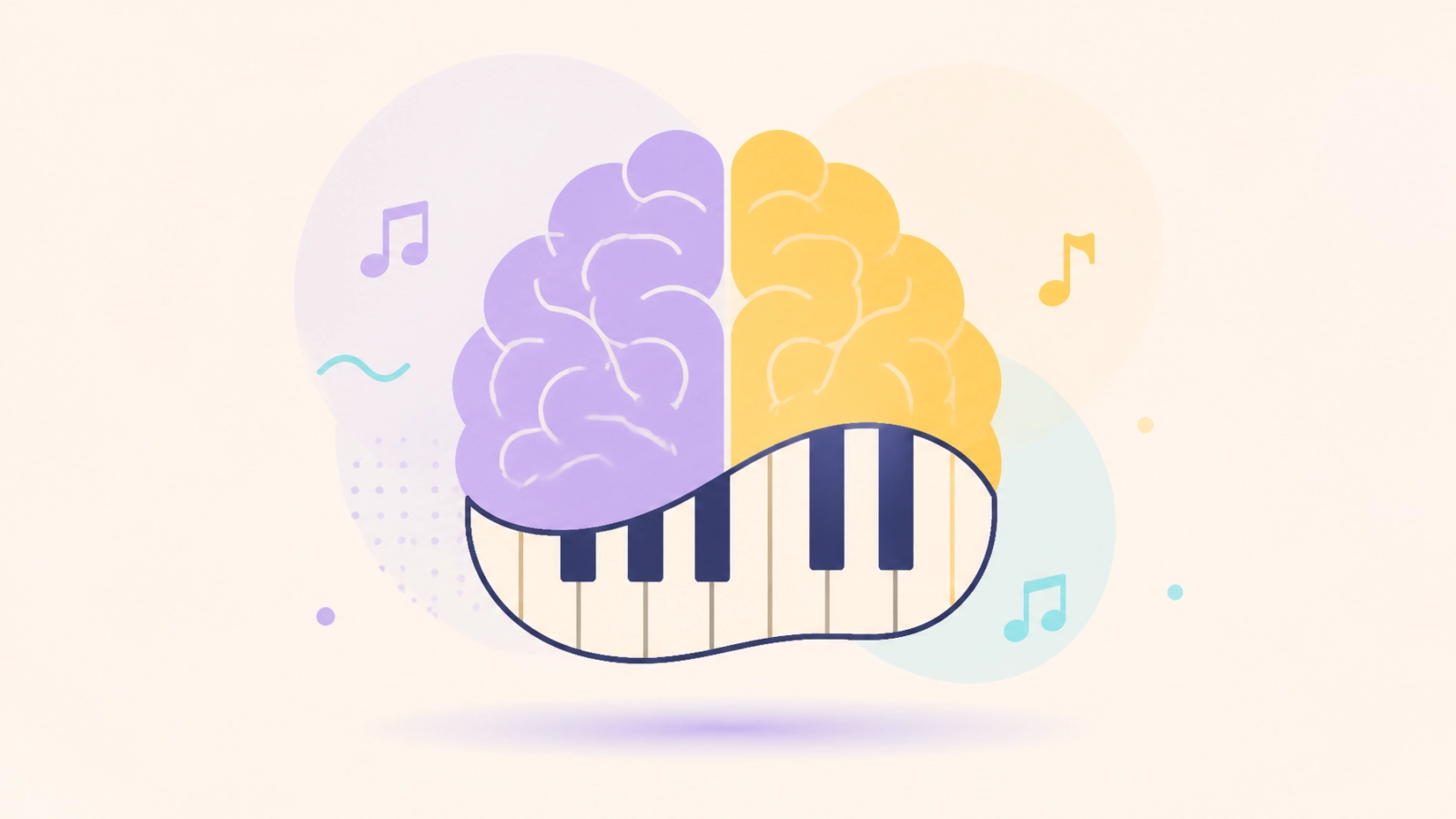
The human brain possesses an extraordinary capacity for adaptation known as neural plasticity. This biological phenomenon allows the nervous system to reorganize its structure and function in response to environmental stimuli and specialized training. Among various forms of cognitive and motor skill acquisition, beginner piano lessons represent one of the most complex multimodal challenges for the cerebral cortex. By requiring the simultaneous processing of visual notation, the execution of fine motor sequences, and the continuous monitoring of auditory feedback, piano training serves as a catalyst for significant structural remodeling within the brain.
Recent longitudinal research has demonstrated that these changes are not merely functional but involve measurable alterations in cortical thickness and white-matter density. Whether engaging in piano lessons Ottawa based or through online lessons, the neurological impact of systematic keyboard training provides a robust framework for understanding experience-dependent plasticity across the lifespan.
Cortical Thickening and Auditory Processing
The temporal lobe, housing the primary auditory cortex, undergoes substantial structural development during the initial stages of piano instruction. This region is responsible for the decoding of frequency, duration, and timbre: elements fundamental to musical syntax. A longitudinal study involving children engaged in fifteen months of weekly keyboard instruction revealed greater structural development in the auditory temporal regions compared to control groups (Hyde et al., 2009, Journal of Neuroscience).
This increase in gray matter volume is directly correlated with improvements in auditory processing and frequency discrimination. For those pursuing beginner piano lessons, the demand to distinguish between minute pitch variations and rhythmic structures necessitates a more efficient neural architecture. These structural advancements are also observed in older adults; six months of piano training has been shown to increase bilateral cortical thickness in auditory regions, suggesting that the adult brain retains a high degree of structural plasticity (Frontiers in Aging Neuroscience, 2022).

The implications of this temporal lobe remodeling extend beyond musical proficiency. The refined auditory processing developed through piano training often translates to improved verbal syntax and linguistic decoding. This synergy is particularly evident in bilingual music lessons, where the brain must navigate both musical and linguistic tonal shifts, further enhancing cognitive reserve and auditory-motor integration.
Motor Cortex Expansion and Fine Skill Acquisition
The execution of piano technique requires independent finger control and precise temporal synchronization, a process governed primarily by the motor and premotor cortices. The primary motor cortex contains a somatosensory map of the human body, where the representation of the hands and fingers occupies a significant area. Research conducted by the Harvard Medical School group, led by Alvaro Pascual-Leone, indicates that the sensorimotor cortex reorganizes rapidly during the acquisition of musical skills.
Beginner piano lessons drive the physical expansion of these motor representations. In children, consistent practice over fifteen months led to increased volume in the motor areas controlling hand movements (Hyde et al., 2009). This structural growth is likely the result of synaptogenesis: the formation of new synapses: and the strengthening of existing neural pathways through long-term potentiation.

Furthermore, the transition from conscious gesture to automatism: a hallmark of muscle memory: reduces the metabolic demand on the prefrontal cortex as skills become encoded in the motor system. This physiological efficiency allows for greater cognitive resources to be allocated toward expressive performance and music theory lessons online. The structural changes in the motor cortex are a prerequisite for the high-level coordination required for more advanced instruments, such as those found in online flute lessons or online clarinet lessons.
Interhemispheric Connectivity and the Corpus Callosum
One of the most profound structural impacts of piano training is the alteration of the corpus callosum, the primary white-matter tract connecting the left and right cerebral hemispheres. Playing the piano is a bimanual activity that requires high degrees of interhemispheric communication. The right hand often performs melodic lines while the left hand manages harmonic or rhythmic structures, requiring the two halves of the brain to work in precise synchrony.
Longitudinal MRI data shows that beginner piano lessons contribute to the thickening of the corpus callosum, particularly in the regions connecting the motor and premotor areas. This increased connectivity facilitates faster signal transmission between hemispheres, improving global executive function and sensory integration. By fostering this interhemispheric harmony, piano lessons Ottawa residents attend serve as a powerful tool for developing neural efficiency.

Cognitive Reserve and White-Matter Stability
The benefits of beginner piano lessons are not limited to the developmental years. In older adults, piano training has been shown to stabilize white-matter microstructure in the fornix, a tract essential for episodic memory. While age-related decline typically results in reduced fiber density in this area, individuals participating in six months of piano instruction showed a stabilization of these neural pathways (Frontiers in Aging Neuroscience, 2022).
This evidence suggests that the cognitive demands of piano training provide a neuroprotective effect, maintaining the integrity of the brain’s communication networks. Such findings reinforce the value of music lessons Ottawa for all age groups, emphasizing that the cerebral cortex remains responsive to structural refinement regardless of chronological age. Whether the goal is to enhance academic performance through kids music lessons Ottawa or to maintain cognitive health in later life, the piano serves as a potent instrument for neurological development.

Educational Logistics and Accessibility
Allegro Ma Non Troppo provides specialized instruction designed to optimize these neurological benefits. Our pedagogical approach focuses on scaffolding, ensuring that each student progresses from basic foundational skills to complex compositions in a way that aligns with natural cognitive development. We offer a range of instructional formats to accommodate the environmental needs of our community, including our Ottawa studio and flexible online platforms.
Our pricing structure is designed to facilitate long-term commitment, which is essential for achieving permanent structural changes in the brain:
- Trial Lesson: $35 $0
- 30-Minute Sessions: $35 per lesson
- 45-Minute Sessions: $50 per lesson
- 60-Minute Sessions: $65 per lesson
To support consistent practice, we offer bundle discounts for extended lesson plans:
- 10-Lesson Bundle: 5% discount
- 20-Lesson Bundle: 10% discount
- Family Plan: 10% discount for families with 3 or more members
Our curriculum is led by expert, Master-level teachers who provide bilingual instruction in English and Spanish. This dual-language environment further stimulates the cerebral cortex, providing additional cognitive advantages. In addition to piano, we provide comprehensive training in other disciplines, including flute lessons Ottawa, clarinet lessons Ottawa, and ukulele lessons Ottawa. For students looking to deepen their analytical understanding, our music theory lessons provide the necessary theoretical framework to complement practical skill acquisition.
The physical reshaping of the cerebral cortex through piano training is a scientifically validated process that enhances motor, auditory, and cognitive faculties. By engaging in systematic practice, you are not simply learning an instrument; you are actively optimizing your neural architecture for improved processing and long-term health.
Leave A Comment