
 Cart is empty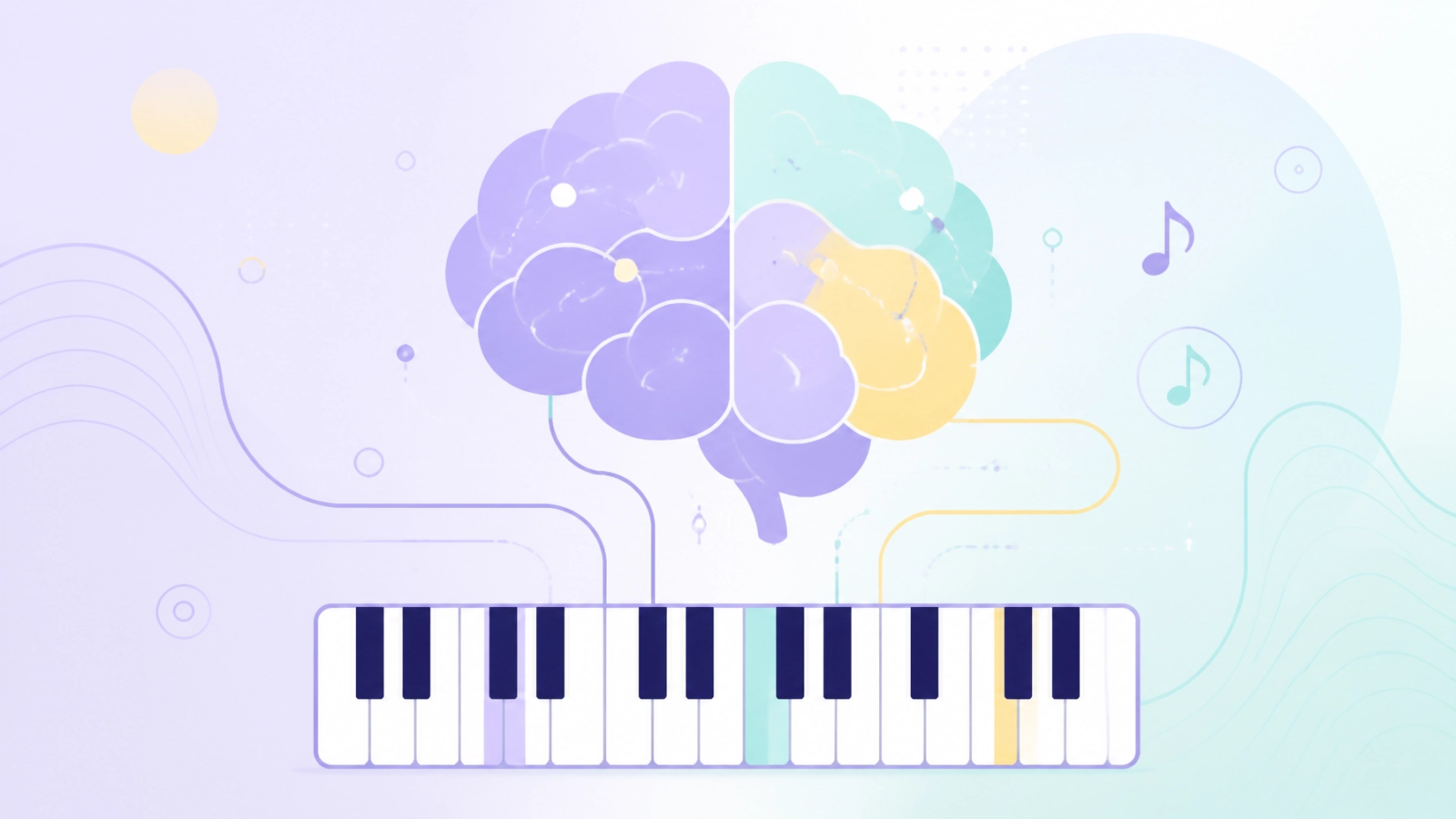
The human brain is a highly adaptive organ, capable of profound structural and functional reorganization in response to consistent environmental stimuli. This phenomenon, known as neuroplasticity, is particularly evident during the acquisition of complex multisensory tasks such as learning a musical instrument. While many perceive beginner piano lessons as a cultural or leisure pursuit, rigorous neuroscience research indicates that the act of training on a keyboard drives measurable changes in the cerebral cortex. This article examines the physiological transformations that occur when you engage in piano lessons Ottawa, drawing on data-driven evidence from leading research institutions.
The Mechanism of Experience-Dependent Plasticity
Experience-dependent plasticity is the process through which neural connections are formed or strengthened based on repetitive activity. When you begin training in music, the brain must reconcile multiple streams of information: visual input from notation, fine motor output through the fingers, and auditory feedback from the instrument. This creates a high cognitive load that forces the brain to optimize its architecture.
A landmark study by Hyde et al. (2009) demonstrated that even short-term musical training: specifically 15 months of weekly beginner piano lessons: resulted in significant structural changes in the brains of young children. These changes were not merely functional improvements but involved physical alterations in cortical volume and white matter integrity. By comparing a group of children receiving music training to a control group, researchers found that the musical group showed greater development in regions responsible for motor and auditory processing. This suggests that the brain does not simply learn a skill; it literally reshapes itself to accommodate the new demands of the instrument.

Structural Adaptation in the Primary Motor Cortex
The primary motor cortex is responsible for the execution of voluntary movements. In piano training, the requirement for independent finger movement is extreme. Unlike other instruments that may rely on a dominant hand, the piano requires high-level bimanual coordination. This demand leads to an expansion of the cortical representation of the hands.
Gaser and Schlaug (2003) conducted a quantitative analysis comparing professional musicians, amateur musicians, and non-musicians. Their findings revealed a gray matter volume increase in the motor regions of the musicians, which correlated with the intensity of their practice. For a beginner, this process begins with the recruitment of additional neurons to manage the fine motor control required for scales and chords. Over time, the neural representation of the fingers becomes more refined and efficient. This scaffolding of motor skills is essential for transitioning from conscious, effortful movement to the automatism required for advanced performance. This same physiological benefit is applicable to students engaged in online clarinet lessons, where fine finger dexterity is also a critical component of technical mastery.
Auditory Processing and Sound-Action Mapping
The auditory cortex is another region that undergoes significant remodeling. In piano training, the brain must develop a precise map between the physical action of pressing a key and the resulting frequency produced. This is referred to as sound-action mapping. As you progress through music theory lessons online, your brain becomes more adept at predicting auditory outcomes based on visual symbols.
Research has shown that musicians possess an enhanced ability to process pitch, timbre, and rhythm. This is attributed to an increase in the thickness of the auditory cortex. Furthermore, the Superior Longitudinal Fasciculus (SLF), a major white matter tract that links the frontal and temporal regions, shows improved microstructure in those who study music. This enhancement facilitates faster and more accurate communication between the parts of the brain that plan movement and those that perceive sound. This auditory refinement is not limited to piano; it is equally prevalent in those taking flute lessons Ottawa or online flute lessons, where pitch control and timbre adjustment are paramount.

White Matter Integrity and Inter-Hemispheric Connectivity
One of the most notable changes observed in pianists is the alteration of the corpus callosum. The corpus callosum is a thick band of nerve fibers that connects the left and right hemispheres of the brain, enabling them to communicate. Because piano playing requires the simultaneous and often independent use of both hands, the corpus callosum must facilitate rapid inter-hemispheric transfer of information.
Studies have indicated that individuals who begin musical training early in life show a larger corpus callosum compared to non-musicians. This increase in white matter integrity translates to better synchronization between the hands. For a student in kids music lessons Ottawa, this structural change supports not only musical ability but also broader cognitive functions that rely on bilateral integration. This structural advantage is a primary reason why beginner piano lessons are highly recommended for developmental support in school-aged children.
Executive Function and the Prefrontal Cortex
The prefrontal cortex is the seat of executive functions, including working memory, cognitive flexibility, and inhibitory control. Learning the piano is an exercise in executive function. You must maintain focus on the sheet music (working memory), adjust your technique based on errors (cognitive flexibility), and suppress the urge to play incorrect notes (inhibitory control).
Habibi et al. (2017) tracked children in a community music program and found that after two years, the children in the music group showed accelerated development in cortical regions associated with executive function. This suggests that the benefits of music lessons extend far beyond the practice room. The cognitive discipline required for piano training serves as a form of mental scaffolding that can enhance academic performance and problem-solving skills in other areas of life. This is also why ukulele lessons Ottawa are an effective entry point for younger students to begin developing these critical neural pathways.

Cognitive Reserve and Lifelong Benefits
The structural changes induced by music lessons do not merely disappear if practice is discontinued. Research into cognitive reserve suggests that the neural density and connectivity built during years of musical training can protect the brain against age-related cognitive decline. By increasing the complexity of neural networks, musicians create a buffer that allows the brain to maintain function despite the typical loss of neurons that occurs with aging.
For adults in Ottawa considering bilingual music lessons, the cognitive demands of learning an instrument in a second language may provide an even greater boost to cognitive reserve. The dual-stream processing required for bilingualism and music creates a highly resilient neural architecture. Whether you are a child starting your first lesson or an adult returning to an old passion, the science remains clear: the brain remains plastic throughout life, and music is one of the most powerful tools available to drive positive structural change.
Allegro Ma Non Troppo: A Research-Based Approach to Instruction
At Allegro Ma Non Troppo, we understand the scientific principles that underpin musical development. Our instructors are Master-level educators who utilize pedagogical models designed to optimize neural connectivity and motor skill acquisition. We offer a structured yet flexible learning environment that addresses the unique cognitive needs of each student.
Our services include:
- Private piano instruction tailored to beginner and intermediate levels.
- Specialized support for school band students through clarinet and flute lessons.
- Online and in-person options to accommodate diverse learning environments.
- Bilingual instruction (English and Spanish) to leverage the cognitive benefits of dual-language learning.

Enrollment and Program Logistics
We provide a transparent pricing structure and flexible scheduling to ensure that high-quality music education is accessible to the Ottawa community. Our commitment to excellence includes a free trial lesson for all new students, allowing you to experience our pedagogical approach before making a long-term commitment.
- Individual lessons are available in 30, 45, and 60-minute sessions.
- Bundle discounts: Save 5 percent on 4-lesson bundles and 10 percent on 12-lesson bundles.
- Family Plan: Families with 3 or more members enrolled receive a 10 percent discount on all lessons.
- Registration is streamlined through our online portal, and we offer year-round enrollment to accommodate your schedule.
By choosing music lessons Ottawa at Allegro Ma Non Troppo, you are investing in more than just a skill; you are investing in the long-term health and efficiency of your cerebral cortex.
Leave A Comment