
 Cart is empty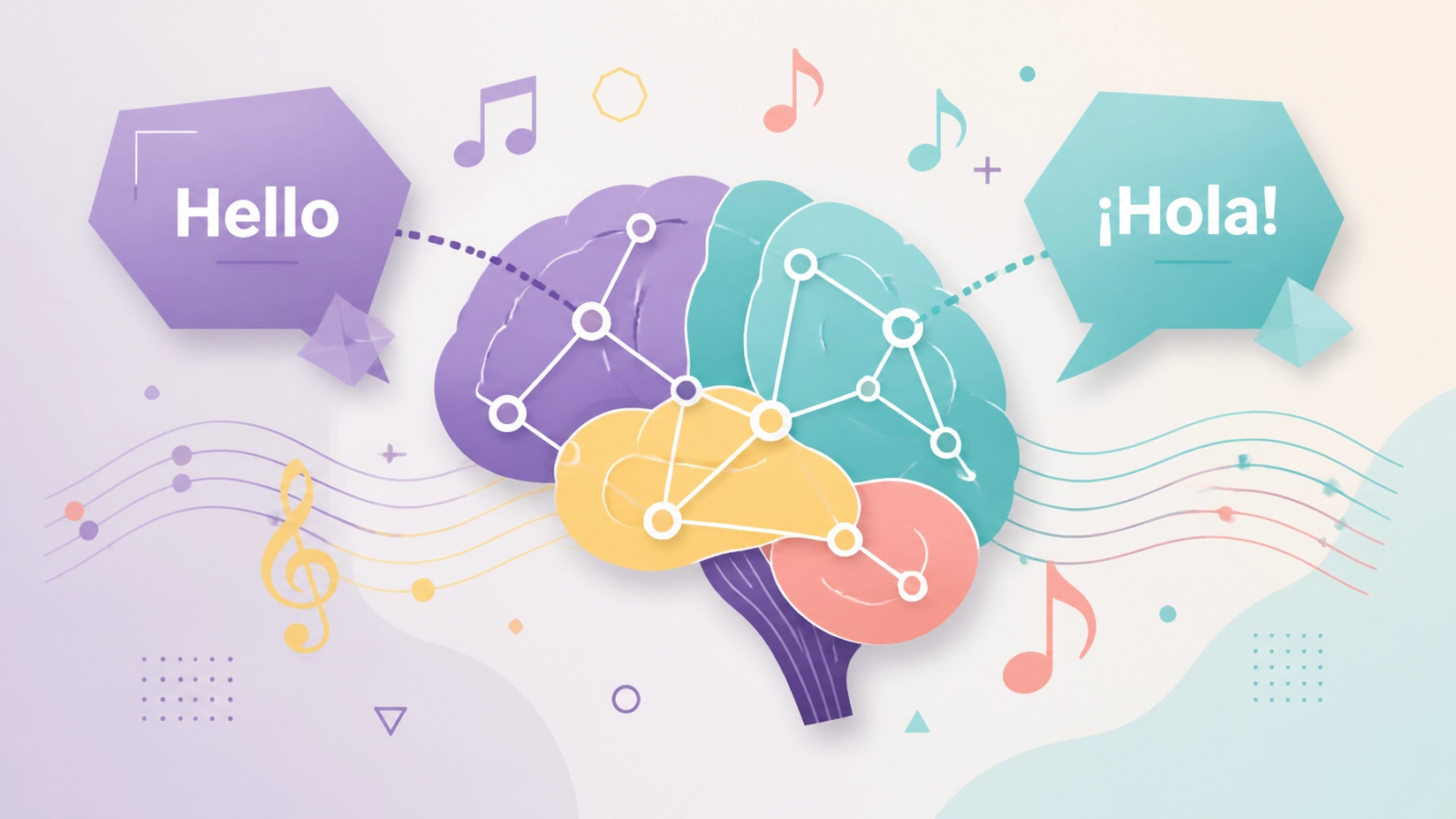
The intersection of musical training and bilingualism represents one of the most potent stimuli for neural development. Research in cognitive neuroscience indicates that both learning an instrument and navigating two linguistic systems demand significant executive resources. When these two disciplines are combined, the brain undergoes a unique form of structural and functional reorganization. At Allegro Ma Non Troppo, our bilingual instruction in English and Spanish leverages these scientific principles to enhance the cognitive architecture of our students. This article examines ten evidence-based secrets that explain how bilingual music lessons accelerate the mastery of both language and sound.
1. Longitudinal Impact on Neural Plasticity
Neural plasticity refers to the brain's capacity to reorganize itself by forming new neural connections throughout life. Longitudinal studies have demonstrated that children who engage in consistent musical instruction show measurable increases in cortical thickness, particularly in areas responsible for auditory processing and motor planning. When lessons are conducted in a second language, the brain must manage a higher cognitive load, which further stimulates the growth of white matter. This structural enhancement provides a robust foundation for future academic and professional endeavors, as the brain becomes more efficient at processing complex information.
2. Enhancement of Inhibitory Control
Inhibitory control is the cognitive ability to suppress impulsive responses and ignore irrelevant stimuli. Bilingual individuals constantly exercise this function by suppressing one language while speaking the other. Similarly, musicians must inhibit incorrect notes and maintain rhythm despite external distractions. Combining these tasks in a bilingual music environment creates a synergistic effect. Students learning piano lessons in Ottawa at our studio practice this suppression every time they translate a musical instruction from Spanish to English while maintaining their focus on the keyboard. This dual-tasking reinforces the prefrontal cortex, the primary seat of executive function.
3. Cognitive Flexibility and Task Switching
Cognitive flexibility allows you to shift your thinking between different concepts or adapt to new rules. In a bilingual music lesson, students must navigate multiple symbolic systems simultaneously: the musical staff, the physical mechanics of the instrument, and two distinct linguistic codes. Research indicates that this environment fosters a high degree of mental agility. Whether you are enrolled in online flute lessons or attending in person, the requirement to switch between musical phrasing and bilingual dialogue trains the brain to transition between complex tasks with minimal cognitive friction.

4. Superior Auditory Signal Processing
The ability to distinguish meaningful sounds from background noise is a critical skill for both language acquisition and musical performance. This is known as the signal-to-noise ratio. Musicians possess a highly refined auditory system that can isolate specific frequencies with precision. Bilingualism further enhances this by requiring the brain to differentiate between the subtle phonemic variations of two languages. Our flute lessons in Ottawa emphasize this auditory refinement, helping students develop a more sophisticated "auditory filter" that assists in clearer communication and better focus in loud environments.
5. Phonological Awareness and Language Acquisition
Phonological awareness is the ability to recognize and manipulate the sounds within a language. Science shows a strong correlation between musical aptitude and the ability to learn a second language. Because music and speech share many acoustic properties: such as pitch, duration, and timbre: training in one domain frequently transfers to the other. Students who study ukulele lessons in a bilingual setting often find that their pronunciation in both English and Spanish improves as they become more sensitive to the rhythmic and melodic patterns of speech.
6. Expansion of Working Memory
Working memory is the system responsible for temporarily holding and processing information. Musical performance requires the retention of long sequences of notes, rhythms, and dynamics, while bilingualism requires holding sentence structures from two different grammars in mind. Longitudinal research suggests that these activities expand the capacity of the phonological loop and the visuospatial sketchpad. In our music theory lessons, students learn to internalize these patterns, which leads to improved retention and recall across all academic subjects.

7. Structural Connectivity and the Corpus Callosum
The corpus callosum is a thick band of nerve fibers that connects the left and right hemispheres of the brain. Studies using Diffusion Tensor Imaging (DTI) have shown that early and sustained musical training increases the size and integrity of this structure. This allows for faster communication between the analytical left hemisphere and the creative right hemisphere. When combined with the linguistic demands of a bilingual environment, this connectivity is further optimized, supporting a more integrated and holistic approach to problem-solving and creative expression.
8. Sensitivity to Prosody and Linguistic Rhythm
Prosody refers to the patterns of stress and intonation in a language. Music is inherently rhythmic and melodic, and training in these areas directly informs how a student perceives the "music" of a language. Bilingual music lessons provide a unique scaffolding for this development. Students learning clarinet lessons at Allegro Ma Non Troppo are taught to hear the phrasing in their music as they would hear the phrasing in a Spanish or English sentence. This sensitivity leads to greater fluency and a more natural command of both languages.
9. Cross-Modal Plasticity and Multi-Sensory Integration
Modern pedagogy emphasizes the importance of multi-sensory learning. Music is a cross-modal activity that engages the visual (reading notes), auditory (listening to sound), and somatosensory (touching the instrument) systems. Bilingualism adds a social and linguistic layer to this integration. By engaging multiple senses in two different languages, students create more durable neural pathways. This process, known as scaffolding, ensures that the skills learned in the music studio resonate in other areas of the student's life, from improved motor coordination to enhanced social cognition.
10. Longitudinal Cognitive Resilience
The benefits of bilingual music education are not limited to childhood. Research into cognitive aging suggests that individuals who have spent years playing an instrument or speaking multiple languages develop a "cognitive reserve" that can delay the onset of symptoms related to dementia and other age-related cognitive declines. This resilience is the result of decades of intense mental exercise. By starting this journey now, students are making a long-term investment in their neurological health.

Logistics and Enrollment Information
At Allegro Ma Non Troppo, we prioritize evidence-based teaching methods delivered by expert, Master-level teachers. Our services are designed to be flexible and accessible to the Ottawa community and beyond through our online platforms.
- Trial Lesson: $35 $0 (One free 30-minute session for new students)
- 30 Minute Private Lessons: $35
- 45 Minute Private Lessons: $50
- 60 Minute Private Lessons: $65
- Lesson Bundles: Discounts available on packages of 10 or more lessons.
- Family Plan: 10% discount for families with 3 or more members enrolled.
Our studio offers bilingual instruction in English and Spanish for flute, clarinet, beginner piano, ukulele, and music theory. We provide a range of options including group workshops and specialized support for school band students. All schedules are designed with flexibility in mind to accommodate the requirements of busy families.
Leave A Comment