
 Cart is empty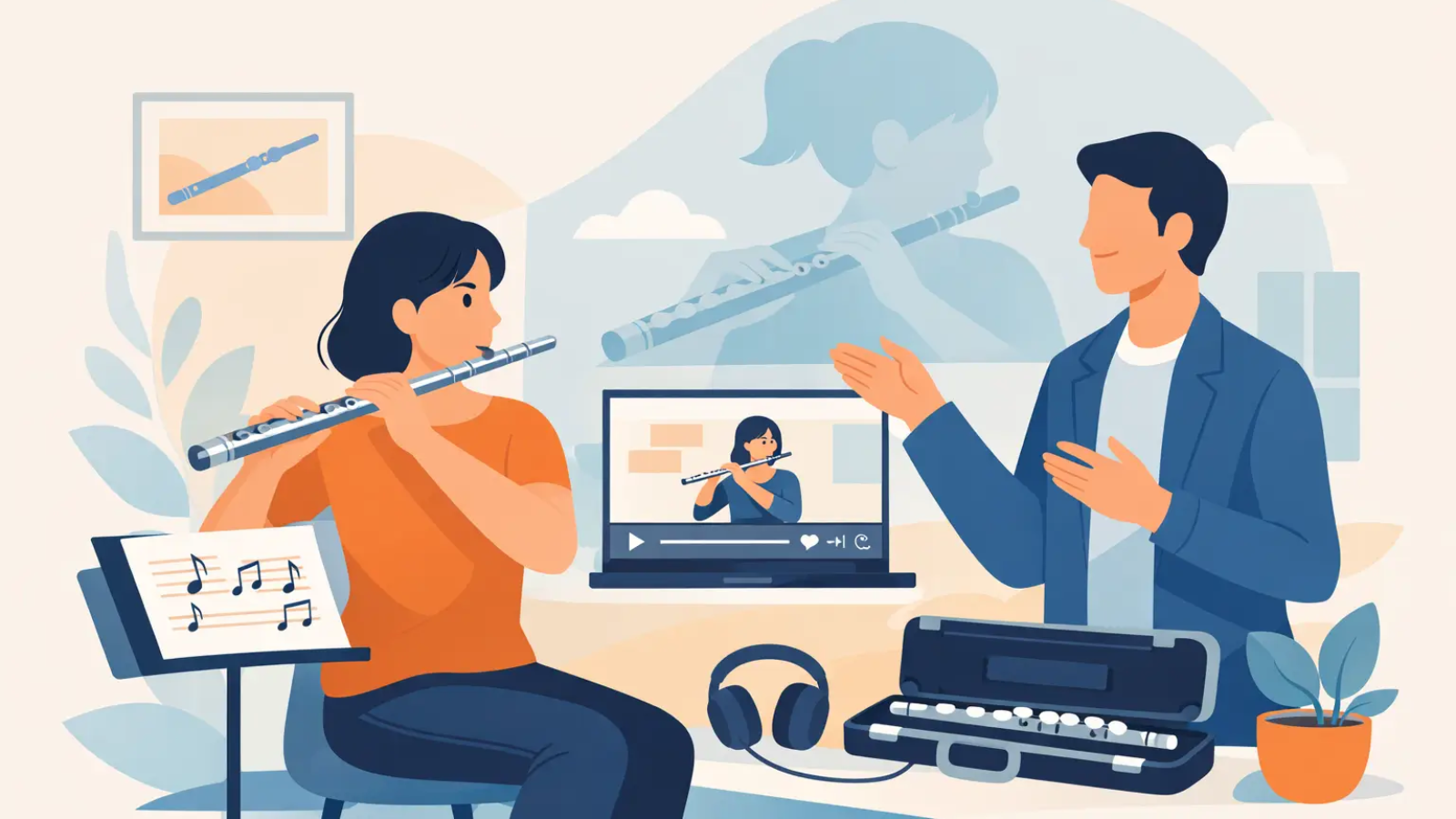
Maybe you played an instrument years ago and stopped. Maybe you have always loved the sound of the flute but assumed it was something people had to start at age eight. If you are wondering, can adults learn flute, the short answer is yes – and often with more focus, patience, and purpose than younger students.
Adults do not learn exactly like children, but that is not a disadvantage. In many cases, it is the reason progress feels more meaningful. Adult students usually come to lessons with clearer goals. They know whether they want to play for personal enjoyment, return to music after a long break, or finally try the instrument they never had the chance to study. That sense of choice matters.
Can adults learn flute well?
Yes, adults can learn flute well enough to play beautiful music, build strong technique, and enjoy steady growth. The real question is not whether adulthood makes flute study possible. The better question is what kind of learning approach helps an adult beginner stay motivated and improve consistently.
Flute does have a learning curve. Getting a clear tone can take time because the instrument depends on precise air direction, embouchure shape, posture, and breath support. Unlike piano, where pressing a key gives immediate sound, flute asks the body to coordinate several things at once before the sound feels reliable. That can be frustrating in the first few weeks.
Still, adults often handle that early stage better than they expect. Mature learners are usually better at listening carefully, noticing patterns, following instructions, and practicing with intention. They may not always have more free time, but they often use their practice time more efficiently.
Why adult flute students often do better than they think
A lot of adults carry an invisible rule in their minds that says musical skill belongs to children or to people who started very young. That idea is powerful, but it is not the same as reality. Starting young can help with long-term technical development, especially for pre-professional pathways, but that does not mean adults cannot become expressive, capable flutists.
Adult learners bring strengths that younger students are still developing. They can reflect on feedback, ask good questions, and connect technique to a musical result. When an adult understands why breathing, finger motion, or articulation matters, they are often more willing to work through the details.
They also tend to care less about comparison over time. A child in school band may feel pressure to keep up with a group. An adult is more likely to say, I want to sound better than I did last month. That mindset leads to healthier progress.
What makes flute challenging for beginners
It helps to be honest here. The flute is rewarding, but it is not effortless at the start.
The first challenge is producing a consistent sound. You may spend a little time working just on headjoint tone before the full instrument feels comfortable. This is normal, not a sign that you are behind. Tone production is a physical skill, and physical skills improve through repetition and guided adjustment.
The second challenge is breath management. New students sometimes assume flute is only about blowing harder. In fact, good playing depends on controlled airflow, relaxed shoulders, and efficient breathing. Too much tension usually makes the sound thinner, not stronger.
The third challenge is coordination. Reading music, remembering fingerings, shaping the embouchure, and keeping a steady pulse all happen at once. That can feel like a lot. A supportive teacher breaks these skills into smaller steps so the student can experience success early.
How adults can learn flute faster
Adults usually make the best progress when lessons are tailored rather than generic. A student who wants to play simple melodies for enjoyment needs a different path than someone returning after years away from concert band. Personalized instruction matters because it keeps the learning process relevant and manageable.
Short, regular practice sessions are usually more effective than occasional long ones. Fifteen to twenty focused minutes several times a week can build much more momentum than one exhausting practice block on Sunday. The body learns flute through repetition, and consistency helps those physical habits settle in.
It also helps to choose music that is musically satisfying without being technically overwhelming. Adults are much more likely to stick with lessons when they feel connected to the sound they are making. A well-chosen beginner piece can reinforce tone, rhythm, and reading while still feeling like real music.
Feedback is another difference-maker. Many adult beginners are highly motivated, but they cannot always hear or diagnose their own technical habits yet. A teacher can spot issues with embouchure, hand position, air use, and rhythm before they become frustrating patterns.
Common worries adults have about starting flute
One of the biggest worries is being too old. In practice, age is rarely the actual obstacle. Scheduling, self-doubt, and unrealistic expectations create more problems than age itself.
Another common concern is not having any musical background. While prior piano or band experience can help, it is absolutely not required. Many adults begin flute with no previous training at all. What they need is patient instruction, a realistic pace, and room to ask questions without embarrassment.
Some adults also worry that they will sound bad for too long. The truth is that every flutist sounds rough at first. Beginners are learning a very specific way of shaping air, and the early tone may be airy, unfocused, or inconsistent. That stage passes more quickly when the student gets clear guidance and practices in short, thoughtful sessions.
There is also the practical question of time. Adults are balancing work, family, commuting, and everything else. This is where flexible lesson formats can make a real difference. For many students, online lessons remove enough friction to make music study sustainable. For others, in-person instruction provides the hands-on structure they need. The best format is the one you can maintain.
What a good adult flute lesson should feel like
A strong lesson should feel encouraging, focused, and specific to you. Adult students do not need to be treated like children, but they do need structure. The teacher should explain concepts clearly, adjust the pace when needed, and connect technical work to actual musical goals.
Good flute teaching is not just about assigning exercises. It is about noticing how a student learns. Some adults respond well to visual explanations. Others need physical imagery for breath support or embouchure placement. Some want strong music theory connections because understanding the pattern helps them remember it.
This is especially important for adults who have tried to teach themselves and hit a plateau. Self-study can be useful, but flute technique is subtle. Small adjustments in angle, lip placement, or air direction can completely change the sound. Personalized feedback often saves months of confusion.
At Allegro Ma Non Troppo, this kind of tailored instruction is central to the teaching process. Adult students benefit when lessons are built around their pace, musical interests, and real-life schedule rather than a one-size-fits-all sequence.
What progress really looks like
Progress on flute is not perfectly linear. One week your sound may suddenly open up. The next week articulation feels awkward. Then reading improves, but high notes feel unstable. This is normal. Musical growth tends to rotate through different skills rather than moving forward in a straight line.
That is why adults do better when they measure progress in layers. Can you produce a clearer tone than before? Can you play a short phrase with better breath control? Can you read rhythms more confidently? Those are meaningful wins.
If you stay consistent, the small gains start connecting. Notes speak more easily. Finger changes feel lighter. Phrases become more musical. At some point, you stop feeling like someone trying flute and start feeling like a flutist.
Can adults learn flute online?
Yes, and for many adults it works extremely well. Online flute lessons can be practical, focused, and surprisingly personal when they are taught well. They also remove barriers that often cause adults to postpone lessons, such as travel time, weather, and tight schedules.
That said, online study is not automatically better for everyone. Some students concentrate more easily in person. Others appreciate the comfort and convenience of learning at home. It depends on your learning style, your routine, and how likely you are to show up consistently.
What matters most is not whether the lesson happens through a screen or in a studio. It is whether the teaching is clear, the goals are realistic, and the student feels supported enough to keep going.
If flute has been sitting in the back of your mind for years, that thought is worth taking seriously. Adults can learn flute, and they can learn it beautifully. Start where you are, let the process be gradual, and give yourself the chance to make music that feels like yours.
Leave A Comment