
 Cart is empty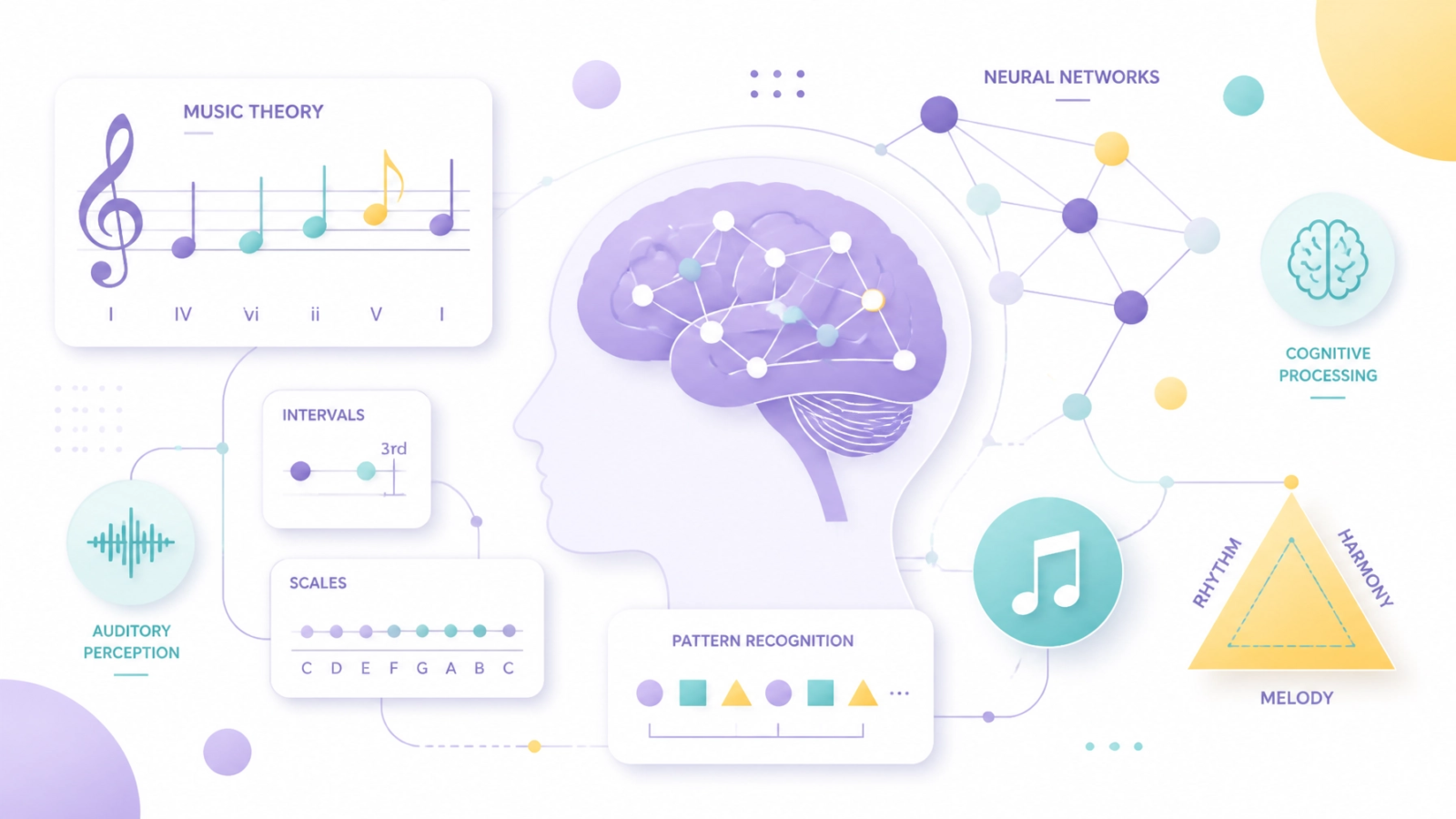
The pursuit of musical proficiency often presents a dichotomy between technical practice and theoretical study. Many students view music theory as an abstract, academic requirement that is secondary to the physical act of playing an instrument. However, contemporary research in cognitive science and pedagogy suggests that a robust understanding of music theory is not merely a supplementary skill but a fundamental driver of learning acceleration. By providing a conceptual framework for auditory information, theory enables the brain to process, store, and retrieve musical data with significantly higher efficiency.
At Allegro Ma Non Troppo, our master-level instructors emphasize the integration of theory within our music lessons in Ottawa. Whether you are studying the flute, clarinet, or piano, understanding the underlying structure of the music you perform is essential for rapid technical development. This article examines the neuroscientific and psychological mechanisms that allow music theory to act as a catalyst for instrumental mastery.
The Neuroscientific Basis for Theory-Led Learning
The human brain is optimized for pattern recognition. When you engage in music theory lessons in Ottawa, you are training your brain to identify the structural blueprints of sound. This process involves neural plasticity, where the brain reorganizes itself by forming new neural connections in response to systematic learning.
Research indicates that formal music training, particularly the analytical components of theory, enhances auditory processing and executive function. When a student understands harmonic progression or rhythmic hierarchy, the cognitive load required to read and perform music is reduced. Instead of processing individual notes as isolated data points, the brain recognizes them as part of a larger, coherent gesture. This shift from note-by-note processing to pattern-based processing is a hallmark of expert-level performance.

Accelerating Motor Skills Through Structural Scaffolding
In educational psychology, the concept of scaffolding refers to the temporary structures that support a student in reaching higher levels of comprehension. Music theory provides this scaffolding for motor skill development. For example, a student taking piano lessons in Ottawa who understands the construction of scales and chords will find that their fingers move with greater intentionality. They are not merely memorizing physical coordinates on the keyboard; they are executing a known harmonic structure.
This advantage is equally evident in woodwind instruction. A student focused on flute lessons in Ottawa or clarinet lessons in Ottawa must manage complex fingerings and breath control simultaneously. When the student can theoretically analyze a difficult passage: identifying it as an arpeggiated dominant seventh chord, for instance: the mental demand for finger placement is simplified. The theory informs the physiology, allowing the student to execute technical passages with greater precision and less trial-and-error.
- Theory reduces the time spent on rote memorization.
- It facilitates faster sight-reading by enabling the anticipation of melodic and harmonic movements.
- It improves rhythmic stability through the analytical understanding of subdivision and pulse.
Executive Function and the Science of Pattern Recognition
The cognitive benefits of integrated music theory extend to executive function, which includes skills such as working memory, cognitive flexibility, and inhibitory control. Mastering theory requires the manipulation of abstract symbols and the application of complex rules (teoría musical). This mental exercise strengthens the prefrontal cortex, the area of the brain responsible for high-level decision-making.
For those beginning their journey with ukulele lessons, theory serves as a map for the fretboard. Instead of viewing the instrument as a collection of disjointed frets, the student learns to perceive the geometric relationships between pitches. This level of understanding leads to what researchers call far transfer: where the skills developed in music study translate into improved performance in other areas, such as mathematics and linguistic syntax.

Practical Application: The Master-Level Approach in Ottawa
At our studio, we believe that music education should be accessible and comprehensive. Our bilingual instruction (English and Spanish) ensures that a diverse range of students can engage with these complex concepts in the language they find most comfortable. We offer a structured environment where theory is never taught in a vacuum; it is always applied directly to the instrument.
By choosing our specialized support for school band students, you ensure that your technical progress is backed by a solid theoretical foundation. This dual focus prepares students for advanced ensemble participation and competitive performance environments. Our pedagogical methods are designed to be efficient, ensuring that every minute of your lesson is optimized for maximum learning gain.
- Bilingual instruction in English and Spanish to support all members of the Ottawa community.
- Expert, Master-level teachers who specialize in technical precision and theoretical depth.
- Creative projects and group workshops that put theoretical knowledge into practice.
Enrollment, Pricing, and Logistical Transparency
We prioritize a transparent and structured approach to our services to ensure that families can plan their education with confidence. Our lessons are offered in a variety of durations to accommodate different developmental stages and schedules. We provide flexible options designed to fit the needs of busy households while maintaining the highest academic standards.
- 30-minute lessons: Ideal for young beginners or introductory theory.
- 45-minute lessons: Recommended for intermediate students seeking balanced technical and theoretical instruction.
- 60-minute lessons: Best for advanced students and school band preparation.
To make high-quality music education more accessible, we offer several cost-saving structures:
- A Family Plan providing significant savings for 3 or more members enrolled simultaneously.
- Discounts on lesson bundles: Purchase multiple sessions in advance to secure a lower rate per lesson.
- Trial Lesson:
Standard RateFree. We offer a complimentary initial session so you can experience our expert instruction before committing.
Our studio is located in Ottawa, offering both in-person and online learning environments. The online platform provides a comfortable and flexible alternative for those who prefer to learn from their own environment, while our studio offers a focused, premium setting for intensive study.

In conclusion, the evidence is clear: music theory is not an obstacle to learning an instrument, but the very engine that drives it. By engaging with the scientific principles of music, you develop a more resilient memory, sharper motor skills, and a deeper intellectual connection to the art form. We invite you to begin your journey toward musical mastery with an evidence-based approach that prioritizes your cognitive and artistic development.
Leave A Comment