
 Cart is empty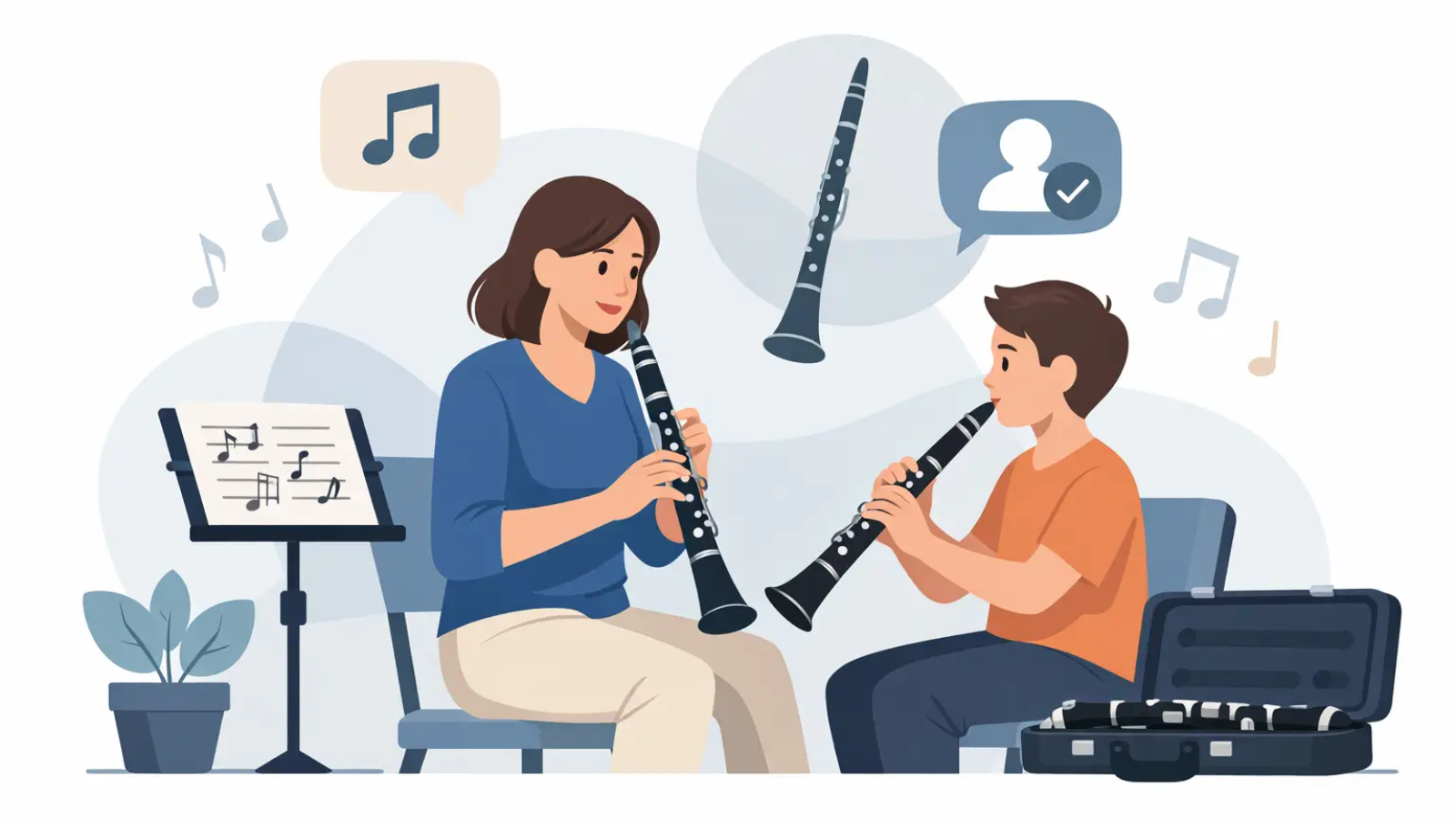
The first clarinet sound a beginner makes is rarely beautiful. It may squeak, crack, or barely come out at all. That is exactly why finding the right clarinet teacher for beginners matters so much. A good first teacher does more than correct mistakes – they make those early attempts feel normal, encouraging, and worth repeating.
Clarinet is one of the most rewarding instruments to learn, but it can feel surprisingly technical in the beginning. Students have to manage embouchure, breath, finger coordination, posture, and reading music all at once. For children, that can be a lot to juggle. For adults, it can feel frustrating to know what you want to play but not yet have the physical setup to produce it. A thoughtful teacher helps break those skills into manageable steps so progress feels steady instead of overwhelming.
What a clarinet teacher for beginners actually does
Many people assume beginner lessons are mostly about learning notes. Notes are part of it, of course, but strong early instruction goes much further. A teacher is shaping habits from day one, and those habits tend to stay with a student for a long time.
A beginner clarinet teacher usually starts by helping the student build a reliable setup. That includes how to assemble the instrument, how to hold it comfortably, how to place the reed, and how to form an embouchure that supports a clear sound. These details may seem small, but they affect everything that comes after. Students who skip this foundation often end up working much harder later to fix tension, squeaks, or uneven tone.
A strong teacher also pays attention to pacing. Some beginners move quickly into simple songs, while others need more time on breathing and tone production before reading becomes enjoyable. Neither approach is wrong. Good teaching is not about rushing through a method book. It is about noticing what the student needs in order to build confidence and real control.
Signs you have found the right fit
The best clarinet teacher for beginners is not always the most formal or the most strict. For a new student, the right fit usually comes down to communication, patience, and the ability to make technical work feel meaningful.
A good teacher explains concepts in plain language. Instead of saying only, “support more,” they might show how to take a relaxed breath, how the air should feel, or why the sound changes when the throat tightens. For younger students, this may mean using imagery and short exercises. For teens or adults, it may mean more direct anatomical or musical explanation. Either way, the teaching should meet the student where they are.
Encouragement matters too, but it should be specific. General praise is pleasant, yet detailed feedback is what helps students grow. A teacher who says, “Your fingers stayed much closer to the keys today, and that made the transition smoother,” is teaching the student what success feels like. That kind of feedback builds awareness, not just motivation.
It also helps when lessons feel personal. Some beginners are excited by school band music. Others want to play melodies they recognize, improve music reading, or simply try something creative after work or school. A teacher who adapts repertoire and exercises around those goals often gets better long-term results than one who teaches every student in exactly the same way.
Questions to ask before starting lessons
If you are searching for a teacher for yourself or your child, a few practical questions can tell you a lot. Ask how they work with complete beginners. Ask what happens in the first few lessons. Ask whether they teach posture, breathing, tone, and music reading together or in stages.
It is also worth asking how they handle frustration. Beginner clarinet has a learning curve. Some students are discouraged by squeaks, while others lose focus if progress feels too slow. An experienced teacher should be able to explain how they keep lessons positive while still maintaining structure and standards.
Lesson format matters as well. In-person instruction can be especially helpful at the start because a teacher can easily adjust hand position, instrument angle, and setup issues on the spot. Online lessons, however, can also work very well when they are taught thoughtfully. They offer flexibility for busy families, remove travel time, and can make consistent study easier to maintain. The better option often depends on schedule, age, attention span, and access to a quiet practice space.
Beginner clarinet lessons should feel structured, not rigid
New students usually thrive when lessons have a clear shape. That might include a warm-up, a tone exercise, a short reading activity, and one or two pieces in progress. Structure helps students know what to expect and gives practice sessions more direction at home.
Still, structure should not become rigidity. A child who had a hard school day may need a lesson that starts with sound games or easier material before returning to a challenging concept. An adult beginner may need extra time revisiting note reading without feeling rushed. Good pedagogy leaves room for adjustment.
This is where personalized instruction makes such a difference. At Allegro Ma Non Troppo, for example, beginner lessons are built around the student rather than forcing every learner into the same pace. That kind of tailored teaching can be especially helpful for families balancing busy schedules, for school band students who need targeted support, or for adults returning to music after many years away.
What progress looks like in the early months
Beginner progress on clarinet is rarely a straight line. One week the tone improves. The next week finger coordination clicks. Then a familiar note suddenly squeaks again. This does not mean the student is failing. It usually means several new skills are developing at once.
In the first months, a strong teacher looks for signs that matter more than perfection. Is the student assembling the instrument correctly with less help? Is the embouchure becoming more consistent? Are note transitions starting to feel smoother? Is reading getting a little faster? These are meaningful wins, even before the music sounds polished.
That said, beginners also need moments of musical satisfaction early on. Playing simple tunes, recognizable rhythms, or short duets helps students connect technical work to actual music-making. When lessons focus only on correction, students can lose sight of why they wanted to learn in the first place. Joy is not a bonus in music education. It is part of what keeps progress going.
Common mistakes when choosing a teacher
One common mistake is choosing based on availability alone. Scheduling does matter, especially for families, but convenience should not outweigh teaching fit. A teacher may have an open time slot and strong performance credentials, yet still not be the right guide for a true beginner.
Another mistake is assuming all beginner instruction is basically the same. It is not. Some teachers are excellent performers but have less experience introducing fundamentals in a patient, step-by-step way. Others are especially skilled at building confidence in new learners, spotting tension early, and making lessons approachable without lowering standards.
It is also easy to underestimate the importance of rapport. Students tend to practice more when they feel understood and supported. That does not mean lessons should be casual or unstructured. It means the teacher-student relationship should feel safe enough for questions, mistakes, and gradual growth.
Clarinet teacher for beginners: why the early match matters
The first teacher often shapes a student’s relationship with the instrument. A positive start can lead to years of musical growth, stronger school band participation, better practice habits, and much more confidence. A poor fit can make clarinet feel harder and less enjoyable than it really is.
This is especially true for beginners who are still deciding whether music lessons belong in their routine long term. If lessons feel too impersonal, too fast, or too discouraging, students may assume they are not musical. In reality, they may simply need teaching that is more responsive, creative, and clear.
The goal is not to find a teacher who promises instant results. Clarinet takes patience. The goal is to find someone who can guide that patience well, with solid pedagogy, warm encouragement, and a plan that fits the student in front of them.
A beginner does not need to sound advanced to be taken seriously. They need a teacher who hears potential in the first shaky notes and knows how to turn them into music, one steady lesson at a time.
Leave A Comment