
 Cart is empty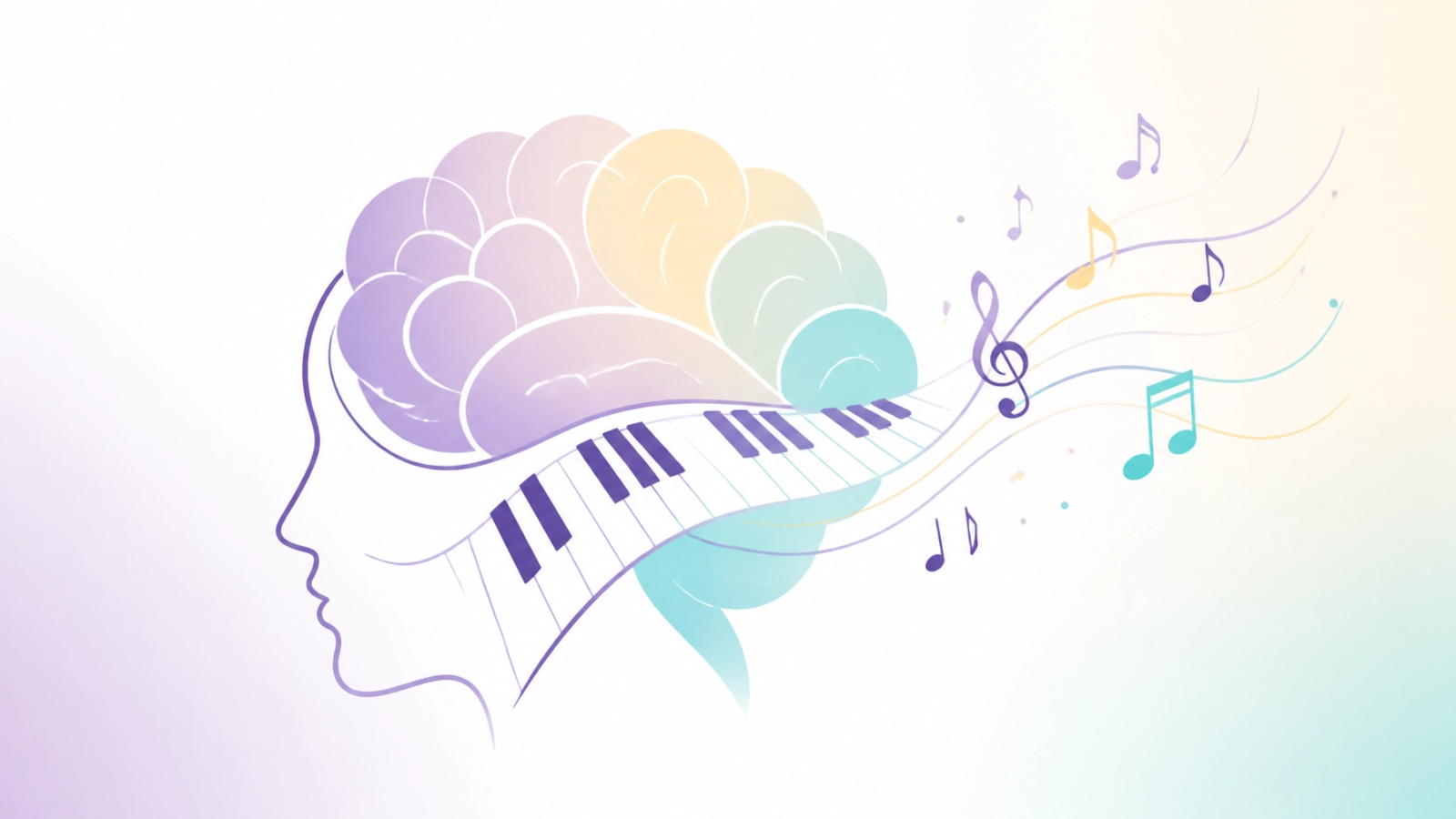
The human brain possesses a remarkable capacity to reorganize itself in response to new experiences, a phenomenon scientifically categorized as experience-dependent neuroplasticity. When you engage with a complex, multimodal task such as learning the piano, you are not merely acquiring a musical skill; you are initiating a significant physiological transformation within your neural architecture. Research in neuroscience and pedagogy suggests that piano training serves as one of the most comprehensive cognitive interventions available, engaging diverse regions of the brain simultaneously to improve executive function, auditory processing, and motor control.
At Allegro Ma Non Troppo, our piano lessons in Ottawa are designed to leverage these scientific principles, providing a structured environment where cognitive development is prioritized alongside musical proficiency. Whether you are a parent seeking to enhance your child's academic performance or an adult looking to maintain cognitive reserve, understanding the neurological mechanisms behind piano instruction is essential.
The Science of Multimodal Integration
The piano is a unique instrument because it requires the simultaneous processing of visual, auditory, and motor information. When you sit at the keyboard, your brain must translate abstract symbols on a page into precise physical movements. This process involves the visual cortex for reading notation, the motor cortex for finger movement, and the auditory cortex for monitoring the resulting sound.
This integration creates a feedback loop that strengthens the connections between these disparate brain regions. Studies using functional Magnetic Resonance Imaging (fMRI) have shown that even short-term training: as little as eleven weeks of beginner piano lessons: leads to measurable changes in how the brain processes audio-visual information. This enhancement in multisensory processing is a hallmark of increased cognitive efficiency. By challenging your brain to synchronize these inputs, you are effectively training it to handle complex information across other domains of your life.

Enhancing Executive Function and Inhibitory Control
Executive function refers to a set of cognitive processes that include working memory, flexible thinking, and self-control. These are the functions that allow you to manage time, pay attention, and transition between tasks. Beginner piano lessons specifically target these areas through the requirement of constant monitoring and error correction.
One of the most significant findings in music psychology is the impact of piano training on inhibitory control. This is often measured using the Stroop test, which requires participants to ignore distracting information to complete a task. Scientific interventions have demonstrated that older adults who engage in piano instruction show significant improvements in their performance on these tests. The act of reading one line of music while executing a different rhythm with each hand requires a level of focus and inhibition that directly translates to improved executive function in daily activities.
Furthermore, the logical structure of music theory plays a critical role in developing these cognitive traits. When you study music theory lessons in Ottawa, you are engaging in a form of mathematical logic that reinforces the brain's ability to recognize patterns and organize information systematically.
Bimanual Coordination and Structural Changes
Piano playing is perhaps the most demanding bimanual task in the musical world. Unlike instruments that require one hand to hold a position and the other to strike or bow, the piano demands that both hands operate independently yet in perfect synchrony. This requirement drives structural changes in the corpus callosum, the bridge of nerve fibers connecting the left and right hemispheres of the brain.
In children who undergo at least fifteen months of consistent keyboard instruction, researchers have observed increased cortical thickness and improved organization in the motor and auditory regions. This structural development is not localized; it affects the entire neural network, leading to better motor precision and faster processing speeds. For students in Ottawa, these benefits are particularly relevant for those participating in school bands, where technical precision and rhythmic accuracy are paramount.

Cognitive Reserve and Lifespan Benefits
The benefits of piano lessons are not restricted to the developing brain of a child. For adults and seniors, piano training serves as a proactive strategy to build cognitive reserve. This is the brain's ability to improvise and find alternate ways of getting a job done, which can help delay the onset of age-related cognitive decline.
Learning a new skill late in life provides the novel, effortful practice required to stimulate neural plasticity. Because piano involves a high level of "scaffolding": where new information is built upon previously mastered concepts: it keeps the brain in a state of active learning. Our studio offers piano lessons in Ottawa that are specifically tailored to adult learners, ensuring that the material is both challenging and cognitively rewarding.
Our bilingual instructors also provide lessons in both English and Spanish (clases de piano en Ottawa), which adds another layer of cognitive complexity. Bilingualism itself is known to enhance executive function, and combining language learning with music instruction creates a powerful environment for neural growth.
Rhythmic Precision and Auditory Processing
Auditory processing is the brain's ability to interpret the information it receives through the ears. Piano training sharpens this ability, particularly in the areas of pitch discrimination and rhythmic timing. This has a direct correlation with language skills, such as verbal sequencing and vocabulary acquisition.
The use of a metronome and the study of rhythmic theory help to calibrate the brain's internal clock. This precision is vital for effective communication and social interaction, as it helps you better understand the nuances of speech and timing in conversation. The scientific consensus is clear: the auditory-motor synchronization required for piano performance results in a more efficient and responsive auditory system.

Pedagogical Structure at Allegro Ma Non Troppo
To maximize the cognitive benefits of music, the instruction must be systematic and evidence-based. At Allegro Ma Non Troppo, our master-level teachers utilize pedagogical strategies that ensure every student is challenged at the appropriate level. This includes:
- Scaffolding: Breaking down complex techniques into manageable components to ensure successful neural encoding.
- Deliberate Practice: Focusing on specific areas of weakness to drive cortical reorganization.
- Multimodal Engagement: Incorporating visual, auditory, and kinesthetic learning styles into every lesson.
- Specialized Support: Providing targeted instruction for students in school bands to enhance their technical precision and performance confidence.
We offer flexible scheduling to accommodate the needs of busy families and professionals in Ottawa, with lesson durations of 30, 45, and 60 minutes. Our studio provides both in-person instruction at our Ottawa location and online lessons for those who prefer the comfort and environmental advantages of their own home.
Logistics and Accessibility
Transparency in pricing and policy is fundamental to our professional standard. We aim to make high-quality music education accessible through various plans and discounts:
- Lesson Bundles: Reduced rates are available when you purchase bundles of 4, 8, or 12 lessons.
- Family Plan: A 10% discount is applied to the total for families with 3 or more members enrolled.
- Trial Policy: We provide a free trial lesson for all new students, allowing you to experience our teaching methodology before committing to a plan.
- Professional Faculty: Our instructors hold Master-level qualifications and are experts in their respective fields, including flute, clarinet, and piano.
If you are looking for music lessons in Ottawa, our studio offers a premium environment focused on both artistic excellence and cognitive development.
Leave A Comment