
 Cart is empty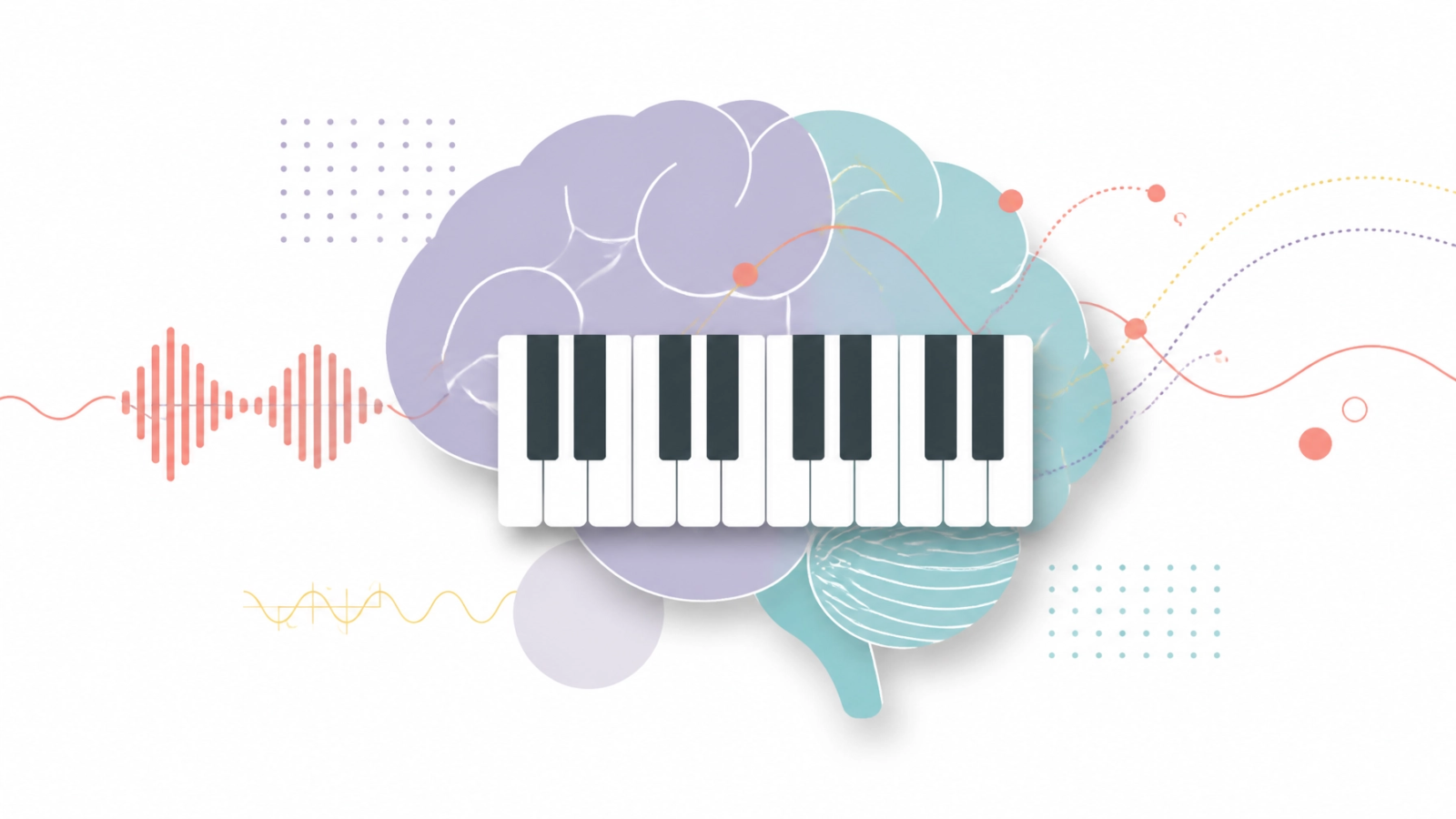
The human brain is a highly adaptive organ characterized by its capacity for structural and functional reorganization in response to environmental stimuli and skill acquisition. This phenomenon, known as neural plasticity, is perhaps nowhere more evident than in the study of individuals engaging in musical training. When you begin beginner piano lessons, you are not merely learning a cultural skill; you are initiating a profound physiological transformation within your cerebral cortex. Recent advancements in neuroimaging, including functional Magnetic Resonance Imaging (fMRI) and Diffusion Tensor Imaging (DTI), have provided empirical evidence that the act of playing the piano modulates brain architecture across multiple domains, including motor control, auditory processing, and executive function.
This guide examines the scientific mechanisms through which piano training reshapes the brain, providing a data-driven perspective for students and families considering piano lessons Ottawa. By understanding the neurological scaffolding that supports musical proficiency, you can better appreciate the long-term cognitive advantages of consistent practice.
The Motor Cortex and Sensorimotor Integration
The primary motor cortex and the premotor cortex are the regions most directly involved in the physical execution of piano playing. The piano requires a unique level of bimanual coordination, where the hands must often perform independent rhythmic and melodic patterns simultaneously. Research conducted by Gaser and Schlaug (2003) demonstrated that keyboard players exhibit increased gray matter volume in the primary motor cortex compared to non-musicians. This structural change is particularly evident in the areas representing the fingers and hands.
As you progress through your lessons, the brain undergoes a process of cortical remapping. The neural territory dedicated to controlling the fine motor movements of each finger expands. This expansion is not limited to long-term experts. A landmark study published in the Journal of Neuroscience by Hyde et al. (2009) tracked children over 15 months of instrumental training and found significant structural changes in the motor cortex after only a relatively short period of instruction. These changes correlate with improved manual dexterity and precise timing.

Furthermore, piano training enhances sensorimotor integration. This involves the brain's ability to translate visual information from a score into motor commands and then use auditory feedback to adjust those commands in real-time. This closed-loop system strengthens the pathways between the visual, motor, and auditory systems. For those seeking music lessons Ottawa, this physiological efficiency translates to better overall physical coordination and reaction times in non-musical contexts as well.
Auditory Processing and Heschl's Gyrus
The auditory system undergoes significant specialization through musical training. Heschl's gyrus, located in the primary auditory cortex, is the first cortical structure to process incoming auditory information. Studies have consistently shown that pianists possess a larger Heschl's gyrus volume and higher neural sensitivity to pitch and timbre.
When you engage in piano lessons, your brain must learn to differentiate between subtle variations in frequency and duration. This necessity drives the refinement of auditory processing. According to research from the Brain and Creativity Institute (Habibi et al., 2016), children involved in music instruction show accelerated maturation of the brain's processing of sound. This acceleration is particularly beneficial for language development and speech perception.
- Improved frequency discrimination helps in the acquisition of second languages.
- Enhanced auditory temporal processing aids in the recognition of phonetic patterns.
- Increased neural tracking of speech envelopes supports reading and verbal memory.
These findings highlight why bilingual music lessons are particularly effective; the brain utilizes shared neural networks for both musical and linguistic syntax processing. For families in the Ottawa community interested in kids music lessons Ottawa, the auditory benefits of the piano provide a scientific foundation for academic success in literacy and communication.

White Matter Integrity and the Corpus Callosum
Beyond gray matter changes, piano lessons also affect the brain's white matter: the fatty insulation known as myelin that allows signals to travel quickly between different brain regions. One of the most significant white matter structures is the corpus callosum, which facilitates communication between the left and right hemispheres of the brain.
Piano playing requires high-level inter-hemispheric communication to coordinate the independent movements of the left and right hands. Longitudinal studies have shown that musicians who start training at a young age have a significantly larger anterior corpus callosum. This increased size suggests a greater density of fibers, allowing for faster and more efficient transfer of information between the motor and sensory areas of both hemispheres.
The benefits of improved white matter integrity extend beyond the piano. Enhanced connectivity is associated with better executive function and faster processing speeds. Whether you are participating in online flute lessons or online clarinet lessons, the requirement to coordinate breath, finger movement, and auditory feedback serves as a rigorous workout for the brain's connectivity networks.

Executive Function and the Prefrontal Cortex
Executive functions refer to a set of cognitive processes that include working memory, inhibitory control, and cognitive flexibility. These processes are managed primarily by the prefrontal cortex. Piano training is a demanding cognitive task that requires you to hold musical patterns in your working memory, inhibit incorrect responses, and switch focus between reading notes and monitoring technique.
Quantitative analysis of students in music theory lessons online demonstrates that the systematic study of musical structure strengthens these executive functions. By learning to analyze complex harmonies and rhythmic subdivisions, students build a cognitive reserve that protects against age-related cognitive decline and improves focus in school and professional settings.
- Working memory: Holding several measures of music in mind while playing.
- Inhibitory control: Resisting the urge to play a note too early or too loud.
- Cognitive flexibility: Adapting to changes in tempo, key, or dynamics.
These executive benefits are a primary reason why Allegro Ma Non Troppo emphasizes a structured pedagogical approach. By integrating theory with practice, we ensure that the cognitive load is managed effectively to promote maximum neuroplastic change.
Implementing Neuroplastic Principles in Ottawa
At Allegro Ma Non Troppo, our teaching methodology is grounded in these scientific principles. We recognize that for the cerebral cortex to reshape itself, the training must be frequent, focused, and progressive. This is why we offer flexible scheduling options, including 30, 45, and 60-minute sessions, to accommodate the consistent practice schedules required for neural adaptation.
Our Ottawa studio and online platforms provide a specialized environment where bilingual instruction in English and Spanish further stimulates cognitive flexibility. Whether you are interested in flute lessons Ottawa or ukulele lessons Ottawa, our Master-level teachers use scaffolding techniques to ensure that the difficulty level is precisely calibrated to encourage growth without causing frustration.

The physiological benefits of piano lessons are accessible to all ages. For children, the focus is on developmental plasticity: shaping the brain as it grows. For adults, the focus shifts to maintenance and the creation of new neural pathways to preserve cognitive health. Our Family Plan also allows multiple members to learn simultaneously, creating a supportive community environment that enhances the social and emotional regulation benefits associated with music.
Conclusion
The evidence from contemporary neuroscience is clear: beginner piano lessons are a powerful tool for physical brain development. By engaging the motor, auditory, and prefrontal cortices, the piano facilitates a level of neural reorganization that few other activities can match. From the expansion of gray matter in the motor cortex to the strengthening of white matter in the corpus callosum, the effects are measurable, significant, and long-lasting.
Choosing a music school that understands these scientific foundations is essential for maximizing your potential. At Allegro Ma Non Troppo, we combine expert instruction with a deep respect for the cognitive and physiological processes of learning. We invite you to experience this transformation firsthand.
Leave A Comment