
 Cart is empty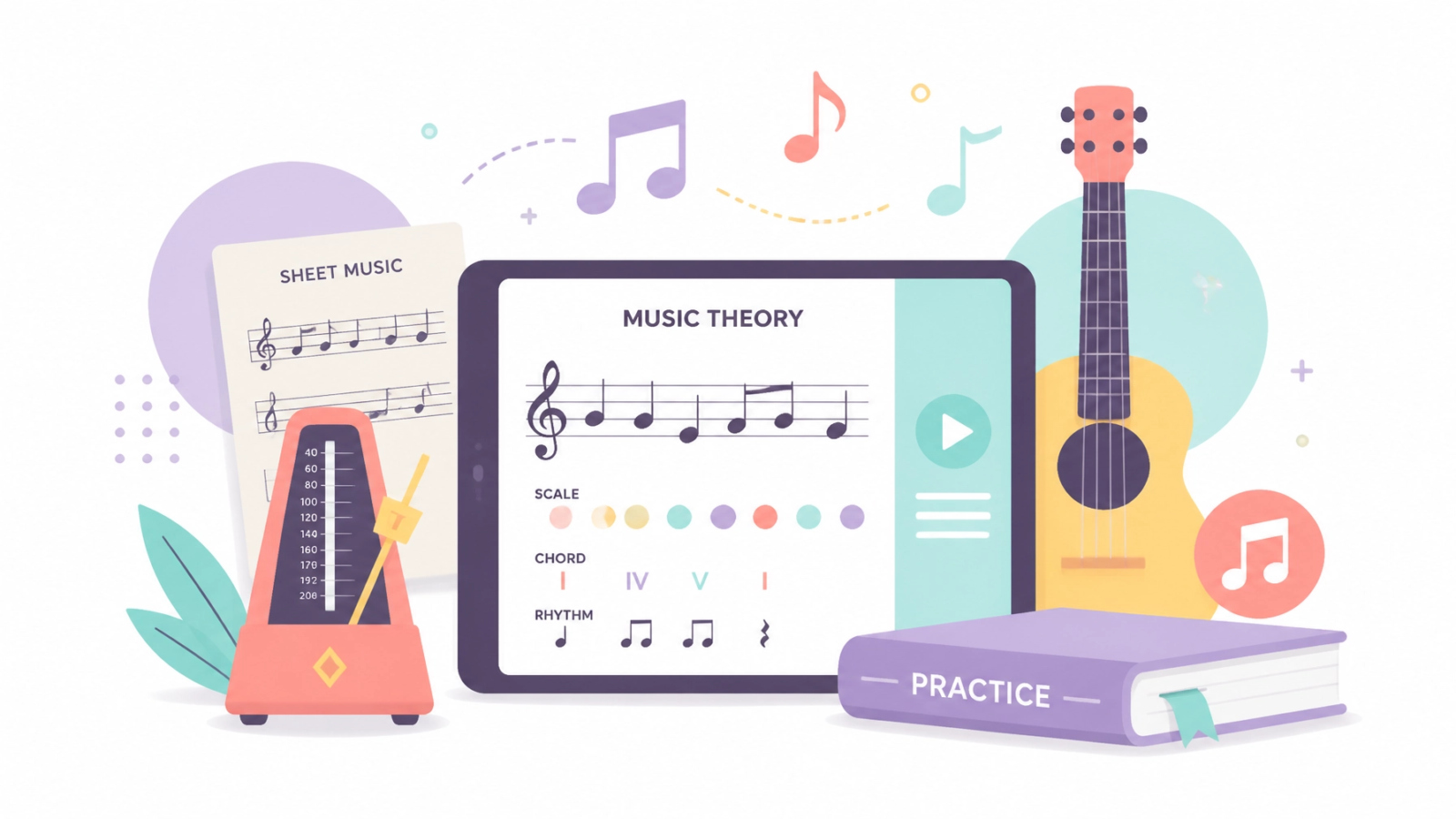
The pursuit of musical mastery requires more than the repetitive physical execution of notes. It demands a sophisticated understanding of the underlying structures that govern sound. When you integrate music theory lessons online with advanced instrumental technique, you create a synergistic learning environment that accelerates cognitive development and technical precision. This comprehensive approach, often referred to as pedagogical scaffolding, ensures that your physical performance is guided by an analytical framework, leading to a higher level of artistry and efficiency.
At Allegro Ma Non Troppo, our Master-level instructors prioritize this dual-track methodology. Whether you are studying in person at our Ottawa studio or through our robust digital platform, the synthesis of theory and practice remains the cornerstone of our curriculum. By understanding the science of music, you transform from a performer who simply executes commands into a musician who understands the logic behind every phrase.
The Cognitive Science of Integrated Musical Learning
Research in neuroscience has consistently demonstrated that musical training is a powerful driver of neural plasticity. When you engage in music theory lessons Ottawa while simultaneously practicing an instrument, you are stimulating multiple brain regions. This process involves the auditory cortex for sound processing, the motor cortex for physical execution, and the prefrontal cortex for analytical reasoning.
Integrating theoretical knowledge: such as understanding intervals, harmonic progressions, and formal structures: with physical practice creates stronger neural pathways. This is known as multimodal integration. When you recognize a ii-V-I progression in a piece of music, your brain does not just see a series of disconnected notes. Instead, it identifies a structural pattern. This recognition reduces the cognitive load on your working memory, allowing you to focus on the nuances of your performance, such as tone quality and emotional expression.

For students in school bands or those pursuing advanced technical goals, this scientific approach is essential. It moves the learning process away from rote memorization and toward a deep, structural understanding. This transition is critical for developing executive function and advanced auditory processing skills, which are transferable to academic disciplines such as mathematics and linguistics.
Applying Theory to Wind Instruments: Flute and Clarinet
Advanced technique on wind instruments like the flute and clarinet is often viewed through the lens of physical mechanics: breath support, embouchure stability, and finger dexterity. However, when you integrate theory into your flute lessons, the physical act of playing becomes more intentional.
Understanding the harmonic implications of a passage allows you to make informed decisions about phrasing and dynamics. For example, knowing where a phrase reaches its harmonic tension (the dominant) and where it resolves (the tonic) informs your breath control. You learn where to take a breath without interrupting the logical flow of the music. In our clarinet lessons, we emphasize the relationship between interval theory and fingerings. By understanding the acoustic properties of the instrument and the physics of the overtone series, students can achieve better intonation and technical fluidity.
This integrated approach is particularly effective for intermediate and advanced students who are preparing for ensemble performances or competitions. It provides the tools necessary for self-correction and independent practice, which are vital components of music lessons Ottawa.
Harmonic Foundations in Piano and Ukulele
For polyphonic instruments like the piano and ukulele, the integration of theory is even more direct. In piano lessons, every piece of music is a living example of counterpoint and harmony. By studying music theory concurrently, you learn to see the keyboard not just as 88 keys, but as a grid of scales, chords, and modulations.

This theoretical grounding is equally important in our ukulele lessons. While the ukulele is often seen as an introductory instrument, it offers a unique perspective on chord voicing and fretboard logic. When you understand the intervals that form a major or minor chord, you are no longer relying on memorized finger shapes. You are applying a universal system of musical organization.
Our bilingual instructors, fluent in both English and Spanish, ensure that these complex concepts are accessible to all members of our community. Whether you refer to it as music theory or teoría musical, the principles remain the same. This linguistic flexibility is a key feature of our music teachers Ottawa, providing a inclusive environment for families who value a multicultural education.
The Advantages of Online Music Theory Integration
The transition to online lessons has provided unique opportunities for integrating theory with practice. Digital tools such as screen sharing, interactive whiteboards, and notation software allow for a seamless transition between playing an instrument and analyzing a score.
- Digital notation software allows students to visualize their compositions and arrangements in real-time.
- Online platforms facilitate the immediate sharing of theoretical resources, such as scale charts and harmonic analyses.
- Recording capabilities enable students to review their own performances through an analytical lens, identifying areas where theoretical understanding and technical execution may be disconnected.
- The comfort of your own home environment reduces performance anxiety, allowing for a more focused exploration of complex theoretical concepts.
This flexibility is a significant advantage of our online music lessons. It allows us to maintain a high standard of education while accommodating the busy schedules of families in Ottawa and beyond.

Strategic Methodology for Accelerated Results
To achieve maximum results, we recommend a structured approach to your daily practice. This involves a deliberate balance between technical exercises and theoretical analysis.
- Begin your practice session with a technical warm-up, focusing on breath control or finger dexterity.
- Transition to the study of a specific theoretical concept, such as a new scale or a particular cadence.
- Apply that concept directly to your repertoire. Analyze the piece you are learning to identify the appearance of that scale or cadence.
- Use slow, focused practice to ensure that your physical execution aligns with your theoretical understanding.
- Finish by recording a short segment of your performance and evaluating it based on both technical accuracy and structural clarity.
By following this methodology, you ensure that every minute of your practice time is contributing to your overall musical development. This is the hallmark of a Master-level education.
Transparency in Logistics and Enrollment
At Allegro Ma Non Troppo, we believe in total transparency regarding our services and pricing. We offer various lesson durations to suit your specific goals and scheduling needs. Our Master-level instruction is available for individuals and families, with specialized support for those involved in school bands.
- Free Trial Lesson: 0.00 (Standard value: 35.00)
- 30 Minute Lesson: 35.00 per session
- 45 Minute Lesson: 50.00 per session
- 60 Minute Lesson: 65.00 per session
- Lesson Bundles: Purchase a bundle of 10 lessons and receive a 5 percent discount.
- Family Plan: Families with 3 or more members enrolled receive a 10 percent discount on all lessons.
Our scheduling is flexible, and we offer both in-person sessions at our Ottawa studio and online lessons through our secure platform. We are committed to providing expert instruction that is personalized to your individual tastes and goals.

Elevating Your Musical Journey
Integrating music theory with instrumental technique is not merely an academic exercise; it is the most efficient path to becoming a proficient and expressive musician. By engaging with the science of music, you develop the cognitive flexibility and technical precision required for advanced performance.
Whether you are interested in music theory lessons to supplement your current studies or are looking to start a new instrument, our team of expert teachers is here to guide you. We invite you to experience the difference that expert, research-backed instruction can make.
Leave A Comment