
 Cart is empty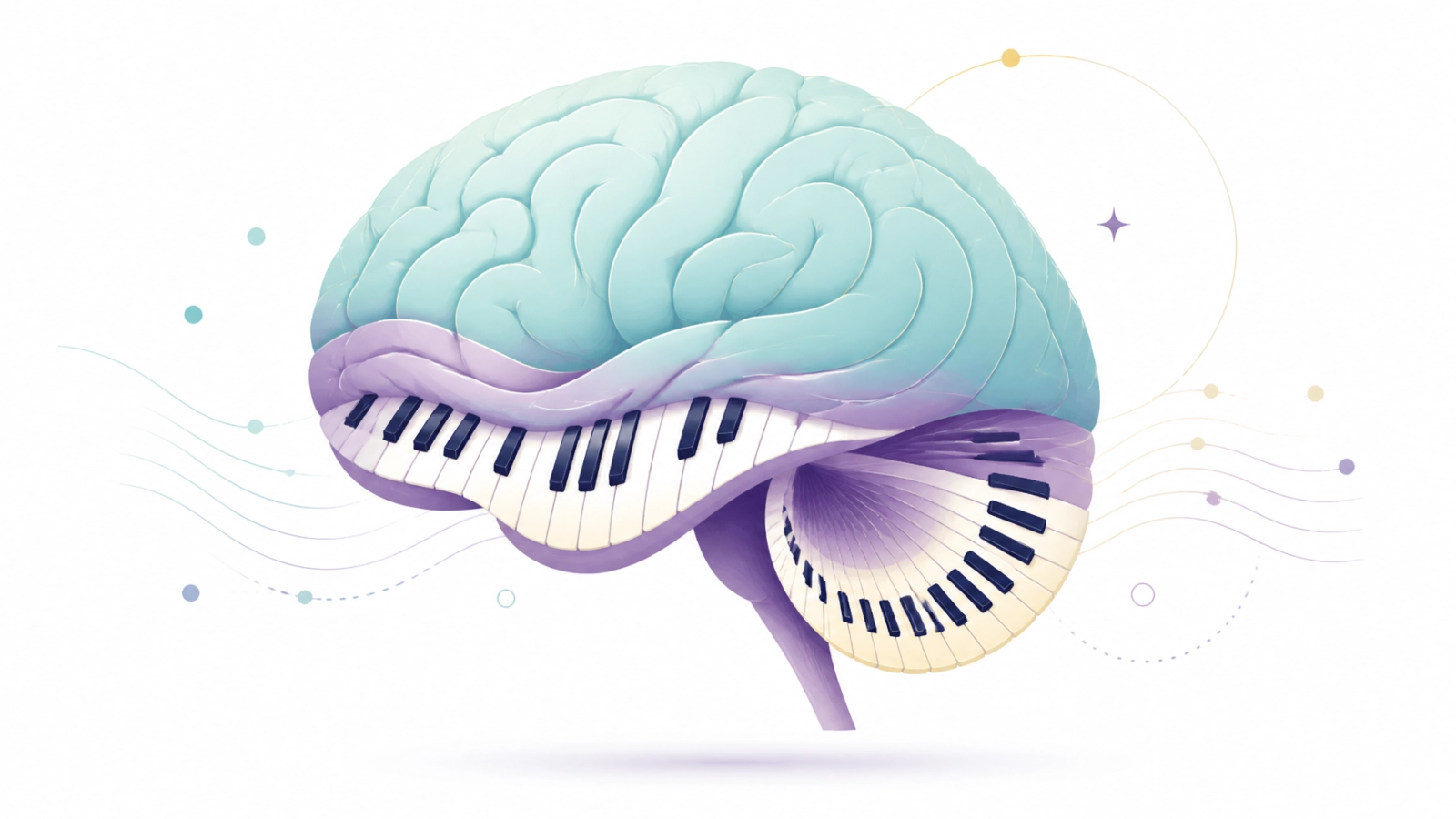
The human brain possesses an extraordinary capacity for experience-dependent reorganization, a phenomenon known as neuroplasticity. While various cognitive activities stimulate neural pathways, few tasks are as demanding or as rewarding for the cerebral cortex as the initiation of musical training. For individuals engaging in beginner piano lessons, the brain undergoes a series of rapid structural and functional modifications that affect everything from fine motor control to complex auditory processing.
Research in the fields of neuroscience and pedagogy suggests that the piano serves as a unique multisensory challenge. It requires the simultaneous integration of visual information (reading notation), motor coordination (independent finger movement), and auditory feedback (monitoring pitch and rhythm). This complex interplay triggers measurable changes in gray matter density and white matter connectivity, providing a compelling case for the cognitive advantages of music education.
Structural Plasticity in the Primary Motor and Somatosensory Cortices
The most immediate physiological response to beginner piano lessons occurs within the primary motor cortex (M1) and the primary somatosensory cortex (S1). These regions, located along the central sulcus of the brain, are responsible for planning and executing voluntary movements and processing tactile information from the body.
When you begin piano training, your brain must develop highly specialized representations for each finger. In non-musicians, the cortical representation of the hand is often less differentiated. However, as you engage in repetitive, precise movements required for scales and melodies, the "maps" in M1 and S1 begin to expand and reorganize. Longitudinal studies involving children have demonstrated that even 15 months of consistent practice can lead to significant growth in the motor areas responsible for finger control (Hyde et al., 2009).

This reorganization is not limited to childhood. Adult novices starting piano lessons Ottawa also show microstructural organization changes after remarkably short periods. Research utilizing diffusion-weighted MRI has identified a reduction in mean diffusivity in the left premotor cortex after just a single 45-minute session, suggesting that the brain begins to optimize its white matter pathways almost immediately upon exposure to new motor tasks (Bengtsson et al., 2005).
The Corpus Callosum and Inter-Hemispheric Communication
The piano is inherently a bilateral instrument, requiring the left and right hands to perform different but synchronized tasks. This requirement places a significant load on the corpus callosum, the large bundle of white matter fibers that connects the two cerebral hemispheres. Effective communication between hemispheres is essential for the temporal precision required in musical performance.
Neuroscientific investigations have revealed that individuals who undergo musical training, especially before the age of seven, exhibit a significantly larger anterior corpus callosum compared to non-musicians (Schlaug et al., 1995). This structural enlargement facilitates faster and more efficient transfer of information between the motor cortices of both hemispheres. For students enrolled in kids music lessons Ottawa, this structural strengthening provides a foundation for improved bimanual coordination that extends beyond the piano to other physical and cognitive tasks.

The strengthening of these neural bridges is a hallmark of bilingual music lessons as well. The cognitive demand of navigating two languages while simultaneously managing the complex motor-auditory tasks of piano performance creates a highly resilient neural architecture. This dual-stream processing enhances executive function and increases the brain's "cognitive reserve," a factor that has been linked to delayed onset of cognitive decline in later life.
Auditory Cortex Reorganization and Frequency Perception
Beyond motor control, beginner piano lessons fundamentally alter how the brain perceives sound. The primary auditory cortex, located in the superior temporal gyrus (STG), becomes more tuned to the nuances of frequency, timbre, and rhythm. This process involves the recruitment of more neurons to respond to specific musical tones, a phenomenon known as cortical tonotopic map reorganization.
Studies have shown that musicians possess an enhanced ability to detect small changes in pitch and timing, even when not actively playing an instrument. This is reflected in the "mismatch negativity" (MMN) response, an automatic neural signature of sound change detection. Beginners who supplement their practice with music theory lessons online often see even faster progress in these areas, as the conceptual understanding of harmony and rhythm provides a scaffolding for the brain to organize incoming auditory data.
As students progress in their flute lessons Ottawa or clarinet lessons Ottawa, they may notice that their "musical ear" developed at the piano translates to these wind instruments. The auditory cortex does not operate in isolation; it builds a generalized framework for sound analysis that benefits all forms of musical engagement.
The Expansion-Retraction Model of Learning Efficiency
A fascinating aspect of neuroplasticity in beginner piano lessons is the "expansion-retraction" pattern of neural activation. During the initial weeks of learning, the brain exhibits widespread activation across multiple regions, including the prefrontal cortex, parietal lobes, and cerebellum. This reflect the high cognitive effort required to coordinate sight, touch, and sound.
As the skill becomes more automatic through deliberate practice, the brain becomes more efficient. Functional MRI (fMRI) scans of intermediate students show that the total volume of activated brain tissue actually decreases as performance improves. The brain "prunes" away unnecessary or inefficient pathways, concentrating the workload into a highly specialized, streamlined circuit. This transition from conscious effort to subconscious automatism is a primary goal of pedagogy at Allegro Ma Non Troppo.

Cognitive Benefits and Academic Performance
The structural changes induced by beginner piano lessons have significant implications for broader cognitive development. There is a strong correlation between musical training and improvements in executive functions, such as working memory, attention, and inhibitory control. These skills are governed by the prefrontal cortex and are critical for academic success.
- Working Memory: Memorizing a piece of music requires the brain to hold and manipulate sequences of notes and rhythms, strengthening the neural circuits used for mathematical and logical tasks.
- Spatial-Temporal Reasoning: The layout of the piano keyboard provides a physical map of pitch, which helps students visualize and understand spatial relationships, a skill vital for STEM subjects.
- Attention and Focus: The discipline required for sustained practice trains the brain to maintain focus on complex tasks, reducing distractibility in classroom settings.
For families seeking music lessons Ottawa, these cognitive "side effects" are often as valuable as the musical proficiency itself. By investing in piano lessons in Ottawa, parents are providing their children with a biological advantage that resonates throughout their academic careers.
Implementing Neural Growth: How it Works at Allegro Ma Non Troppo
At Allegro Ma Non Troppo, our pedagogical approach is designed to maximize these neurological benefits through evidence-based instruction. We offer a structured environment that supports the brain’s natural learning cycles, whether you are interested in ukulele lessons Ottawa or specialized woodwind training.
Our logistical framework is designed for transparency and efficacy:
- Bilingual Instruction: Lessons are available in English and Spanish, fostering the cognitive advantages of bilingualism alongside musical training.
- Flexible Scheduling: We offer 30, 45, and 60-minute sessions to accommodate different attention spans and developmental stages.
- Expert Faculty: Our teachers hold Master-level qualifications, ensuring that every lesson is grounded in professional expertise and pedagogical research.
- Pricing and Packages: We offer competitive rates with a focus on long-term development.
- Individual 30-minute lessons: $35.00
- Individual 45-minute lessons: $50.00
- Individual 60-minute lessons: $65.00
- Family Plan: Savings are available for families with 3 or more members (contact us for specific adjustments).
- Bundle Discounts: Pre-payment for lesson bundles results in a lower per-lesson cost (e.g.,
$350.00$315.00 for a 10-lesson starter pack).
Whether you choose online flute lessons or in-person clarinet lessons Ottawa, our studio provides a professional atmosphere conducive to deep learning. We address common pain points such as scheduling conflicts by offering flexible online options, allowing you to prioritize neural development from the comfort of your home.
Summary of Cortical Reorganization
The scientific consensus is clear: beginner piano lessons are a potent catalyst for structural and functional change in the cerebral cortex. By challenging the motor, somatosensory, and auditory systems simultaneously, piano training creates a more interconnected and efficient brain.
- Motor Cortex (M1): Expansion of finger representations and increased white matter organization.
- Somatosensory Cortex (S1): Enhanced tactile processing and sensory mapping.
- Corpus Callosum: Improved inter-hemispheric communication and bimanual coordination.
- Auditory Cortex: Superior pitch and frequency discrimination through tonotopic reorganization.
The journey from a novice's first scale to the fluent performance of a complex piece is mirrored by a physical transformation within the brain. This "rewiring" process provides a lifelong foundation for cognitive health and artistic expression.
Leave A Comment