
 Cart is empty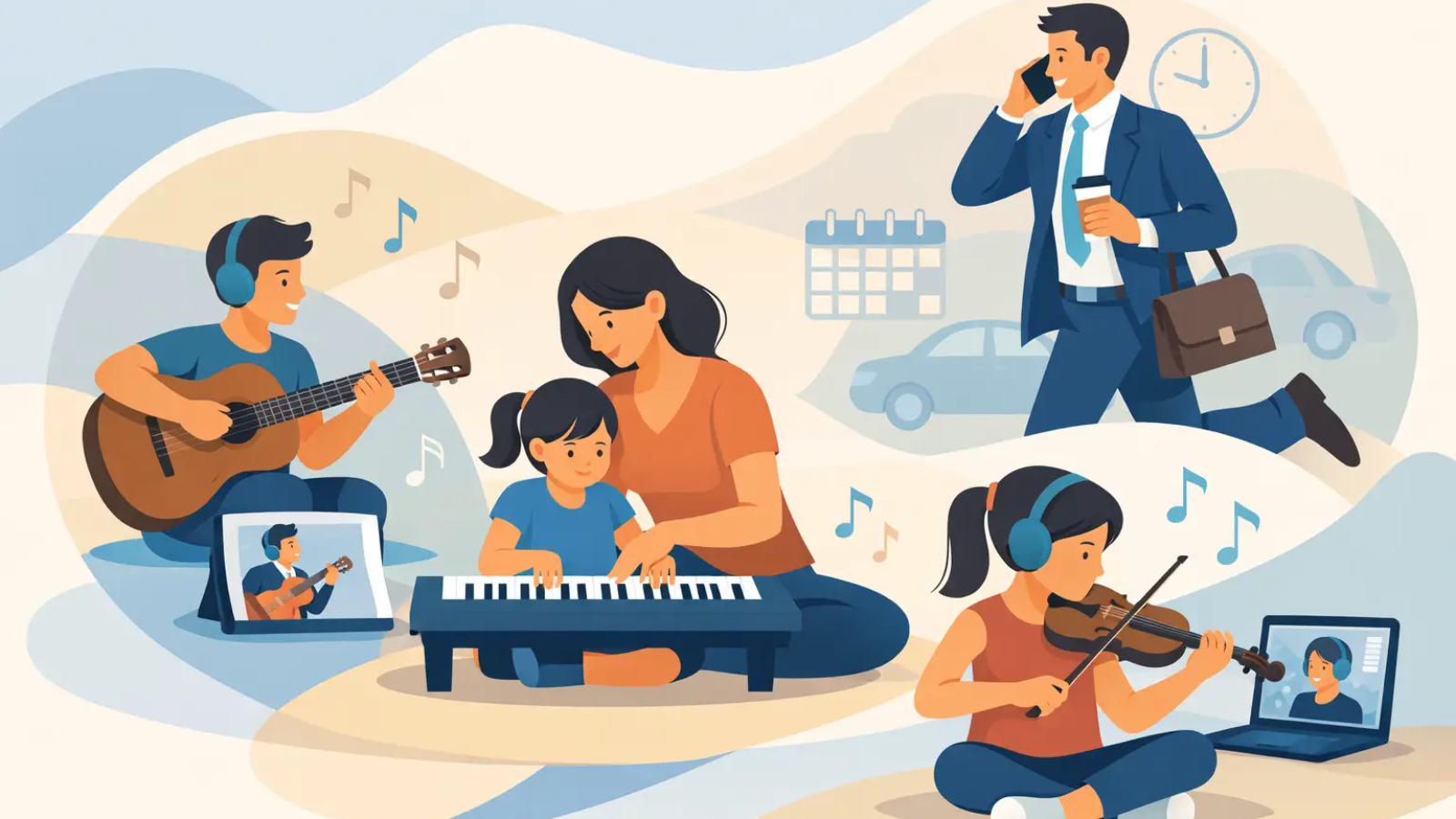
By Thursday evening, many families are already negotiating the rest of the week. One child has band rehearsal, another has homework that somehow multiplied, and a parent is still answering emails between dinner and dishes. In that reality, music lessons for busy families need to do more than sound appealing. They need to fit real schedules, reduce stress, and still lead to meaningful progress.
That is where the right teaching approach matters. A good lesson plan is not just about what instrument a student studies. It is also about lesson length, realistic home practice, teacher communication, and whether the experience feels encouraging instead of one more thing to manage. Families do not need more pressure. They need a way to make music part of life without turning it into a weekly scramble.
Why music lessons fail busy schedules
Most families do not stop music lessons because they stopped caring about music. They stop because the setup never worked for the way their week actually looks.
Sometimes the problem is travel time. A 30-minute lesson can quietly become a 90-minute commitment once driving, parking, waiting, and getting everyone back home are included. Sometimes the issue is a one-size-fits-all teaching model. A child who needs variety, a teen preparing school repertoire, and an adult beginner returning to music do not thrive in the same structure.
There is also the hidden problem of unrealistic expectations. If a lesson assumes a student will practice 45 minutes every day, many families will feel behind by week two. That does not mean the student lacks ability. It usually means the plan was not built around real life.
What music lessons for busy families should include
Flexible music study still needs structure. In fact, busy students often do better when the structure is clear, personalized, and manageable.
First, lesson goals should be specific. A younger beginner might be working on steady rhythm, hand position, and confidence with a favorite tune. A school band student may need targeted support for tone, articulation, and audition music. An adult learner may want to play for enjoyment while developing reading skills at a comfortable pace. When goals are clear, families can see progress even during busy seasons.
Second, lesson format should match the family’s routine. Online lessons can be a strong option when commuting is the biggest obstacle. They remove weather delays, traffic, and extra transition time, which can make a surprising difference during the school year. In-person lessons can be ideal for students who focus better in a studio setting or benefit from hands-on guidance. Neither format is automatically better. It depends on the student, the instrument, and what the family can sustain consistently.
Third, practice expectations need to be realistic. Short, focused practice often works better than long sessions that feel impossible to maintain. Ten to fifteen minutes of intentional work several times a week can build technique and confidence, especially for beginners. For advancing students, the plan may need more time, but it should still be broken into clear tasks rather than vague instructions to practice more.
The best lesson plan is not the busiest one
Families sometimes assume that serious music study has to feel intense all the time. That is not necessarily true. Strong teaching is not about filling every minute with difficulty. It is about choosing the next right step and building from there.
A personalized teacher can adjust pacing when school workloads spike, performances approach, or family life gets unusually full. That flexibility helps students stay connected to music instead of feeling like they are failing at it. Progress is rarely perfectly linear. What matters is that the student keeps developing technique, listening skills, and musical confidence over time.
This is especially important for children and teens. If music becomes associated only with stress, motivation drops quickly. But when lessons include repertoire the student actually enjoys, creative problem-solving, and encouragement grounded in pedagogy, students are far more likely to stay engaged. They begin to see music as a meaningful part of their identity, not just another appointment.
How families can make lessons sustainable
The most successful music routines are usually simple. They are built around habits that can survive a normal week, not an ideal week.
One useful approach is to attach practice to an existing routine. Right after school is often effective for younger students before the evening gets crowded. For teens, a shorter practice block after dinner may be more realistic. Adults sometimes do best with a set time on two or three predictable days rather than promising themselves daily practice they cannot maintain.
It also helps to keep the instrument accessible. If setting up takes too long, practice becomes easy to skip. A flute or clarinet stored ready to go, a piano bench already clear, or a ukulele kept in a visible spot can make practice feel like a natural next step instead of a project.
Families with more than one student should think carefully about timing. Back-to-back lessons can be far easier to manage than separate trips on separate days. Family discounts can help financially, but the logistical value matters too. A coordinated schedule often makes the difference between lessons that last one semester and lessons that become a lasting part of family life.
Choosing between online and in-person lessons
For busy households, this choice often comes down to energy as much as time.
Online lessons work well for students who are comfortable learning at home and for families trying to reduce transitions. They are especially helpful during winter months, on high-traffic days, or when a parent is balancing several pickups and activities. Students can move directly from schoolwork to music study without losing momentum to the commute.
In-person lessons can offer a different kind of focus. Some students respond well to a dedicated learning space outside the house. A teacher can also observe posture, breathing, hand position, and physical setup in a very immediate way. For instruments like beginner piano, flute, or clarinet, that can be valuable, especially in early stages.
A thoughtful studio will help families choose based on what serves the student best, not on a rigid rule. Some learners even do well with a mix over time depending on the season and their goals.
What personalized teaching really changes
Personalized instruction is often described as a nice extra, but for busy families it is much more practical than that. It saves time.
When a teacher understands how a student learns, lessons move more efficiently. The teacher can choose repertoire that motivates practice, explain theory in a way that makes sense, and focus on the technical issues that are actually holding the student back. That means fewer weeks of spinning in circles.
This matters for beginners, but it is just as important for school band students. A student preparing for a festival, chair test, or performance often does not need generic support. They need targeted help with their specific music, stronger reading skills, and a strategy for practicing under a deadline. A teacher with solid pedagogy and performance experience can make that process feel much more manageable.
For bilingual families, learning in English or Spanish can also make lessons more comfortable and more effective. Clear communication supports confidence, especially for younger students who are still learning how to talk about what feels difficult.
A realistic way to start music lessons for busy families
The best time to begin is usually not when life becomes perfectly calm. That week may never arrive. A better starting point is when the family is ready to try a lesson structure that respects current reality.
Begin with a lesson length that feels sustainable. Not every student needs the longest session right away. Start with goals that match the student’s age, experience, and available practice time. Let the teacher know what the family calendar actually looks like. That honesty helps create a plan the student can follow with confidence.
A free trial lesson can be especially useful here. It gives families a chance to see how the teacher communicates, how the student responds, and whether the format feels workable before making a longer commitment. At Allegro Ma Non Troppo, that first conversation often helps families realize that music study can be both structured and flexible, which is exactly what many households need.
Music does not have to compete with family life. With the right support, it can steady it a little – one lesson, one practice session, one small win at a time.
Leave A Comment