
 Cart is empty
Meta description: Learn how neuroscience explains flute sight-reading, eye-hand span, anticipation, breathing, and sensorimotor integration in music lessons Ottawa.
If you are researching music lessons Ottawa, sight-reading deserves more than repeated note naming. Flute reading requires your visual system, auditory processing, breathing, attention, and finger movements to operate as one coordinated network.
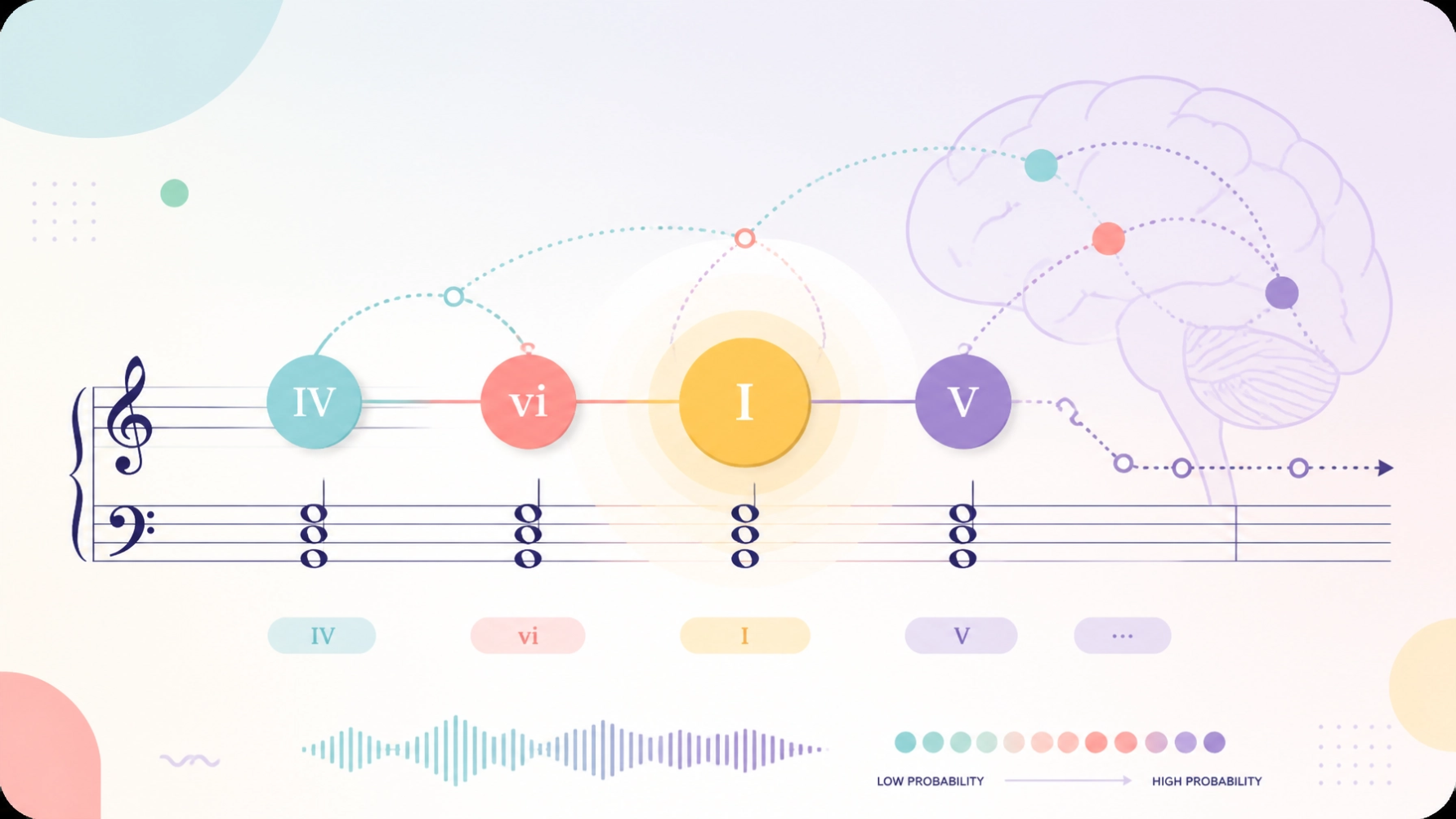
While your eyes process notation, your brain predicts upcoming events. At the same time, your hands prepare fingerings, your respiratory system plans the next breath, and your auditory system evaluates the result. This process is an example of sensorimotor integration.
Recent flute research provides a clearer model for teaching these skills. It also shows why effective practice should include anticipation, structured scanning, embodied awareness, and carefully sequenced feedback.
Music Lessons Ottawa and the Neuroscience of Sight-Reading
Sight-reading begins with visual processing. Your eyes do not read every note in isolation. Instead, experienced musicians identify patterns, intervals, rhythmic groups, articulation marks, and phrase structures.
This process reduces cognitive load. Rather than decoding each symbol separately, your brain organizes notation into meaningful chunks. Consequently, working memory can allocate more capacity to breathing, timing, tone, and expressive decisions.
The visual system also relies on saccades and fixations. A saccade moves the eyes rapidly across the score. A fixation briefly stabilizes the image so that your brain can extract information.
During fluent sight-reading, fixation duration often becomes shorter. However, shorter fixations do not automatically indicate better reading. The information must still be processed accurately and connected to the correct movement.
A 2025 eye-tracking study found that musical expertise influences how performers manage visual complexity during sight-reading. Expert readers show more flexible visual strategies when notation becomes locally difficult.
Perra, J., Poulin-Charronnat, B., Baccino, T., Bard, P., Pfister, P., Lalitte, P., Zerbib, M., and Drai-Zerbib, V. (2025). “Markers of musical expertise in a sight-reading task: An eye-tracking study.” Journal of Experimental Psychology: Learning, Memory, and Cognition, 51(3), 496–513. https://doi.org/10.1037/xlm0001358

Eye-Hand Span and Predictive Reading
Eye-hand span describes the distance between what your eyes process and what your fingers currently execute. In flute playing, this distance may involve notes, beats, or musical phrases.
A limited eye-hand span creates a reactive process. You see a note, identify it, select a fingering, and then produce the sound. This sequence can work at slow tempos. However, it becomes unstable when the music contains rapid rhythms, large intervals, or frequent breath points.
A larger eye-hand span supports anticipation. Your brain can prepare upcoming fingerings and rhythmic actions before they become urgent. Therefore, the goal is not merely to read faster. The goal is to establish a reliable planning interval.
In a 2026 study, Cara, Mitrovic, and Rojas examined 27 flautists with different levels of expertise. Participants sight-read and practised an excerpt from Giulio Briccialdi’s Duo Concertante for Two Flutes, No. 2, Op. 100.
The researchers compared three performances:
- An initial sight-reading performance.
- A second performance after 10 minutes of self-guided practice with a metronome.
- A final performance without the metronome.
The study connected eye movements, anticipation, breathing patterns, and performance measures. Musicians who combined mental, structural, and technical strategies showed improved anticipation. They also demonstrated shorter fixation durations and more balanced thoracic-to-abdominal breathing patterns.
These findings do not mean that every student should force the eyes farther ahead. Instead, they support gradual scaffolding. You can first read one beat ahead. Then, you can extend the preview to one bar or one phrase.
Cara, M. A., Mitrovic, D., and Rojas, C. (2026). “Visual processing and sensorimotor integration in flute music reading: Eye movements, anticipation, and breathing patterns during practice.” Experimental Eye Research, 269, 111044. https://doi.org/10.1016/j.exer.2026.111044
Breathing Is Part of Music Reading
Flute sight-reading is also respiratory planning. Your next breath may depend on phrase length, register, dynamics, articulation, and musical structure.
If you wait until your air is nearly depleted, breathing becomes reactive. This can interrupt the phrase and increase physical tension. By contrast, anticipatory breathing allows you to prepare before the phrase demands it.
A practical sight-reading scan should identify:
- The next breath point.
- The phrase peak.
- Long sustained notes.
- Register changes.
- Articulation patterns.
- Rhythmic sections that may require additional attention.
Breathing also provides interoceptive information. Interoception refers to the perception of internal bodily signals. During flute practice, these signals may include rib movement, abdominal activity, throat tension, airflow, and fatigue.
However, excessive internal monitoring can interfere with automated movement. Therefore, you should use bodily sensations as information rather than as a continuous checklist. First, observe the sensation. Next, compare it with the sound. Finally, make one specific adjustment.
Cara, Lobos, Ceardi, and Rojas studied embodied awareness in five advanced flute students during six weeks of exam-repertoire preparation. The students used weekly logbooks and self-ratings of anxiety and confidence.
The researchers found that students often connected breathing and anticipation. Students with greater confidence more frequently described preparing their bodies before performance. Students with higher anxiety more often reported tension, breathing difficulty, and physical discomfort.
The study was exploratory and used a small sample. It therefore cannot establish broad causal conclusions. Nevertheless, it supports a practical principle: preparation should include both musical structure and bodily readiness.
Cara, M. A., Lobos, C., Ceardi, A., and Rojas, C. (2026). “Embodied awareness during preparation of an exam repertoire in advanced flute students.” Frontiers in Education, 11, 1794272. https://doi.org/10.3389/feduc.2026.1794272

Sensorimotor Integration in Flute Reading
Sensorimotor integration links visual information with movement and sound. In a flute lesson, this connection includes several stages:
- The eyes identify notation.
- The brain predicts pitch, rhythm, and fingering.
- The hands organize the required movement.
- The respiratory system prepares airflow.
- The embouchure shapes the air jet.
- The ears evaluate pitch, tone, and timing.
- The nervous system updates the next action.
This sequence operates rapidly. It also depends on feedback and feedforward control. Feedforward control prepares an action before the result occurs. Feedback then compares the result with the intended outcome.
For example, when you see an ascending phrase, your brain can predict the required finger sequence and air adjustment. The sound confirms or modifies that prediction. With repeated practice, the connection becomes more efficient.
Pedagogical scaffolding can strengthen this system. A teacher may separate one demand before recombining it:
- Read and clap the rhythm.
- Name the intervals without playing.
- Sing or audiate the phrase.
- Practise the fingering slowly.
- Add breath planning.
- Play the passage while looking ahead.
- Repeat it at a controlled tempo.
This progression protects working memory. It also makes errors more informative because you can identify whether the difficulty began with visual decoding, motor planning, breathing, or auditory monitoring.
Tone Production, Jet Angle, and Auditory Feedback
Sight-reading also involves tone prediction. You do not simply produce correct notes. You anticipate how each note should resonate within the phrase.
Recent acoustics research offers a useful mechanism. Onogi, Yokoyama, Yoshinaga, and Iida used direct aeroacoustic simulations to examine how jet angle changes flute harmonic structure.
As the air jet becomes more perpendicular to the mouth opening, the second harmonic becomes stronger relative to the third. The mechanism involves pressure differences inside and outside the flute. These pressure differences deflect the jet and alter its effective offset from the edge.
This finding has practical relevance. Small changes in air direction can influence tone colour and projection. However, you should not attempt to control individual harmonics consciously during rapid sight-reading. Instead, develop auditory targets such as focused, warm, clear, or projecting.
Your teacher can then help you identify which combination of air speed, embouchure, jet angle, and oral posture produces the intended result.
Onogi, K., Yokoyama, H., Yoshinaga, T., and Iida, A. (2026). “Mechanism of harmonic structure change with jet angle in flute playing.” Journal of the Acoustical Society of America, 159(1), 862–873. https://doi.org/10.1121/10.0042263
A Daily Sight-Reading Protocol
You can apply this research through a short, structured routine. Begin with music below your maximum technical level.
1. Scan before playing
Take 20 to 30 seconds to identify the key, meter, tempo, phrase boundaries, difficult intervals, and likely breath points.
2. Establish a visual lead
Choose a manageable eye-hand span. Start with one beat or one measure. Keep the eyes moving toward the next information group while the fingers execute the current group.
3. Preview silently
Before playing a difficult measure, look at it and imagine the sound. Include the rhythm, contour, breath, and intended tone quality.
4. Play without stopping
Maintain the pulse. If an error occurs, continue whenever possible. Stopping after every mistake trains interruption rather than recovery.
5. Review one variable
After the attempt, identify one priority. It might be rhythmic accuracy, breath timing, fixation duration, or tone stability. Then repeat the passage.
This method supports attention, working memory, neural plasticity, and motor prediction. It also avoids unnecessary cognitive overload.
Applying the Research in Flute Lessons Ottawa
At Allegro Ma Non Troppo, flute lessons in Ottawa can include sight-reading, breath planning, tone production, school-band repertoire, and audition preparation. Lessons are available in person at the Ottawa studio or through online flute lessons.
Online instruction can provide a comfortable home environment. It can also reduce travel time and offer scheduling flexibility. In-person instruction allows direct observation of posture, finger movement, breathing, and acoustic projection.
Bilingual instruction is available in English and Spanish. Students may also request “Lecciones de flauta en línea” when Spanish-language explanations improve technical precision.
You can combine instrumental study with music theory lessons. Score analysis helps you identify phrase structure, harmonic direction, rhythmic hierarchy, and likely points of anticipation.
Lessons are offered in 30-, 45-, and 60-minute formats. A free trial lesson allows you to evaluate the instructional approach before making a longer commitment.
Conclusion
Flute sight-reading is a coordinated cognitive and physiological process. Your eyes process notation, your brain predicts musical events, your hands prepare movement, and your respiratory system supports phrasing.
Current research suggests that effective practice combines visual anticipation, diverse learning strategies, breathing awareness, and auditory feedback. It also suggests that the body should be prepared before performance, rather than monitored only after problems appear.
With systematic scaffolding, you can expand your eye-hand span and improve sensorimotor integration. Each accurate prediction adds another note to the larger harmony between notation, movement, breath, and sound.
Leave A Comment