
 Cart is empty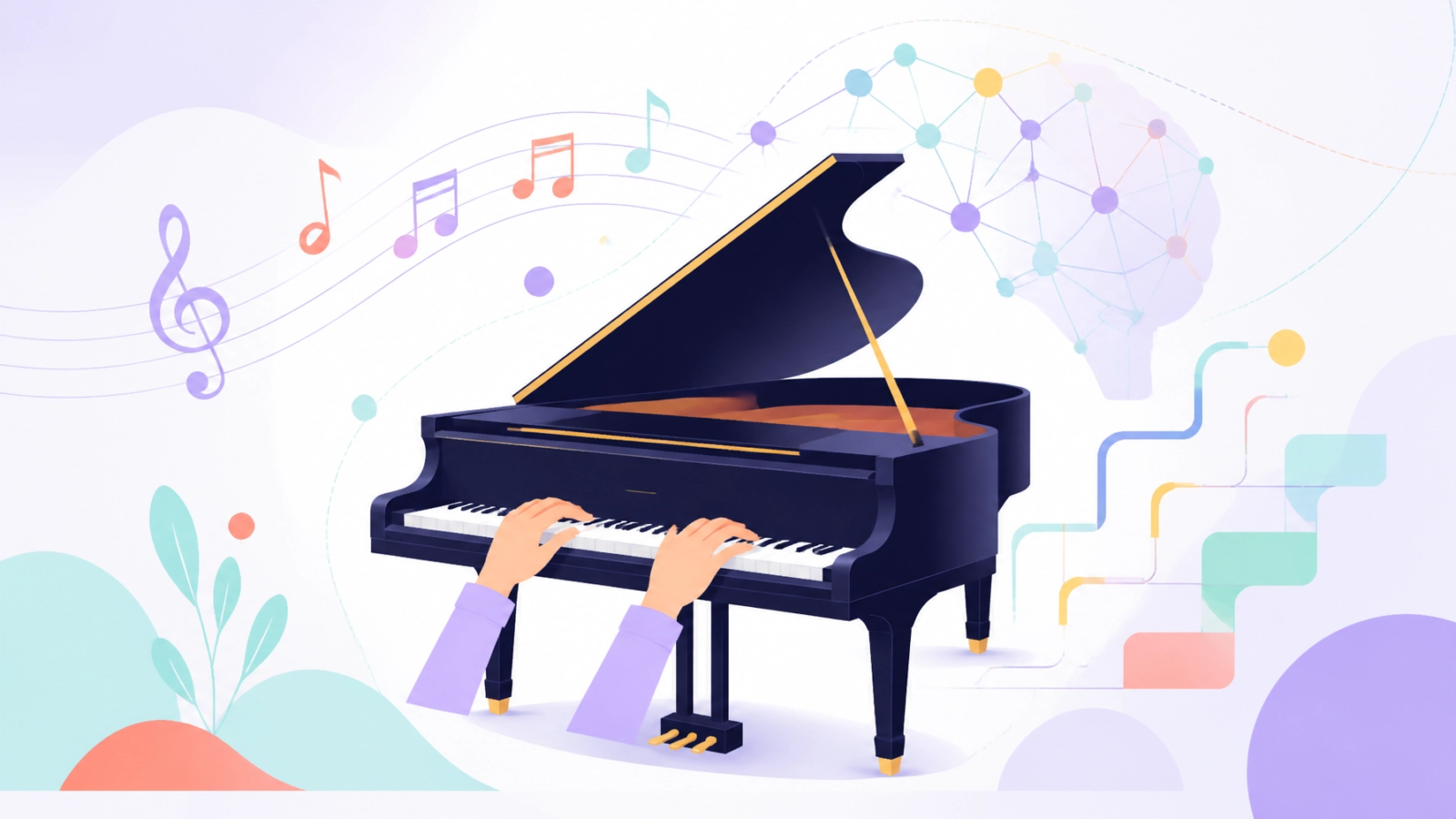
Music lessons Ottawa students pursue can develop more than instrumental technique. Structured piano study engages auditory processing, motor planning, attention, memory, and cognitive flexibility. However, these outcomes depend on consistent practice, effective instruction, and realistic expectations.
Piano lessons Ottawa families choose should therefore provide more than songs to memorize. They should build a coordinated system of skills. You learn to read notation, organize movement, anticipate sound, monitor errors, and make musical decisions. Over time, these processes can strengthen both musical independence and broader cognitive control.
At Allegro Ma Non Troppo, piano instruction begins with a student’s current level and goals. Lessons take place in English or Spanish, either at the Ottawa studio or online. The approach combines precise technical instruction with repertoire selected to maintain attention and support measurable progress.
How music lessons Ottawa can develop executive function
Executive function refers to the mental processes that help you plan, focus, remember information, inhibit automatic responses, and shift between tasks. Piano playing places sustained demands on each of these processes.
When you learn a new passage, you must coordinate several activities at once:
- Read pitch, rhythm, dynamics, and articulation.
- Translate visual symbols into precise motor actions.
- Maintain a pulse while controlling changes in tempo.
- Remember upcoming patterns and harmonic movement.
- Detect errors through auditory and visual feedback.
- Adjust your performance while continuing to play.
This activity resembles a cognitive laboratory. You receive immediate information, evaluate it, and modify your response. As a result, practice can strengthen the relationship between perception, movement, and decision-making.
A systematic review of music training and executive functions reported the strongest evidence for improvements in inhibitory control. The review also identified promising effects on working memory and cognitive flexibility. These findings do not mean that every learner will experience identical results. They do suggest that carefully structured music training can exercise important executive processes.
Piano study also requires task switching. You may move from reading a rhythm to shaping a phrase, then return to a difficult fingering pattern. This shifting is particularly relevant for advanced learners. Mature musicians must monitor several layers of performance without allowing one layer to disrupt another.

Piano lessons Ottawa learners can use to strengthen working memory
Working memory allows you to hold information briefly while using it. Piano performance relies on this capacity constantly.
For example, you might remember a chord progression while reading the next measure. At the same time, you must retain a fingering choice and prepare a dynamic change. Skilled performance depends on keeping these elements active without overloading attention.
Effective teaching reduces this cognitive load through scaffolding. Scaffolding means dividing a complex skill into manageable stages, then gradually removing assistance as your control improves.
A teacher may use the following sequence:
- Isolate the right-hand pattern.
- Add the left-hand accompaniment.
- Combine both hands at a reduced tempo.
- Introduce the correct articulation and dynamics.
- Increase tempo only after accuracy stabilizes.
- Reintegrate the passage into the complete musical phrase.
This progression improves efficiency because it separates problems before combining them. It also supports retrieval practice. When you recall a passage without relying on constant visual prompts, you strengthen access to the underlying motor and musical patterns.
Research on children supports this connection. A meta-analysis of musical training and executive function in children aged 3 to 12 found a positive overall effect, although the size of the effect varied across studies. Therefore, piano should not be presented as a guaranteed academic shortcut. Instead, it is a disciplined activity that repeatedly exercises memory, attention, and self-monitoring.
Neural plasticity and the piano sensorimotor loop
Neural plasticity describes the nervous system’s capacity to adapt through repeated experience. Piano practice activates a sensorimotor loop involving hearing, vision, touch, movement, prediction, and correction.
When you press a key, you produce an expected sound. Your auditory system then compares the result with the intended pitch, timing, volume, and tone. If the sound differs from the target, your motor system adjusts. Repetition refines this loop.
The process involves several forms of coordination:
- Fine motor control in the fingers and hands.
- Bilateral coordination between the left and right hands.
- Visual processing of notation and keyboard geography.
- Auditory discrimination of pitch, timing, and balance.
- Proprioception, or awareness of body position and movement.
- Predictive timing based on pulse, meter, and phrase structure.
Advanced piano study adds further demands. You may need to voice one melodic line above an accompaniment, control several rhythmic layers, or shape a long phrase across multiple measures. These tasks require inhibition and prioritization. You must prevent less important sounds from dominating the musical texture.
A recent review of the neuropsychological dimensions of piano interaction describes piano performance as an interaction between auditory, motor, visual, and executive systems. This research supports the idea that piano training creates rich neural engagement. It does not establish that piano is superior to every other form of music training. It does show why deliberate practice can be cognitively demanding.
Why deliberate practice matters more than time alone
Long practice sessions do not automatically produce mastery. Deliberate practice requires a specific objective, immediate feedback, and a method for correcting errors.
A productive session may include:
- Five minutes of posture, relaxation, and technical preparation.
- Ten minutes of scales, arpeggios, or coordination patterns.
- Fifteen minutes on one carefully selected passage.
- Ten minutes of rhythm, sight-reading, or ear training.
- Five minutes of complete performance and reflection.
The exact structure should change according to your level and goals. A beginner may need more time for reading and basic coordination. An intermediate learner may need work on voicing, pedaling, and rhythmic stability. A serious student may require phrase analysis, harmonic reduction, memorization strategies, and performance planning.
The principle remains consistent: define the problem before repeating the passage. If the issue involves rhythm, use a metronome and subdivision. If it involves tension, reduce the tempo and examine movement. If it involves memory, practice from different starting points. If it involves interpretation, analyze harmony and phrase direction before repeating the notes.

A teacher provides external feedback during this process. That feedback helps you distinguish between a technical error, a reading error, a memory error, and an interpretive choice. Each category requires a different intervention.
Piano study, academic performance, and realistic expectations
Families often ask whether piano lessons improve grades. The evidence requires a careful answer.
Music training may support skills related to academic learning, including auditory sequencing, sustained attention, processing speed, and working memory. However, these benefits do not guarantee higher grades. Academic performance also depends on instruction, sleep, motivation, health, language, and the learning environment.
The strongest educational value of piano may come from the habits it develops. You learn to:
- Set a specific goal.
- Break a complex task into smaller components.
- Monitor performance objectively.
- Tolerate gradual improvement.
- Use feedback to revise your method.
- Return to a skill consistently over time.
These habits can transfer to other activities, particularly when teachers make the connection explicit. For instance, a student can apply the same process to a difficult school assignment: identify the obstacle, divide the task, test a strategy, and review the result.
At the same time, responsible educators should acknowledge the limits of transfer. A controlled study on piano training and auditory processing found no significant advantage over an active music-listening control on several measures. This result reinforces an important point: piano lessons are not a guaranteed cognitive treatment. Their benefits depend on the learner, the program, the comparison activity, and the outcome being measured.
Choosing music lessons Ottawa families can sustain
The most effective program is one you can maintain. Comfort and flexibility affect consistency, especially during Ottawa winters, exam periods, and changing family schedules.
Allegro Ma Non Troppo offers several formats:
- In-person lessons at 90 Genest Street in Ottawa.
- Online lessons from the comfort of your home.
- English or Spanish instruction.
- 30-, 45-, and 60-minute lesson options.
- A free trial lesson before you commit.
- Family Plan savings of 10% for three or more members.
- Lesson bundles with transparent pricing.
Current individual lesson rates listed by the academy include:
- 30 minutes: $35 for one lesson; 4 lessons are
$140$120. - 45 minutes: $48 for one lesson; 4 lessons are
$192$180. - 60 minutes: $63 for one lesson; 4 lessons are
$252$240. - Trial lesson: $0.
A 30-minute session may suit a young beginner or a busy adult. A 45-minute session provides more time for technique, repertoire, and theory. A 60-minute session can accommodate advanced repertoire, detailed analysis, and performance preparation.
You can also strengthen piano study through music theory lessons. Theory supports harmonic understanding, sight-reading, rhythm, and musical memory. It helps you see the architecture behind the notes rather than treating each measure as an isolated problem.

How to begin piano lessons in Ottawa
A free trial lesson allows you to evaluate the instructional fit before making a longer commitment. Prepare a short description of your experience, goals, preferred repertoire, and schedule.
During the first meeting, you can expect to:
- Discuss your current skills and musical objectives.
- Identify technical, reading, or coordination priorities.
- Explore an appropriate lesson length.
- Review in-person and online options.
- Ask questions in English or Spanish.
- Receive a practical recommendation for your next steps.
Mastery develops through a sequence of accurate decisions. Each note contributes to a larger pattern of movement, sound, memory, and interpretation. With expert instruction and consistent practice, piano lessons can help you build that pattern with greater clarity.
If you are seeking serious, personalized music lessons Ottawa learners can access in a comfortable studio or online environment, begin with a free trial.
Leave A Comment