
 Cart is empty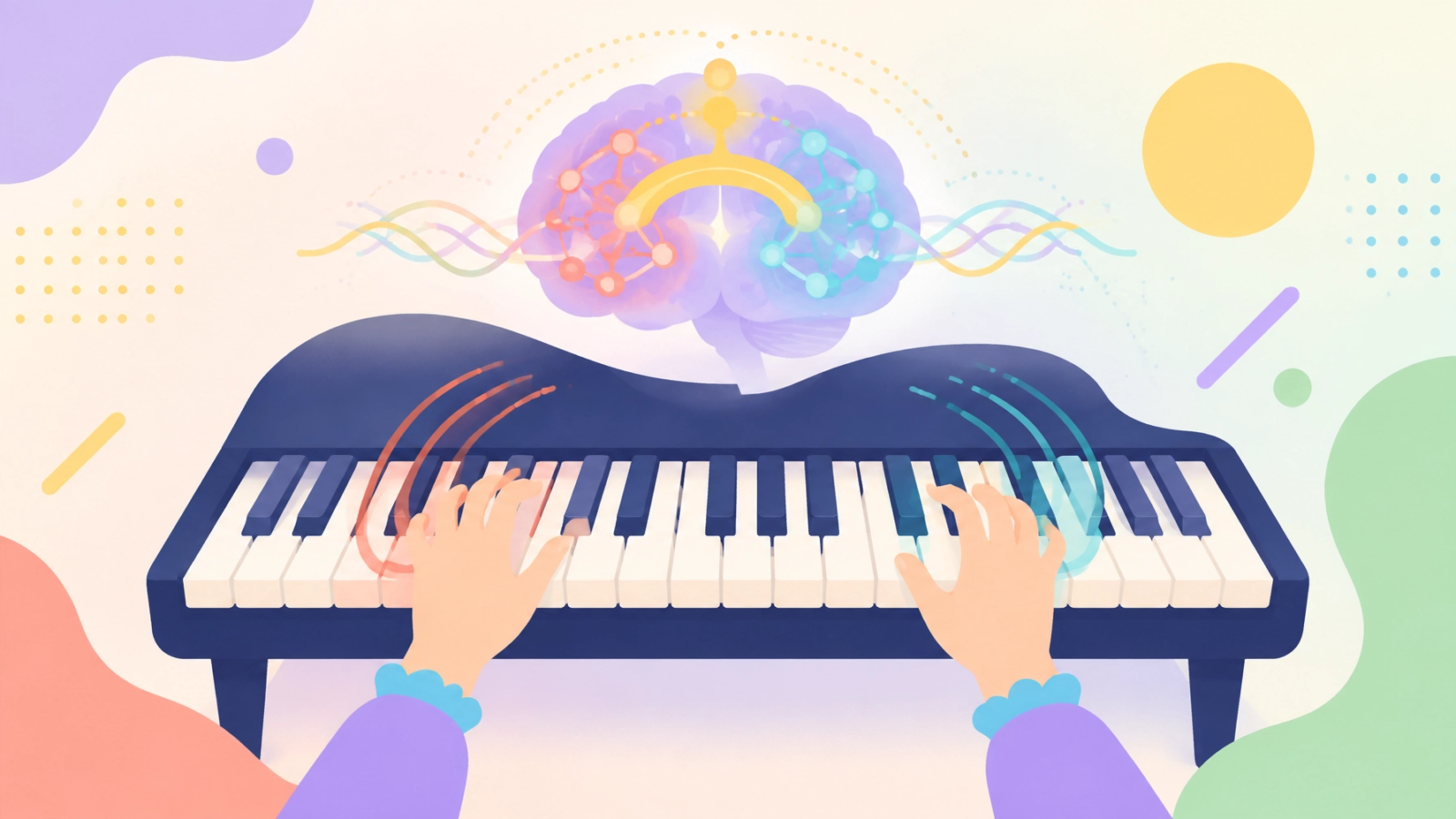
If you are comparing music lessons Ottawa programs, piano hand independence deserves more than a collection of exercises. It is a complex motor-learning problem involving interhemispheric communication, auditory processing, timing, attention, and neural plasticity. Understanding these mechanisms can make your practice more efficient.
This article examines the science behind independent hands at the keyboard. It also presents practical protocols for serious learners, including hands-separate chunking, metronome scaffolding, rhythmic re-framing, and contralateral dynamics work.
Meta description: Learn how music lessons Ottawa build piano hand independence through neuroscience, bimanual control, rhythmic practice, and precise motor-learning protocols.
What piano hand independence actually requires
Piano playing combines two related, but non-identical, motor tasks. Each hand must control its own sequence of finger movements. At the same time, both hands must share a common pulse, coordinate changes, and respond to auditory feedback.
Therefore, “independence” does not mean that the hands operate as completely separate systems. Instead, skilled performance requires controlled coupling. Your hands must coordinate when the score demands synchrony. They must also avoid unwanted interference when their rhythms, articulations, or dynamics diverge.
Research on expert pianists shows several relevant adaptations:
- More balanced performance between the dominant and non-dominant hands.
- Reduced involuntary mirror movements.
- Lower unnecessary co-activation in hand and finger muscles.
- More efficient sensorimotor planning.
- Greater automaticity for familiar movement sequences.
Pang, Zhao, Wang, Wang, and Fang describe this process as a reduction in motor asymmetry. Their review also proposes greater attention to the left hand for right-handed learners, although they identify the need for more direct intervention studies.
The practical implication is precise: you should not treat the weaker hand as a passive accompanist. It needs its own motor representation, rhythmic clarity, and dynamic control.

Music lessons Ottawa and the interhemispheric motor system
Each cerebral hemisphere primarily controls the opposite side of the body. The left hemisphere contributes strongly to right-hand control. The right hemisphere contributes strongly to left-hand control. The corpus callosum connects these systems through large bundles of white-matter fibres.
This interhemispheric transfer matters because piano performance requires each hand to maintain a distinct motor plan while both plans remain temporally related. The corpus callosum helps the hemispheres exchange information about timing, position, and movement context.
Recent research provides important evidence. Kang, Snyder, and Mooshagian temporarily disrupted posterior callosal pathways in macaques performing coordinated bimanual movements. The intervention reduced temporal synchrony when both arms moved toward a common target. It also reduced errors when the arms moved toward separate targets.
The study was not conducted with pianists. It also used non-human primates. Consequently, you should not treat it as a direct piano-practice experiment. However, it offers causal evidence that posterior callosal communication supports spatially coordinated bimanual action while potentially limiting fully independent limb control.
This distinction explains a common piano experience. When both hands must move together, callosal coupling helps create a shared temporal framework. When the hands must perform different patterns, that same coupling can create interference. Practice must therefore train both coordination and controlled differentiation.
The supplementary motor area and movement sequencing
The supplementary motor area, or SMA, supports the preparation, sequencing, initiation, and coordination of voluntary movements. It becomes particularly relevant when a task involves complex sequences or simultaneous actions by both hands.
Sadato and colleagues found stronger activation in the SMA and right premotor cortex during bimanual finger movements. These areas help organize motor sequences before and during execution. They do not simply send isolated commands to individual fingers.
Early in learning, your pre-SMA and premotor regions must solve several problems:
- Which hand begins the phrase.
- Which fingers belong to each movement chunk.
- Where the hands align rhythmically.
- Which notes receive accents.
- How one movement prepares the next.
As practice stabilizes these relationships, control becomes more economical. Olszewska and colleagues observed functional reorganization during naturalistic piano playing in novices. Similarly, Herman’s 2025 study reported dynamic neuroplasticity in bimanual coordination after piano training, without a parallel change in general auditory processing.
This finding matters for practice design. Improvement does not arise simply from hearing more music. It depends on repeated, accurate sensorimotor mapping between notation, sound, timing, and movement.
Why hands-together practice often fails too early
Hands-together practice is not inherently wrong. However, it often fails when both hands remain consciously controlled at the same time.
Working memory has limited capacity. A new passage may require you to monitor finger order, rhythm, articulation, dynamics, posture, and visual information. Adding a second unfamiliar hand pattern can exceed that capacity.
When this happens, you may observe:
- Pauses at hand-change points.
- Uneven tempo.
- Accidental synchronization.
- Loss of the weaker hand’s line.
- Increased muscular tension.
- Repeated errors at the same location.
In motor-learning terms, each hand has not yet achieved sufficient automaticity. The combined task then requires two unstable motor programs to compete for attention.
Hands-separate practice reduces this load. It allows you to establish local chunks before asking the nervous system to coordinate them. However, hands-separate practice does not transfer completely to bimanual performance. Unimanual and bimanual control share mechanisms, but they are not identical.
Therefore, the most effective sequence is usually:
- Build accurate hand-specific chunks.
- Combine only short sections.
- Reintroduce hands-together practice before the passage feels completely effortless.
- Alternate separate and combined practice across the session.
The goal is not to postpone hands-together playing indefinitely. The goal is to introduce it at a difficulty level that permits accurate coordination.
An evidence-based practice protocol
Use the following protocol for a difficult passage. Adjust the details to your level, repertoire, and physical comfort.
1. Define the motor chunk
Select one to three beats, one beat of preparation, and one beat of release. Mark the first note of each chunk. Include the movement that leads into the difficult location.
Practice the right hand alone. Then practice the left hand alone. Do not continue if either hand repeatedly misses notes or loses the pulse.
2. Establish a slow tempo threshold
Set the metronome between 40 and 60 percent of the target tempo. The correct threshold is not a universal number. It is the slowest tempo at which you can produce:
- Accurate notes.
- Stable rhythm.
- Consistent fingering.
- Relaxed movement.
- Clear articulation.
If you make two identical errors in three repetitions, reduce the tempo by 5 to 10 beats per minute. Slow practice should reduce error frequency, not merely make errors quieter.
3. Use metronome scaffolding
Begin with one click per beat. Once the passage stabilizes, use one click per half-note or one click per bar. This increases the demand for internal pulse while preserving an external temporal reference.
Next, alternate metronome practice with unmetered practice. This prevents dependence on the click while preserving rhythmic precision.
4. Reframe the rhythm
Convert the passage temporarily into long-short and short-long patterns. For example, transform even sixteenth notes into dotted-eighth and sixteenth groupings. Then reverse the pattern.
This changes the timing and accentual demands without changing the pitch sequence. It can expose weak finger transitions and prevent one error pattern from becoming overlearned.
Return to the written rhythm after each variation. Rhythmic re-framing is a temporary perturbation, not the final interpretation.
5. Add hands together in micro-sections
Combine only one chunk. Play it three times accurately. Then connect it to the next chunk. If the transition fails, isolate the transition rather than repeating the entire passage.
Use a “two successful, one reset” structure:
- Two accurate repetitions.
- One short pause.
- A new starting point.
- A final attempt from memory or with reduced visual support.
This procedure encourages retrieval and reduces mindless repetition.

Rhythmic entrainment and contralateral dynamics
Rhythmic entrainment describes the tendency of a motor system to align with a regular external pulse. In music, auditory timing can support motor timing through auditory-motor coupling. A metronome therefore provides more than speed control. It supplies a predictable temporal scaffold.
You can strengthen this process through several variations:
- Tap the pulse with your foot while playing one hand.
- Speak the subdivision while playing the other hand.
- Clap each hand’s rhythm separately before combining them.
- Play one hand while silently conducting the other.
- Shift accents every two or four beats.
Contralateral dynamics work is also valuable. Ask one hand to play a clear forte line while the other plays a controlled piano accompaniment. Then reverse the dynamic roles.
This exercise trains selective attention and force differentiation. It also exposes whether one hand automatically dominates the other. Use moderate dynamics and stop if you feel tension.
The aim is not to exaggerate the final interpretation. Instead, you are increasing the separation between motor commands. Afterward, return to the score’s intended balance.

Your musical goals come first
The choice of instrument is secondary to your musical goals. If you want to develop auditory-motor timing, coordination, or theory knowledge, the appropriate pathway depends on your interests, schedule, and current skills.
At Allegro Ma Non Troppo, our Ottawa studio at 90 Genest Street offers personalized instruction. We also provide online lessons for students who need a comfortable home environment, flexible scheduling, or access from outside Ottawa.
You can explore:
- Beginner piano lessons in Ottawa
- Music theory lessons in Ottawa
- Online music lessons
- Online flute lessons
- Clarinet lessons
Instruction is available in English and Spanish. These bilingual music lessons can also help families coordinate musical terminology across home practice and school instruction. A free trial lesson allows you to evaluate the teaching approach before committing.
Research limitations and selected references
The current evidence supports the importance of bimanual coordination, callosal communication, auditory-motor coupling, and practice-dependent plasticity. However, no single study establishes one universally optimal piano practice sequence.
Recent findings also require careful interpretation. Herman’s study examined piano training in young adults. Kang and colleagues studied macaque bimanual reaching. Cui’s 2026 review synthesizes several domains but notes methodological variation across studies.
Selected peer-reviewed references include:
- Herman, A. M. (2025). Piano training induces dynamic neuroplasticity of bimanual coordination but not auditory processing in young adults. Journal of Neuroscience Research, 103, e70067. https://doi.org/10.1002/jnr.70067
- Kang, J. U., Snyder, L. H., & Mooshagian, E. (2026). A causal role for the posterior corpus callosum in bimanual coordination. Proceedings of the National Academy of Sciences, 123(18), e2516541123. https://doi.org/10.1073/pnas.2516541123
- Cui, L. (2026). The neuro-psychological dimensions of piano interaction: From mental health therapy to intelligent systems. Frontiers in Psychology, 17, 1725791. https://doi.org/10.3389/fpsyg.2026.1725791
- Pang, J., Zhao, S., Wang, Y., Wang, Q., & Fang, Q. (2023). Piano practice with emphasis on left hand for right handers: Developing pedagogical strategies based on motor control perspectives. Frontiers in Psychology, 14, 1124508. https://doi.org/10.3389/fpsyg.2023.1124508
- Sadato, N., Yonekura, Y., Waki, A., Yamada, H., & Ishii, Y. (1997). Role of the supplementary motor area and the right premotor cortex in the coordination of bimanual finger movements. Journal of Neuroscience, 17(24), 9667–9674. https://doi.org/10.1523/JNEUROSCI.17-24-09667.1997
- Swinnen, S. P., & Wenderoth, N. (2004). Two hands, one brain: Cognitive neuroscience of bimanual skill. Trends in Cognitive Sciences, 8(1), 18–25. https://doi.org/10.1016/j.tics.2003.10.017
Whether your goal is school-band support, repertoire development, music theory, or advanced coordination, structured practice can help your movements resonate with greater precision.
Leave A Comment