
 Cart is empty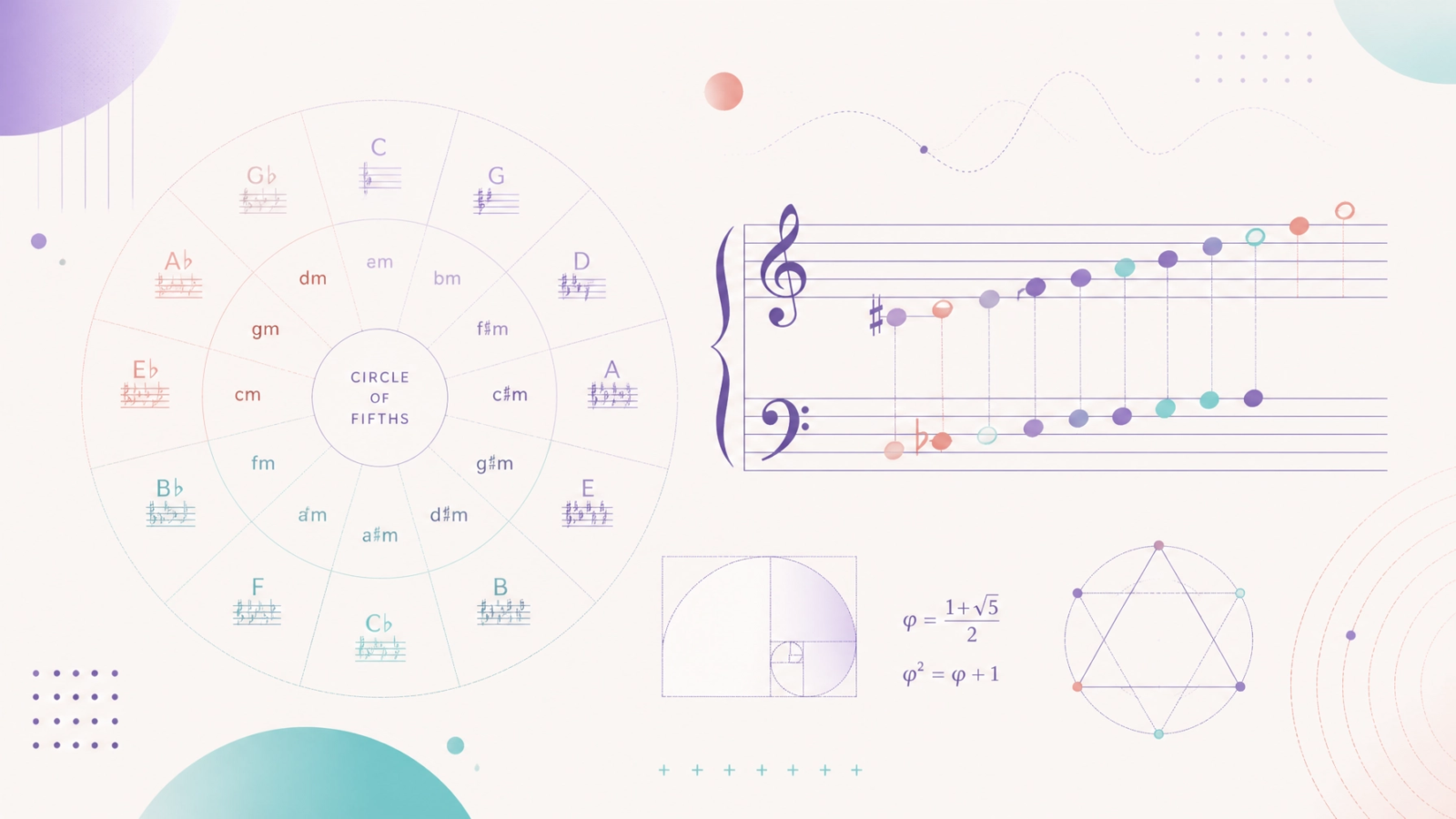
The study of music theory is often perceived as a secondary discipline to the physical act of performance. However, contemporary research in neuroscience and cognitive psychology suggests that music theory functions as a critical cognitive scaffolding that accelerates the acquisition of technical proficiency. By understanding the underlying architecture of sound, you engage in a high-level cognitive exercise that restructures the neural pathways responsible for auditory processing, memory, and executive function. At Allegro Ma Non Troppo in Ottawa, our approach to music theory lessons Ottawa is rooted in this evidence-based understanding of learning acceleration.
The Neurobiology of Music Theory
When you study music theory, you are not merely memorizing symbols on a page; you are engaging in a process of neural plasticity. This term refers to the brain's ability to reorganize itself by forming new neural connections throughout life. Music theory requires the integration of visual, auditory, and motor information, which activates a distributed network across the cerebral cortex.
Research indicates that formal music study, particularly the analytical components of theory, strengthens the corpus callosum. This is the bundle of nerve fibers that facilitates communication between the left and right hemispheres of the brain. For a student engaged in piano lessons in Ottawa, this inter-hemispheric communication is vital for coordinating complex movements while simultaneously processing harmonic structures. By internalizing the grammar of music, you provide your brain with a roadmap that makes the physical execution of notes more efficient and less cognitively demanding.

Cognitive Scaffolding and Pattern Recognition
One of the primary benefits of music theory is the enhancement of pattern recognition. Music is inherently mathematical, and theory provides the tools to decode these mathematical relationships. When you learn to identify intervals, scales, and chord progressions, you are training your brain to recognize complex patterns rapidly.
This skill is essential for learning acceleration. Instead of viewing a piece of music as a series of isolated notes, a student with a foundation in theory sees meaningful clusters of information. This process, known as chunking in cognitive psychology, allows you to store more information in your working memory. For instance, in our clarinet lessons Ottawa or flute lessons in Ottawa, a student who understands the theory of a specific key signature will anticipate the fingerings required, rather than reacting to each note individually. This anticipatory processing is a hallmark of master-level performance and is directly facilitated by theoretical knowledge.
- Improved working memory capacity through informational chunking.
- Reduced cognitive load during sight-reading and performance.
- Enhanced ability to predict melodic and harmonic resolutions.
Auditory Processing and Linguistic Transfer
The relationship between music theory and language acquisition is a significant area of research. Both disciplines rely on the ability to decode symbols and process rhythmic and tonal variations. Studying the science of music can lead to what researchers call far transfer effects, where the skills gained in one domain improve performance in another unrelated domain.
At Allegro Ma Non Troppo, we offer bilingual instruction in English and Spanish. This provides a unique cognitive advantage. When you engage with music theory: or teoría musical: in a bilingual environment, you are further challenging the brain's executive functions. You must navigate two different linguistic systems while also processing the universal language of music. This dual-tasking environment has been shown to improve verbal memory and second-language pronunciation.

Executive Function and Academic Performance
Executive function refers to a set of cognitive processes including attentive control, inhibitory control, and working memory. These functions are highly predictive of academic success. Music theory is a rigorous exercise in executive function. It requires you to sustain attention, switch between different tasks (such as rhythm and pitch), and monitor your own performance for errors.
Studies have shown that children and adults who study music theory demonstrate higher levels of executive function than those who do not. This translates to better planning, strategizing, and problem-solving skills in everyday life. In the context of our ukulele lessons, the transition from simple chord shapes to understanding the harmonic theory behind them represents a significant leap in abstract reasoning.

Strategic Learning for Ottawa Students
At our Ottawa studio, we prioritize a structured and scientific approach to music education. We recognize that every student has unique cognitive goals, whether they are school band students looking for technical precision or adults seeking cognitive maintenance. Our master-level teachers provide the expert guidance necessary to navigate the complexities of theory and performance.
Our logistical framework is designed to support long-term commitment and cognitive growth. We offer flexible scheduling and personalized lesson plans to ensure that your music education fits seamlessly into your life. The comfort of our Ottawa studio or the convenience of our online lessons provides an optimal environment for focused learning.
- Master-level instruction tailored to individual goals.
- Support for school band students to excel in ensemble settings.
- A scientific approach to technique and theory.
Transparency in Music Education Costs
We believe in providing clear and transparent information regarding our services. Investing in music education is an investment in cognitive development. We offer several options to accommodate different needs and budgets, ensuring accessibility for the Ottawa community.
- Trial Lesson: $15.00
- 30-Minute Lessons: Individual sessions or bundles available.
- 45-Minute Lessons: Ideal for intermediate students focusing on theory and technique.
- 60-Minute Lessons: Deep-dive sessions for advanced study.
For those committed to long-term acceleration, we offer significant savings on lesson bundles. For example, a 10-lesson bundle of 30-minute sessions is available for $320.00, while a 5-lesson bundle is $165.00. Our Family Plan also provides a 10% discount for families with 3 or more members, making it easier for the entire household to benefit from musical training.

Conclusion: The Harmony of Theory and Practice
The science is clear: music theory is not an optional extra, but a fundamental driver of learning acceleration. By engaging with the theoretical foundations of music, you are optimizing your brain for success both on and off the stage. The neural pathways you build through intervals, rhythms, and harmonic analysis resonate throughout your cognitive life, improving memory, attention, and executive function.
At Allegro Ma Non Troppo, we are dedicated to helping you achieve these cognitive and musical milestones. Whether you are interested in flute, clarinet, piano, ukulele, or specialized music theory lessons, our Ottawa studio offers the professional environment you need to excel.
Leave A Comment