
 Cart is empty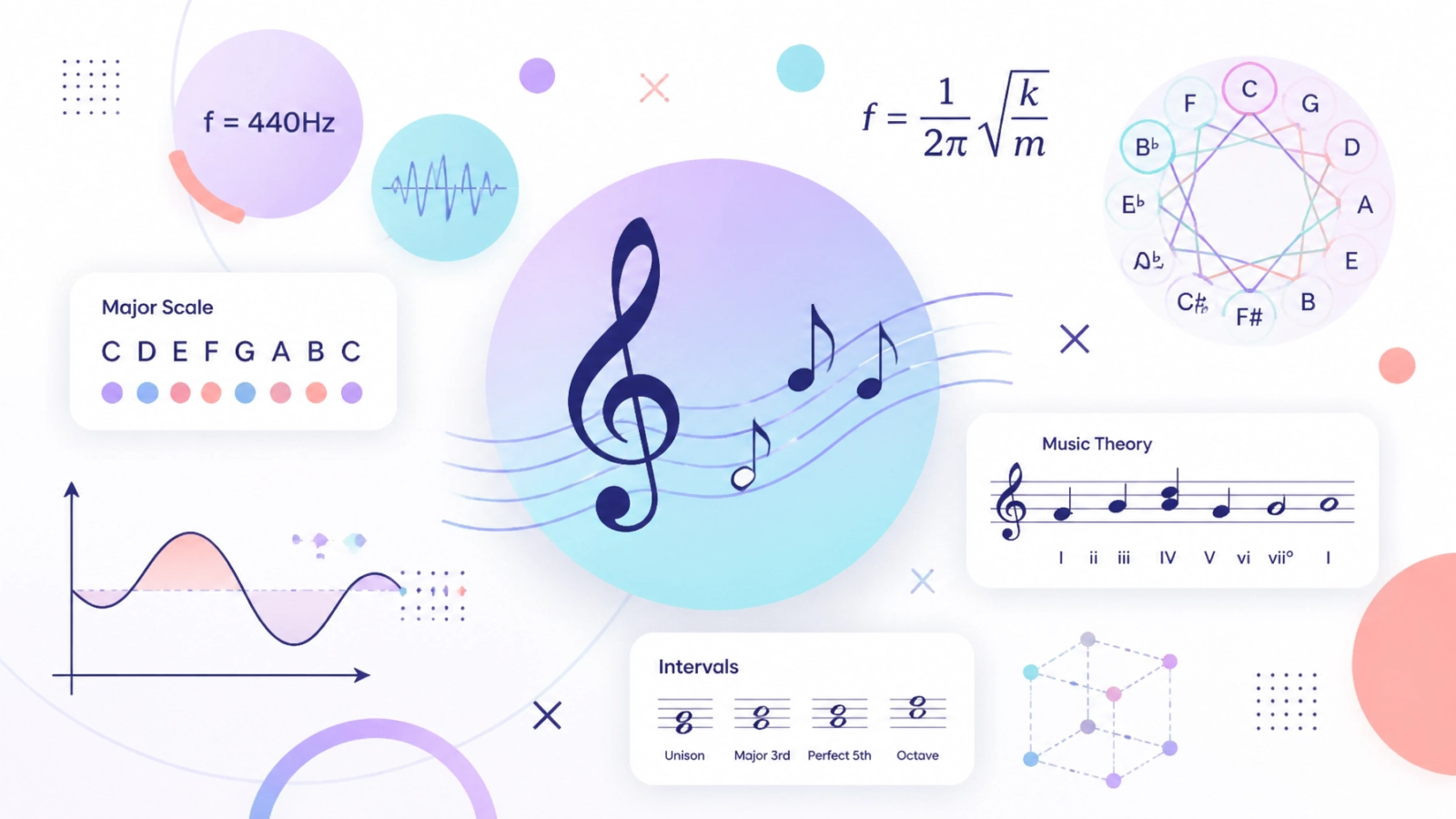
The acquisition of musical proficiency is often perceived through the lens of motor skill development and repetitive practice. However, the underlying architecture of any high-level performance is rooted in a deep understanding of music theory. By examining the cognitive mechanisms and neurological frameworks involved in sound production, it becomes evident that theory is not merely an academic exercise but a catalyst for accelerated learning. At Allegro Ma Non Troppo, the pedagogical approach prioritizes this scientific foundation to ensure that students in the Ottawa community achieve technical mastery with greater efficiency.
The Cognitive Framework of Music Theory
Music theory serves as the grammatical structure of the musical language. When you engage with music theory lessons, you are not simply memorizing symbols; you are constructing a mental scaffolding that supports complex auditory processing. Research in neuroscience suggests that structured musical training involving notation and harmonic analysis significantly enhances neural plasticity. This refers to the brain's ability to reorganize itself by forming new neural connections throughout life.
For students pursuing music lessons in Ottawa, understanding the theoretical basis of their instrument allows for superior pattern recognition. Instead of perceiving a series of isolated notes, the brain identifies larger structures such as scales, intervals, and chords. This reduction in cognitive load enables the musician to focus on expressive nuances rather than the mechanical retrieval of individual pitches.
Neural Plasticity and Auditory Processing
The study of music theory engages multiple brain regions simultaneously. The visual cortex processes the notation, the auditory cortex anticipates the sound, and the motor cortex prepares the physical execution. This cross-hemispheric communication is particularly robust when theory is integrated into practice. When you understand the harmonic function of a passage, your brain utilizes predictive coding to anticipate the next tonal center, which drastically improves sight-reading and error detection.
In our bilingual environment, offering instruction in both English and Spanish (instrucción bilingüe en inglés y español), we observe that the cognitive flexibility required to navigate two languages parallels the analytical demands of music theory. This linguistic and musical intersection further strengthens executive function, which includes skills such as planning, working memory, and cognitive flexibility.

Accelerating Proficiency in Woodwind Instruments
The technical demands of instruments like the flute and clarinet are significantly mitigated when the player possesses a strong theoretical foundation. For those enrolled in flute lessons in Ottawa, theory provides the necessary context for breath control and phrasing. By understanding the formal structure of a composition: such as binary or ternary form: the flutist can strategically plan inhalations that do not disrupt the melodic integrity of the work.
Similarly, in clarinet lessons, an understanding of acoustics and harmonic series is essential for mastering the altissimo register and achieving precise intonation. When you recognize that a specific fingering corresponds to a particular overtone, the mechanical adjustment becomes an informed decision rather than a trial-and-error process. This level of technical precision is a hallmark of the instruction provided by our master-level teachers.
Structural Analysis in Piano and Ukulele
The piano and ukulele offer a unique visual representation of music theory through their physical layouts. For students in piano lessons in Ottawa, the keyboard serves as a linear map of the chromatic scale and harmonic relationships. Theoretical knowledge allows the pianist to analyze complex scores and identify underlying chord progressions, which facilitates memorization. Rather than memorizing thousands of individual notes, the student memorizes a handful of logical sequences.
The ukulele, often viewed as a gateway instrument, benefits equally from a theoretical approach. By understanding interval relationships and basic harmony, students in our ukelele lessons can quickly transition from simple rhythmic strumming to sophisticated melodic arrangements. This conceptual understanding ensures that the transition to more complex string instruments is seamless and scientifically grounded.

The Science of Sound and Academic Performance
The benefits of music theory extend beyond the studio. Quantitative data indicates that students who study the mathematical components of music: such as rhythm division, ratios in intervals, and frequency relationships: often demonstrate superior performance in mathematics and spatial-temporal reasoning. This is because music theory requires the same logical deductive processes as algebraic problem-solving.
In our Ottawa studio, we emphasize the importance of these cognitive links. Whether you are a student in a school band seeking specialized support or an adult learner looking to enhance your mental acuity, the systematic study of music provides a comprehensive cognitive workout. Our lessons are designed to be an evidence-based intervention that supports lifelong learning and brain health.
Specialized Support and Flexible Learning Environments
Allegro Ma Non Troppo offers a versatile range of learning options to accommodate various neurological and logistical needs. Our online lessons provide a distraction-free environment that can be beneficial for students who require specific sensory conditions to focus on the analytical aspects of theory. Conversely, our in-person studio sessions in Ottawa foster a collaborative atmosphere where theory is applied in group workshops and creative projects.
Our pedagogical model is centered on personalization. We recognize that every learner has a unique cognitive profile. Therefore, our master-level teachers adapt the theoretical curriculum to align with your specific goals, whether they are focused on classical performance, contemporary improvisation, or academic preparation for university-level music programs.

Logistics, Accessibility, and Professional Standards
Transparency in our operational policies ensures that families and individuals can plan their educational journey with confidence. We offer flexible scheduling options to fit the busy lives of our students, with various lesson durations designed to match the developmental stage and attention span of the learner.
Our pricing structure is designed to be accessible while maintaining the high standards of a master-level academy. We offer significant incentives for long-term commitment and family participation.
- Trial Lesson: Free
- 30 Minute Lesson: 37.00
- 45 Minute Lesson: 53.00
- 60 Minute Lesson: 68.00
- Lesson Bundles: 5% to 10% discount available on 10, 20, and 40-lesson packages.
- Family Plan: 10% discount for families with 3 or more members enrolled.
The enrollment process is streamlined to ensure a professional experience from the initial contact. By offering a free trial lesson, we allow prospective students to experience our pedagogical methods and verify the expertise of our instructors without any financial obligation.

Conclusion: The Integrated Path to Mastery
The evidence is clear: music theory is the engine that drives instrumental proficiency. By understanding the science of sound, you unlock the ability to learn faster, perform with greater accuracy, and enjoy the cognitive benefits of a highly developed musical mind. Whether your interest lies in the flute, clarinet, piano, ukulele, or the deep study of music theory itself, Allegro Ma Non Troppo provides the expert guidance necessary to reach your full potential.
Our commitment to bilingual instruction and scientific pedagogy makes us a leading choice for music education in the Ottawa area. We invite you to join our community and discover how a structured, theoretical approach can transform your musical journey.
Leave A Comment