
 Cart is empty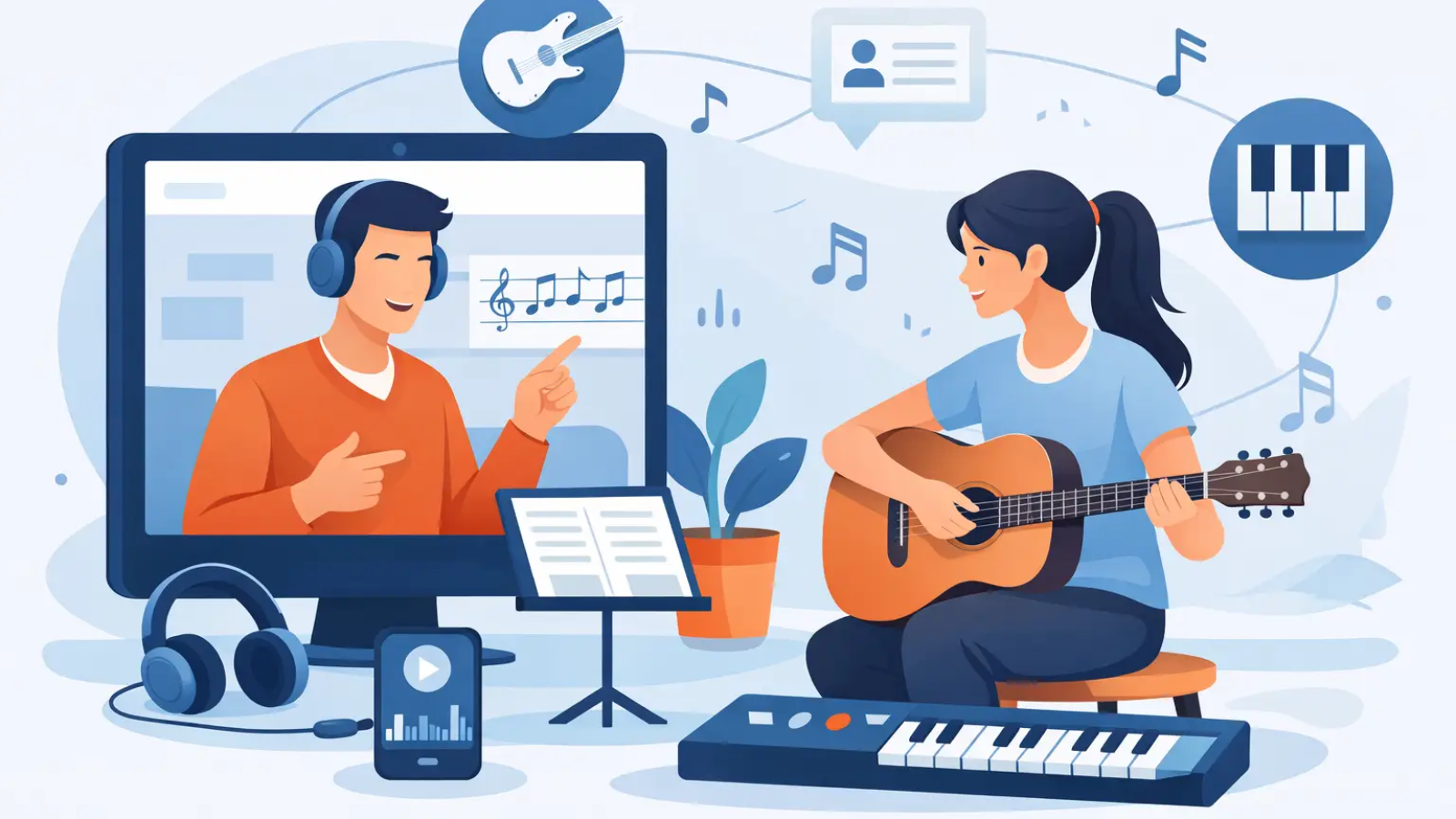
Some beginners quit music not because they lack talent, but because they start in a way that does not fit them. A child who wants to play movie themes may be handed dry exercises. An adult who is nervous about reading music may be pushed too fast. That is why personalized music lessons for beginners make such a difference. They meet the student where they are, build skills in a clear sequence, and keep music connected to real enjoyment.
For a beginner, the first few months matter more than most people realize. This is when habits form, confidence either grows or shrinks, and the student decides whether lessons feel exciting or stressful. A personalized approach gives structure without making the experience feel rigid. It helps students learn correctly, but it also gives them a reason to keep coming back.
Why personalized music lessons for beginners work so well
Beginners do not all start from the same place. One student may have a strong ear but no theory knowledge. Another may read rhythms well from school band but struggle with tone or hand position. A young child may need playful, shorter activities, while an adult beginner may want a calm, step-by-step explanation of what they are doing and why.
Personalized teaching accounts for those differences from the start. Instead of following the exact same script for every student, the teacher adjusts the pace, repertoire, exercises, and explanations. That does not mean lessons become random. Good personalization is carefully planned. It simply means the plan is built around the student rather than forcing the student to fit a preset mold.
This matters because progress is rarely linear. Some beginners grasp note reading quickly but need more time with coordination. Others play by ear with surprising ease but need support building technique. Personalized lessons allow room for those uneven patterns, which is often what keeps frustration from turning into discouragement.
What personalized lessons actually look like
A tailored lesson is not just a teacher asking, “What song do you want to play?” It is a thoughtful balance between student interests and solid pedagogy. A flute beginner, for example, still needs breath control, posture, and tone work. A beginner piano student still needs rhythm, finger coordination, and basic reading. The difference is that those skills are taught in a way that feels relevant and manageable.
That might mean choosing simple pieces that match a student’s musical taste, breaking concepts into smaller steps, or using visual and auditory learning strategies together. It can also mean adjusting the lesson length. Some beginners thrive in shorter, focused sessions. Others do better with more time to settle in, ask questions, and repeat material until it feels secure.
At Allegro Ma Non Troppo, this kind of personalization is part of what makes lessons feel both professional and welcoming. Students can study flute, clarinet, beginner piano, ukulele, or music theory in a format that supports their schedule and learning style, whether that is online or in person.
The best first instrument depends on the student
Families often ask which instrument is best for a beginner. The honest answer is that it depends. The right fit comes down to age, physical comfort, attention span, musical taste, and practical considerations at home.
Beginner piano is often a strong starting point because it gives students a clear visual layout of notes and harmony. Ukulele can feel immediately rewarding because students can accompany songs fairly quickly. Flute and clarinet are wonderful options for students interested in school band or expressive melodic playing, but they require patience with tone production in the early stages. Music theory can be added to support any of these paths, especially for students who want to understand how music works rather than only imitate it.
The key is not choosing the instrument that seems most impressive. It is choosing the one the student is most likely to stick with. Motivation is not a small detail for beginners. It is part of the learning process.
Personalized music lessons for beginners build confidence faster
Confidence in music does not come from empty praise. It comes from doing something that once felt hard and realizing you can now do it. A well-tailored lesson creates those moments regularly.
For one student, that might mean learning to keep a steady beat for the first time. For another, it could mean producing a centered flute tone, changing smoothly between ukulele chords, or reading a short melody independently on piano. When goals are realistic and specific, students notice their own growth. That is one of the strongest motivators there is.
This is especially important for beginners who feel intimidated. Many children compare themselves to older siblings or classmates. Many adults worry they are starting too late. Personalized teaching lowers that pressure. Instead of measuring success against someone else, the lesson focuses on the student’s own next step.
Online or in-person? The right format depends on your life
A beginner does not always need to sit in a studio to get high-quality instruction. Online lessons can work very well when they are taught intentionally, especially for families balancing busy calendars, traffic, weather, and multiple activities. Virtual lessons also make it easier to maintain consistency, and consistency is one of the biggest predictors of progress.
That said, in-person instruction can be especially helpful for younger beginners, students who benefit from a more tactile learning environment, or instrumentalists who need close guidance with setup and posture. Neither format is automatically better. The better option is the one that the student can attend regularly and engage in fully.
Some families assume online means less personal. In practice, a skilled teacher can make virtual study highly interactive and supportive. The teaching still needs to be customized. The tools may change, but the student-centered approach does not.
What beginners should expect from a strong teacher
A good beginner teacher does more than correct mistakes. They know how to sequence skills so that each new challenge builds on something already understood. They can explain the same idea in different ways. They notice when a student needs encouragement, when they need clearer structure, and when they are ready to be challenged.
They also understand that fun and discipline are not opposites. Beginners usually learn best when lessons are enjoyable and purposeful at the same time. If a lesson is only entertaining, progress may stay shallow. If it is only strict, many students shut down. The strongest teaching combines warmth, clarity, and high standards in a way that feels achievable.
For school band students, personalization becomes even more valuable. A teacher can help with repertoire, tone development, technique, audition preparation, and the specific musical demands a student is facing in class or before a festival. That kind of targeted support often leads to faster improvement because the lesson is tied directly to real goals.
Small details make a big difference for beginners
Parents and adult students sometimes look for dramatic teaching methods, but steady progress usually comes from small, consistent adjustments. A better hand position. A clearer breathing pattern. A practice routine that fits real life. A piece of music that feels just challenging enough. These details may seem simple, but together they shape the student’s entire experience.
This is another reason personalization matters. A beginner who practices ten focused minutes a day may progress more than one who is assigned thirty unrealistic minutes and avoids the instrument altogether. A child may need games and shorter tasks. A teenager may need repertoire connected to their interests. An adult may need reassurance that slow progress is still real progress.
The lesson should fit the person, not just the instrument.
Learning music should feel personal from day one
The best beginning is not the one that looks the most formal. It is the one that makes a student feel capable, supported, and eager to continue. Personalized music lessons for beginners create that kind of start by respecting both the craft of music and the individuality of the learner.
When students are taught in a way that matches their pace, goals, and personality, they usually learn with more confidence and much less friction. Music becomes something they participate in, not something they struggle to survive. And that is often the difference between a short-lived attempt and a lasting musical life.
Leave A Comment