
 Cart is empty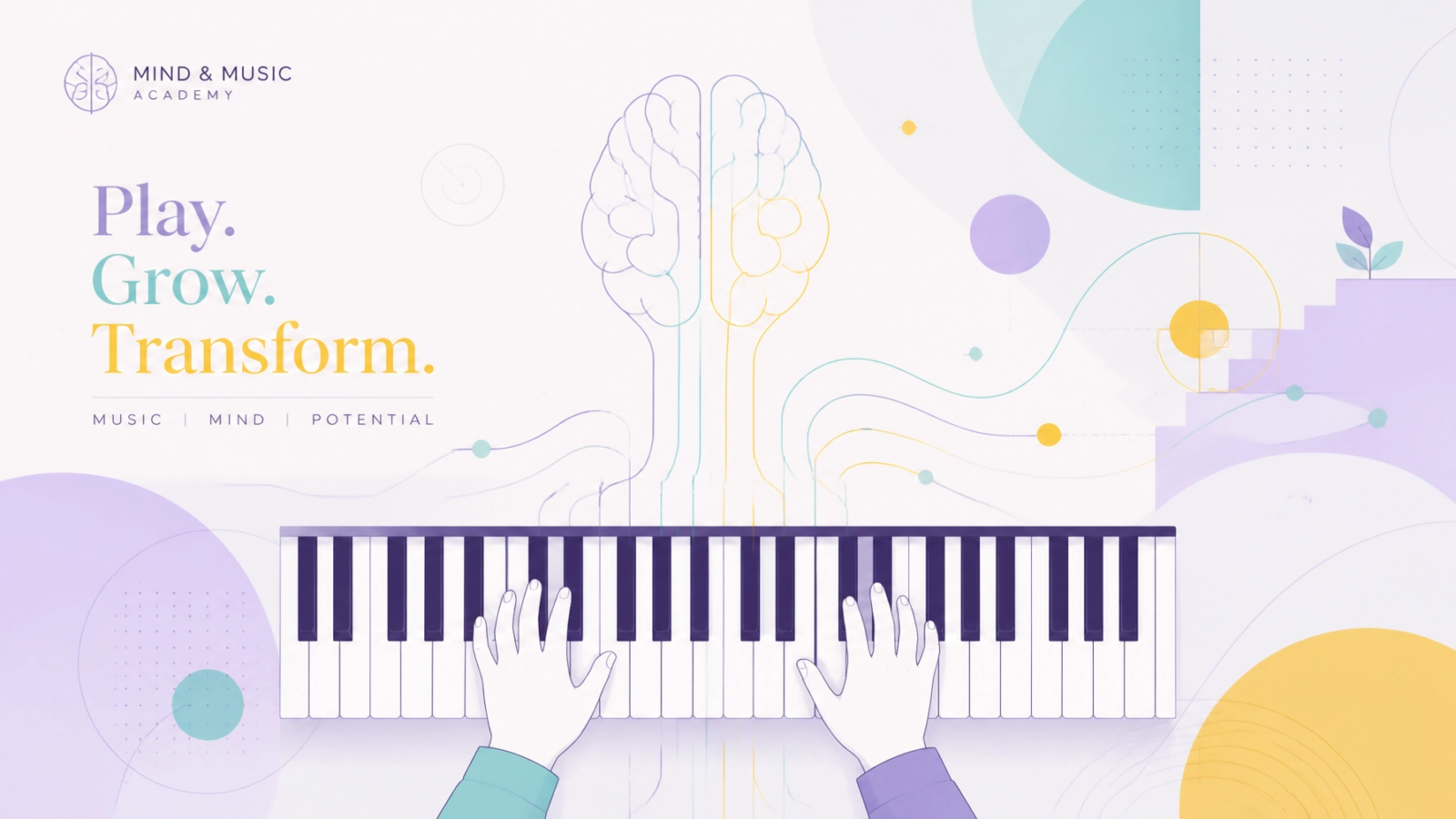
The pursuit of musical proficiency is often categorized as an artistic endeavor, yet contemporary neuroscience reveals that instrument training, particularly on the piano, is a rigorous cognitive exercise that significantly enhances logical thinking and executive function. In the context of academic and professional development in Ottawa, understanding the biological mechanisms behind piano instruction provides a clear rationale for its integration into a comprehensive educational regimen. Piano lessons are not merely about aesthetic expression; they are a catalyst for neural plasticity and long-term cognitive performance.
The piano presents a unique set of challenges that engage multiple regions of the brain simultaneously. Unlike many other instruments, the piano requires the independent movement of ten fingers, the coordination of both feet for pedaling, and the real-time decoding of two distinct staves of musical notation. This complex task demand drives structural changes in the brain, improving how you process information, solve problems, and manage complex tasks.
The Neuroscience of Neural Plasticity and Auditory Processing
At the core of cognitive enhancement through music is the concept of neural plasticity. This refers to the brain's ability to reorganize itself by forming new neural connections throughout life. When you engage in consistent piano practice, your brain undergoes functional and structural modifications. Research indicates that the fronto-parietal, motor, and auditory networks become more efficient. These networks are responsible for high-level tasks including attention, working memory, and the integration of sensory information.
The process of auditory processing is also significantly refined through piano study. Your brain must learn to distinguish minute differences in pitch, duration, and timbre. This refinement does not remain confined to music; it transfers to linguistic processing. Enhanced auditory processing allows for better speech-in-noise perception and faster verbal memory retrieval. In a bilingual environment such as Ottawa, where English and Spanish are increasingly intertwined within our community, these improvements in auditory processing can facilitate more efficient second-language acquisition and communication.

Bimanual Coordination and Hemispheric Integration
The piano is fundamentally a bimanual instrument. While the right hand may be executing a complex melodic line, the left hand often provides a rhythmic or harmonic counterpoint. This requirement for independent yet synchronized movement necessitates high-speed communication between the left and right hemispheres of the brain via the corpus callosum.
This inter-hemispheric integration is vital for logical reasoning and multitasking. By strengthening the connection between the analytical left hemisphere and the more holistic, spatial right hemisphere, piano lessons foster a more integrated approach to problem-solving. This cognitive flexibility allows you to shift between different concepts or tasks with greater ease. The ability to manage multiple streams of information simultaneously is a hallmark of high executive function, a skill that is directly applicable to complex professional environments and advanced academic study.
Logical Reasoning and Spatial-Temporal Intelligence
The relationship between music and mathematics is well-documented in pedagogical research. Piano lessons require a deep understanding of rhythm, which is essentially the division of time into mathematical fractions. Decoding complex rhythms involves constant mental calculation and pattern recognition. These skills are the foundation of logical reasoning and spatial-temporal intelligence.
Spatial-temporal reasoning is the ability to visualize patterns and manipulate them in space and time. This is critical for fields such as engineering, architecture, and advanced mathematics. Studies have shown that students who receive long-term piano instruction perform significantly better on tasks involving spatial reasoning than those who do not. The act of sight-reading: translating visual symbols on a page into precise physical movements: trains the brain to process spatial information rapidly and accurately.

Enhancing Executive Function and Working Memory
Executive functions are a set of cognitive processes that include inhibitory control, working memory, and cognitive flexibility. These are the "command and control" functions of the brain. Piano practice provides a rigorous framework for developing these skills through what educators call scaffolding.
- Working Memory: Memorizing a piano piece requires the brain to store and retrieve large sequences of information. This process strengthens the working memory system, which is essential for following complex instructions and maintaining focus on long-term goals.
- Inhibitory Control: Playing the piano requires you to suppress incorrect movements while prioritizing the correct ones. This trains the brain's ability to resist impulses and maintain focus, a skill directly linked to academic success and emotional regulation.
- Cognitive Flexibility: Adapting to changes in tempo, key signatures, and dynamics requires the brain to remain flexible and responsive. This mental agility translates into better problem-solving abilities in non-musical contexts.
The master-level teachers at Allegro Ma Non Troppo utilize these scientific principles to provide personalized instruction that targets these specific cognitive domains. Whether you are interested in piano lessons in Ottawa or wish to explore the theoretical foundations of music through music theory lessons, the focus remains on evidence-based learning and technical precision.
The Transfer of Skills to Academic and Professional Success
The cognitive benefits of piano lessons are not limited to the practice room. The improved executive functions and logical reasoning abilities provide a competitive advantage in various fields. For students in school bands, the technical precision gained through piano can enhance their performance on other instruments, such as the flute or clarinet. Those taking flute lessons in Ottawa or clarinet lessons often find that their understanding of music theory and rhythmic structure: solidified through piano study: allows for faster progression and deeper musicality.
Even introductory instruments like the ukulele provide a gateway to these benefits. Engaging with ukelele lessons can introduce the basics of harmony and string coordination, setting the stage for more complex keyboard training. The cumulative effect of these musical activities is a more robust, resilient, and capable cognitive system.

Bilingual Instruction and Community Accessibility in Ottawa
Our academy recognizes the diverse linguistic landscape of the Ottawa community. We offer bilingual instruction in English and Spanish, ensuring that our expert pedagogical approach is accessible to a wider demographic. Research into the bilingual brain suggests that speaking two languages already provides certain cognitive advantages, such as improved executive control. Combining bilingualism with musical training may create a synergistic effect, further enhancing neural plasticity and cognitive performance.
We provide a structured and professional environment for all learners, from beginners to advanced students. Our studio in Ottawa is designed to facilitate focused learning, while our online options offer the flexibility needed for modern, busy schedules. We aim to address the logistical pain points of music education by providing clear, transparent policies and expert support.
Logical Implementation: Pricing and Enrollment
To ensure complete transparency, our pricing structure is outlined below. We believe that professional, master-level instruction should be accessible through clear and proactive planning.
- Trial Lesson:
$20.00$0.00 (Our complimentary introductory session) - 30-Minute Weekly Lessons: $35.00 per session
- 45-Minute Weekly Lessons: $50.00 per session
- 60-Minute Weekly Lessons: $65.00 per session
Additional logistical advantages include:
- Discounts on lesson bundles for long-term commitment.
- Family Plan: Savings for three or more family members enrolled simultaneously.
- Flexible scheduling to accommodate professional and academic calendars.
- Specialized support for students enrolled in school band programs.
By choosing Allegro Ma Non Troppo, you are investing in a high-end, research-backed educational experience. Our instructors hold Master-level credentials and are dedicated to the cognitive and technical development of every student.

Conclusion
The evidence is definitive: piano training is a powerful tool for enhancing the human brain. From the development of neural plasticity and bimanual coordination to the strengthening of executive functions and logical reasoning, the benefits of piano lessons extend far beyond the ability to play a musical piece. In Ottawa, our academy provides the expert guidance necessary to unlock these cognitive performance gains in a professional and inclusive environment.
Whether you are seeking to improve your child's academic foundations or looking to challenge your own cognitive flexibility, the piano offers a structured and effective pathway. We invite you to experience our personalized, scientific approach to music education.
Leave A Comment