
 Cart is empty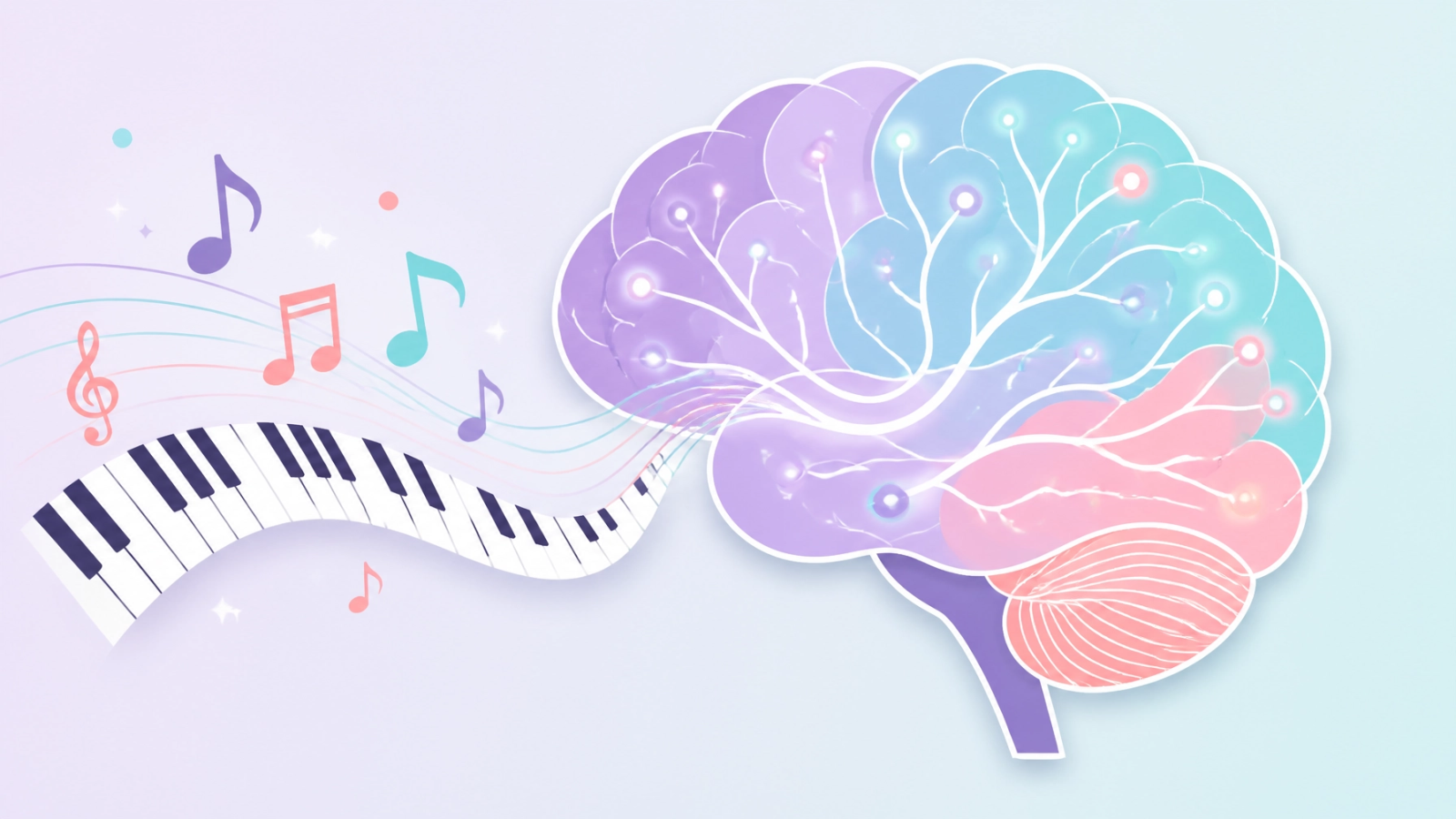
The human brain possesses an extraordinary capacity for adaptation known as neuroplasticity. This biological mechanism allows the cerebral cortex to reorganize its structure and function in response to environmental stimuli and specialized training. For individuals seeking piano lessons Ottawa, the neurological implications of starting a musical instrument extend far beyond the acquisition of a new hobby. Recent advancements in neuroimaging and cognitive psychology have demonstrated that beginner piano lessons initiate significant structural changes in the brain, often within a remarkably short timeframe. By engaging in the complex task of translating visual symbols into fine motor movements and auditory feedback, you are effectively re-engineering your neural architecture.
Structural Plasticity in the Motor Cortex
The primary motor cortex is a central hub for the execution of voluntary movements. When you begin piano lessons Ottawa, you subject your motor system to a high level of demand for finger independence and bimanual coordination. Research conducted by Hyde et al. (2009) investigated the effects of 15 months of keyboard training on children. Using magnetic resonance imaging (MRI), researchers identified significant growth in the motor areas of the cortex in students who received musical training compared to a control group. This expansion of the motor map is a direct response to the repetitive and precise gestures required to strike individual keys with varying pressure and timing.
This structural plasticity is not limited to childhood. Studies on adult beginners have shown that microstructural changes in the white matter and gray matter can be observed after only a few weeks of consistent practice. The process involves synaptogenesis, where new connections between neurons are formed, and the strengthening of existing pathways. By enrolling in beginner piano lessons, you are providing the necessary scaffolding for your motor cortex to refine its control over fine motor skills, a benefit that resonates across other daily physical tasks.

Auditory Processing and Cortical Thickness
Playing the piano is an inherently multimodal activity that requires a tight coupling between the motor and auditory systems. As you play a note, your brain must process the frequency, duration, and intensity of the sound to determine if the output matches the intended goal. This constant feedback loop drives structural changes in the auditory cortex, specifically in the Heschl’s gyrus, which is the primary site for processing pitch.
Gaser and Schlaug (2003) demonstrated that musicians possess greater gray matter volume in the auditory, sensorimotor, and premotor regions compared to non-musicians. For those pursuing music lessons Ottawa, this means that even the early stages of training can lead to an increase in cortical thickness in regions responsible for auditory processing. These changes improve your ability to discriminate between subtle differences in tone and rhythm. The implications of this enhanced auditory processing extend to language acquisition and verbal syntax, highlighting the cross-domain benefits of musical education.
If you are exploring other instruments, such as through online flute lessons or online clarinet lessons, you will find that similar auditory-motor integration occurs. However, the piano’s unique demand for simultaneous multi-staff reading and independent hand movements provides a particularly rigorous workout for the cerebral cortex.
Interhemispheric Connectivity and the Corpus Callosum
One of the most profound structural changes observed in pianists is the enlargement of the corpus callosum. This massive bundle of nerve fibers connects the left and right hemispheres of the brain, facilitating the transfer of information between them. Piano playing requires a high degree of interhemispheric communication, as each hand is often performing distinct tasks that must be perfectly synchronized.
A study by Steele et al. (2013) found that musical training, particularly when started during a sensitive period of development before age seven, leads to enhanced white matter integrity in the corpus callosum. This increased connectivity allows for more efficient motor control and faster processing speeds. For families considering kids music lessons Ottawa, starting piano early can establish a robust neurological foundation that supports executive functions throughout life. Even for adults, the demand for bimanual coordination in piano lessons Ottawa continues to challenge and strengthen these interhemispheric pathways.
The Role of Music Theory in Cognitive Development
A comprehensive approach to learning piano involves more than just physical practice; it requires an understanding of the underlying structure of music. Incorporating music theory lessons online into your curriculum provides the cognitive framework necessary for advanced musical comprehension. Music theory engages the prefrontal cortex, the area of the brain responsible for logical reasoning, pattern recognition, and executive function.
- Patterns in scales and chords mirror mathematical structures, stimulating logical-mathematical reasoning.
- The analysis of musical form requires high-level cognitive categorization and memory.
- Reading complex notation involves a sophisticated form of visual-spatial processing.
By integrating these theoretical elements, students at Allegro Ma Non Troppo benefit from a holistic pedagogical model that addresses both the physical and intellectual aspects of music. This dual approach ensures that the structural changes in the brain are supported by a deep understanding of the material.

Bilingual Instruction and Cognitive Reserve
Allegro Ma Non Troppo offers a unique advantage through bilingual music lessons in English and Spanish. Learning music in a second language adds an additional layer of cognitive complexity, which has been linked to increased cognitive reserve. The process of switching between languages while focusing on musical tasks requires intense inhibitory control and cognitive flexibility.
Neurological research suggests that bilingualism can delay the onset of cognitive decline by strengthening the brain's executive control network. When combined with the neuroplastic benefits of beginner piano lessons, bilingual instruction provides a powerful stimulus for neural health. This is particularly relevant for the diverse community in Ottawa, where being able to access high-quality music lessons Ottawa in multiple languages meets both cultural and cognitive needs.
Environmental Factors and Learning Efficiency
The environment in which you learn significantly impacts the rate of neural adaptation. Our Ottawa studio provides a professional setting optimized for focus, while our online options offer the comfort and flexibility of your own home. Addressing the potential pain points of scheduling and travel, we ensure that your cognitive resources are dedicated to learning rather than logistical stress.
- Flexible scheduling with 30, 45, and 60 minute options allows you to tailor your training to your current cognitive load and attention span.
- Expert, Master-level teachers provide the necessary scaffolding to guide your brain through the expansion-renormalization process of learning.
- Discounts on lesson bundles and a Family Plan with savings for 3 or more members make long-term neural development accessible.
For those interested in other instruments, we also provide specialized support through flute lessons Ottawa, ukulele lessons Ottawa, and clarinet lessons. Each instrument offers unique biomechanical and neurological challenges that contribute to overall cognitive health.

Cognitive Benefits and Academic Performance
The structural changes initiated by piano lessons Ottawa have a measurable impact on academic and professional performance. Enhanced executive function: which includes working memory, cognitive flexibility, and inhibitory control: is a direct byproduct of the disciplined practice required for piano. Studies have consistently shown a correlation between musical training and improved performance in mathematics and spatial tasks.
At Allegro Ma Non Troppo, we prioritize evidence-based learning. Our curriculum is designed to maximize these cognitive gains through personalized instruction that adapts to your individual goals. Whether you are a student in a school band looking for specialized support or an adult seeking to optimize your neural connectivity, our programs are structured to deliver results.
Logistical Transparency and Accessibility
We believe in total transparency regarding our services and pricing. To facilitate your start, we offer a free trial lesson, allowing you to experience our pedagogical approach before making a commitment.
Current Lesson Rates:
- Trial Lesson: $00.00
$35.00 - 30 Minute Lesson: $35.00
- 45 Minute Lesson: $52.50
- 60 Minute Lesson: $70.00
- Lesson Bundle (10 lessons): Save 5% on total cost
- Family Plan (3+ members): Save 10% on total cost
Our bilingual instructors are available for both in-person sessions at our Ottawa studio and through online platforms, ensuring that geography is never a barrier to your neural development. By choosing Allegro Ma Non Troppo, you are choosing a scientific and dedicated partner in your musical and cognitive journey.
Leave A Comment