
 Cart is empty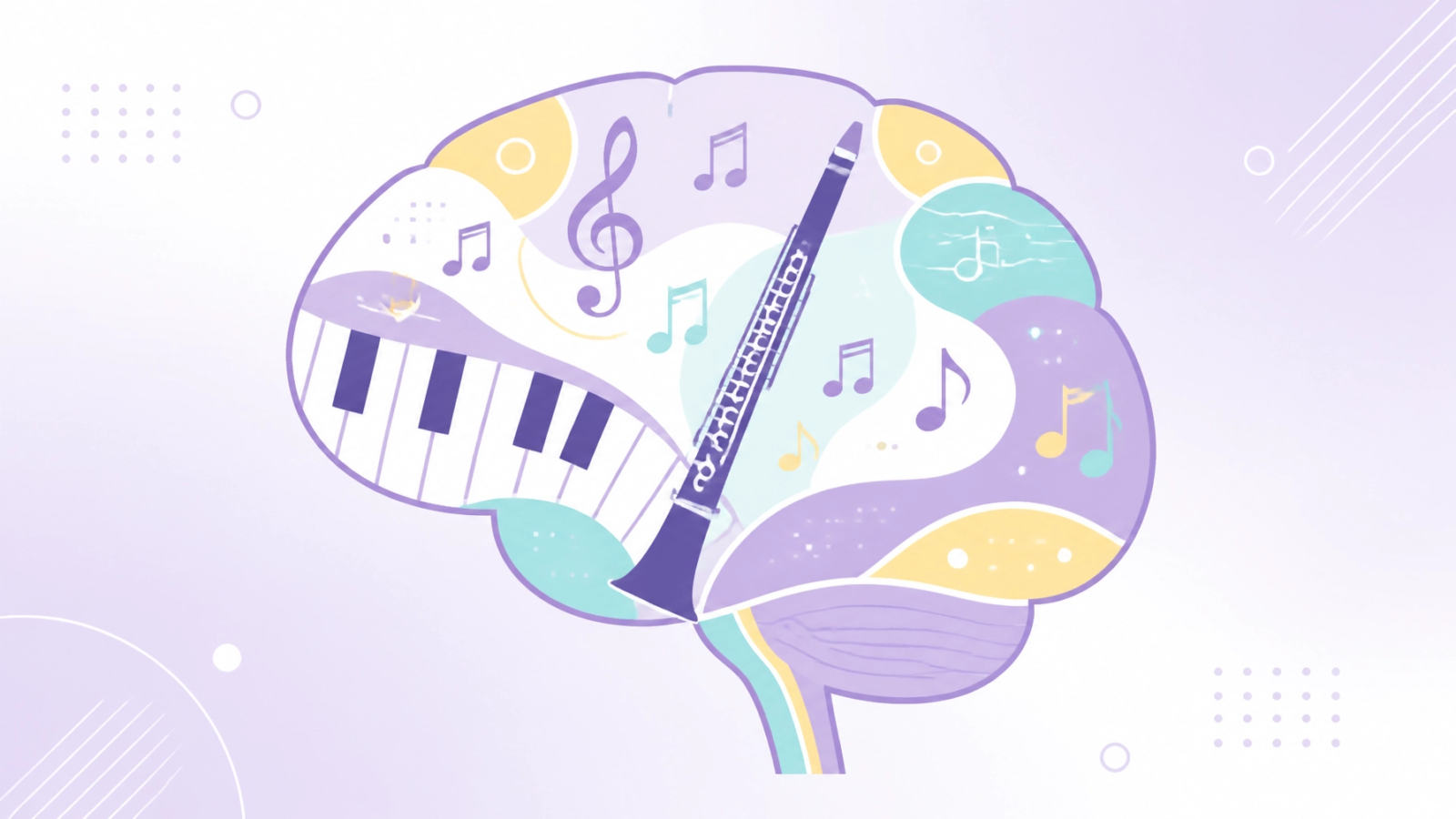
The decision to enroll a child in musical instruction often stems from an understanding of the profound cognitive advantages associated with instrumental practice. As parents and educators in Ottawa evaluate the various avenues for musical development, a frequent question arises regarding the comparative neurobiological benefits of different instruments. Specifically, the debate between keyboard instruments and woodwinds, such as the clarinet, involves examining how different physical and mental demands shape the developing brain.
Musical training is not merely a cultural or artistic endeavor; it is a rigorous cognitive workout that leverages neural plasticity to enhance various mental faculties. Research in neuroscience and developmental psychology suggests that the specific architecture of an instrument influences the nature of the brain's adaptation. Whether you are considering piano lessons in Ottawa or exploring the complexities of clarinet lessons, understanding the underlying scientific mechanisms of each can help align musical education with your child's developmental goals.
The Cognitive Architecture of Piano Training
The piano serves as a foundational instrument in music pedagogy due to its logical layout and the comprehensive sensory integration it requires. From a cognitive perspective, the piano acts as a visual and spatial map of music theory. Each key represents a specific frequency, arranged linearly, which facilitates a direct correlation between spatial positioning and auditory output.
One of the primary benefits of piano instruction is the development of bimanual coordination. Unlike many other instruments, the piano frequently requires the left and right hands to perform independent, complex tasks simultaneously. This demand for asynchronous finger movements fosters significant growth in the motor cortex and enhances the communication between the two hemispheres of the brain via the corpus callosum.
- Spatial-temporal reasoning: Piano students often demonstrate superior performance in tasks requiring the mental manipulation of objects in space and time. This is attributed to the constant need to translate visual symbols on a staff into precise physical locations on the keyboard.
- Visual-motor integration: The act of reading two staves of music (grand staff) while coordinating ten fingers requires high-level executive function and attention.
- Mathematical mapping: The structural nature of the keyboard reinforces concepts of intervals, scales, and ratios, which are inherently mathematical.

Auditory Processing and Executive Function in Clarinet Performance
While the piano offers a logical visual grid, the clarinet introduces a different set of neurological challenges centered on auditory-motor integration and physiological self-regulation. Learning the clarinet requires a child to master the embouchure: the precise coordination of the lips, jaw, and tongue: while simultaneously managing breath control.
The clarinet is a monophonic instrument that emphasizes the development of melodic phrasing and intonation. Because the pitch on a wind instrument is not fixed in the same way as a piano, the student must use their auditory feedback loop to constantly adjust their air pressure and finger placement. This process enhances auditory processing and pitch discrimination, which are closely linked to language acquisition and phonological awareness.
- Respiratory coordination and focus: The requirement for sustained, controlled exhalation serves as a form of physiological scaffolding for attention. Students must learn to regulate their breathing to maintain tone quality, which can improve self-regulation and concentration.
- Fine oro-facial motor control: The development of the embouchure involves fine motor skills that are distinct from finger dexterity, engaging different neural pathways related to speech and facial expression.
- Auditory-motor loops: Clarinetists must anticipate the sound they wish to produce and make micro-adjustments in real-time, fostering a highly sensitive auditory system.

Comparative Analysis of Motor Skill Development
When comparing the two instruments, the distinction lies in the type of motor skill and cognitive load prioritized. Piano training is heavily weighted toward spatial mapping and complex bimanual independence. In contrast, the clarinet prioritizes the integration of the respiratory system with fine motor movements of the fingers and mouth.
Scientific studies comparing keyboard players and wind players have noted instrument-specific brain plasticity. Piano players often show increased gray matter density in regions associated with visuo-spatial processing. Wind players, including those studying the clarinet, may show enhanced connectivity in areas related to auditory-motor coordination and breath management.
It is also important to consider the social and ensemble aspects of the clarinet. As students progress, they are likely to join school bands or orchestras. This ensemble environment requires high-level executive functions, such as inhibition control (waiting for your turn to play) and cognitive flexibility (adjusting your volume and pitch to match others). This social-cognitive dimension is a significant factor in the holistic development of a young musician.
The Role of Bilingual Instruction in Music Pedagogy
At Allegro Ma Non Troppo, we recognize that the benefits of music education are amplified when combined with linguistic development. We offer instruction in both English and Spanish (instrucción bilingüe en inglés y español), which provides an additional layer of cognitive challenge and cultural enrichment. Learning a musical instrument while navigating a second language further stimulates neural plasticity, as both music and language rely on similar auditory processing frameworks.
For families in Ottawa, this bilingual approach ensures that children can learn in the language they feel most comfortable in, or use their music lessons as a practical application for their second language skills. Whether your child is studying flute, clarinet, or music theory, the bilingual environment fosters a more inclusive and global perspective on education.
Program Logistics and Accessibility in Ottawa
Selecting the right instrument involves practical considerations alongside scientific ones. We offer a structured and transparent approach to music education to ensure that every student has the resources they need to succeed. Our curriculum is designed by expert, Master-level teachers who tailor their instruction to the individual goals and cognitive needs of each student.
We provide a variety of scheduling options and financial plans to accommodate the diverse needs of Ottawa families. Our lessons are available in 30, 45, and 60-minute durations, allowing for flexibility based on the student's age and attention span.
- Standard Lesson Rates:
- 30-minute lesson: $35.00
- 45-minute lesson: $52.50
- 60-minute lesson: $70.00
To support long-term commitment and family-wide learning, we offer the following discounts:
- Lesson Bundle Discount: Purchase a pack of 10 lessons and receive a 5% discount (e.g., 10 x 30 mins for
$350.00$332.50). - Family Plan: Families with 3 or more members enrolled receive a 10% discount on all lessons.
Our lessons can be conducted in-person at our Ottawa studio or through our convenient online lessons platform. This flexibility addresses common pain points such as commuting time and environmental comfort, ensuring that the student can focus entirely on their musical and cognitive growth.

Conclusion: Synthesizing the Benefits
Ultimately, there is no definitive scientific consensus that one instrument is superior to another for brain development. Instead, the research highlights that the act of engaged, consistent practice is the primary driver of cognitive enhancement. The piano may offer a slight advantage in spatial-temporal reasoning and logical mapping, while the clarinet excels in fostering auditory precision and physiological focus.
The most effective instrument for your child’s brain is the one that resonates with their personal interests and motivates them to engage in regular practice. Whether they are drawn to the polyphonic possibilities of the piano or the expressive, breath-driven nature of the clarinet, the resulting neural adaptations will provide a lifetime of cognitive and academic benefits.
Our pedagogical approach at Allegro Ma Non Troppo focuses on making this journey evidence-based and professionally guided. By combining expert instruction with a supportive, bilingual environment, we help students in Ottawa reach their full potential.
Leave A Comment