
 Cart is empty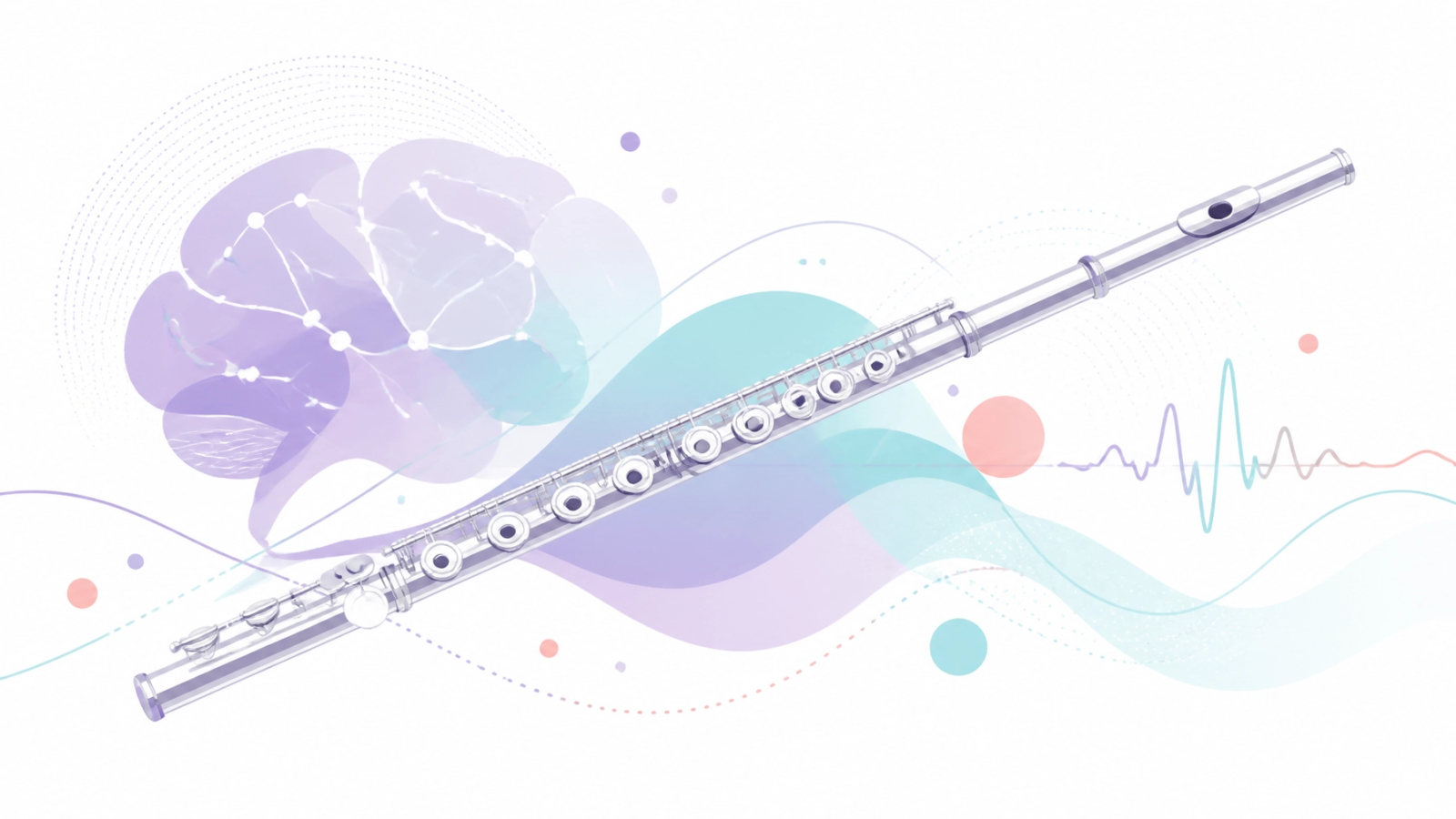
The acquisition of high-level musical skill is one of the most complex tasks the human nervous system can undertake. For those pursuing flute lessons in Ottawa, the process involves more than the mastery of repertoire; it is a systematic reorganization of the brain’s structural and functional architecture. Research in neuroscience and pedagogy indicates that the unique demands of the flute: combining precise respiratory modulation with rapid, asynchronous finger movements: induce specific patterns of neuroplasticity that differ significantly from other instrumental disciplines.
Respiratory Dynamics and Neuromuscular Recruitment
The mechanical production of sound on the flute requires a sophisticated level of breath support that necessitates specific muscle recruitment patterns. According to research by Pavaux et al. (2007), professional flute performance involves the coordinated antagonistic contraction of non-diaphragmatic inspiratory muscles. This allows for the precise modulation of mouth pressure essential for maintaining intonation and dynamic range across different registers.
While the diaphragm is often discussed in introductory contexts, scientific observation reveals that it is selectively activated during specific articulatory tasks such as vibrato, staccato, and abrupt pressure changes. For students engaged in music lessons in Ottawa, understanding this physiological scaffolding is critical. The brain must learn to manage these pressure gradients through a feedback loop involving the primary motor cortex and the respiratory centers in the brainstem, ensuring that every note resonates with mathematical precision.

Instrument-Specific Structural Plasticity
Recent neuroimaging evidence demonstrates that musical training produces instrument-specific structural brain changes. A study (PMID: 34296181) highlights that woodwind players develop distinct neuroplastic patterns compared to pianists or string players. This is because the brain optimizes itself based on the specific motor and sensory demands placed upon it.
In flute performance, the asymmetric posture and the requirement for independent control of the ten digits lead to specialized cognitive development. This reorganization is not limited to the gray matter; it extends to the white matter tracts that facilitate communication between brain regions. Diffusion Tensor Imaging (DTI) studies (PMID: 19264144) have shown that professional musicians exhibit significantly different fractional anisotropy in the corticospinal tracts. These structural differences correlate strongly with the age of onset of training, suggesting that early intervention during periods of high neural plasticity can lead to more robust long-term adaptations.
Rapid Adaptation and Short-Term Plasticity
The brain's ability to change is not limited to years of practice. Research into motor sequence learning (PMID: 31596547) reveals that even 45 minutes of intensive motor sequence learning can produce detectable structural changes in motor-related regions. This "short-term plasticity" is the foundation of effective practice sessions.
When you engage in online flute lessons, the repetitive execution of complex fingerings and technical etudes triggers immediate synaptic adjustments. These microstructural changes are the precursor to the more permanent adaptations seen in professional performers. By utilizing expert instruction, students can ensure that these rapid changes are aligned with correct technique, preventing the consolidation of inefficient motor patterns.

Sensorimotor Integration and the Embouchure
The embouchure is perhaps the most sensitive motor task a flutist performs. It requires the integration of tactile, kinesthetic, and auditory feedback to maintain a stable and flexible aperture. A Magnetoencephalography (MEG) study (PMID: 31632836) found that fine motor control of the embouchure relies on precise sensorimotor integration and cortical inhibition.
The study investigated the role of GABA-ergic activity: the primary inhibitory neurotransmitter in the brain: in maintaining motor control. In advanced performers, the brain uses cortical inhibition to "silence" unnecessary muscle movements, allowing for the extreme delicacy required for high-register leaps or subtle timbral shifts. This level of control is a hallmark of the master-level training offered at Allegro Ma Non Troppo, where we emphasize music theory and pedagogical principles to support technical development.
Pedagogical Framework at Allegro Ma Non Troppo
Our approach to music education is grounded in these scientific realities. We provide a structured environment that fosters both cognitive development and artistic expression. Whether you are a student in a school band looking for specialized support or an adult pursuing a new intellectual challenge, our curriculum is designed to respect the biological limits and potentials of the human brain.
We offer instruction in a bilingual environment, providing lessons in both English and Spanish (instrucción bilingüe en inglés y español). This linguistic flexibility not only serves the diverse Ottawa community but also adds another layer of cognitive scaffolding to the learning process.

Instructional Logistics and Trial Information
To ensure our services are accessible and transparent, we provide various lesson plans tailored to individual needs. We prioritize flexibility and scientific rigor in our teaching methods, offering the following options:
- 30-minute lessons: Ideal for consistent, high-frequency technical maintenance.
- 45-minute lessons: Sufficient for detailed repertoire analysis and theory integration.
- 60-minute lessons: Recommended for advanced students focusing on professional-level performance and structural mastery.
We also offer a Family Plan for households with three or more members, ensuring that musical education is a sustainable endeavor for the entire family. Our pricing structure includes transparent discounts on lesson bundles to facilitate long-term commitment:
- Single Trial Lesson: $35.00 $0.00 (Free for new students)
- 10-Lesson Bundle (30 min): $350.00 $315.00
- 10-Lesson Bundle (60 min): $700.00 $630.00
All lessons are conducted by Master-level teachers who specialize in translating complex physiological and musical concepts into actionable steps. Our Ottawa studio provides a premium, focused environment, while our online platform offers the comfort and flexibility required for modern schedules.
The neuroplastic journey of a flutist is a testament to the brain's incredible capacity for adaptation. By understanding the underlying mechanisms of breath support, motor control, and sensorimotor integration, students can approach their practice with a more informed and effective perspective.
References
Pavaux, D., et al. (2007). Chest wall dynamics and muscle recruitment during professional flute playing. ScienceDirect.
Brain Plasticity Reflects Specialized Cognitive Development Induced by Musical Training. (2021). Frontiers in Human Neuroscience. PMID: 34296181.
Imfeld, A., et al. (2009). White matter plasticity in the corticospinal tract of musicians: A diffusion tensor imaging study. NeuroImage, 46(3), 600-607. PMID: 19264144.
Sampaio-Baptista, C., et al. (2019). Short-term plasticity following motor sequence learning revealed by diffusion MRI. PMID: 31596547.
Mantel, T., et al. (2019). Sensorimotor Integration and GABA-ergic Activity in Embouchure Dystonia. PMID: 31632836.
Leave A Comment