
 Cart is empty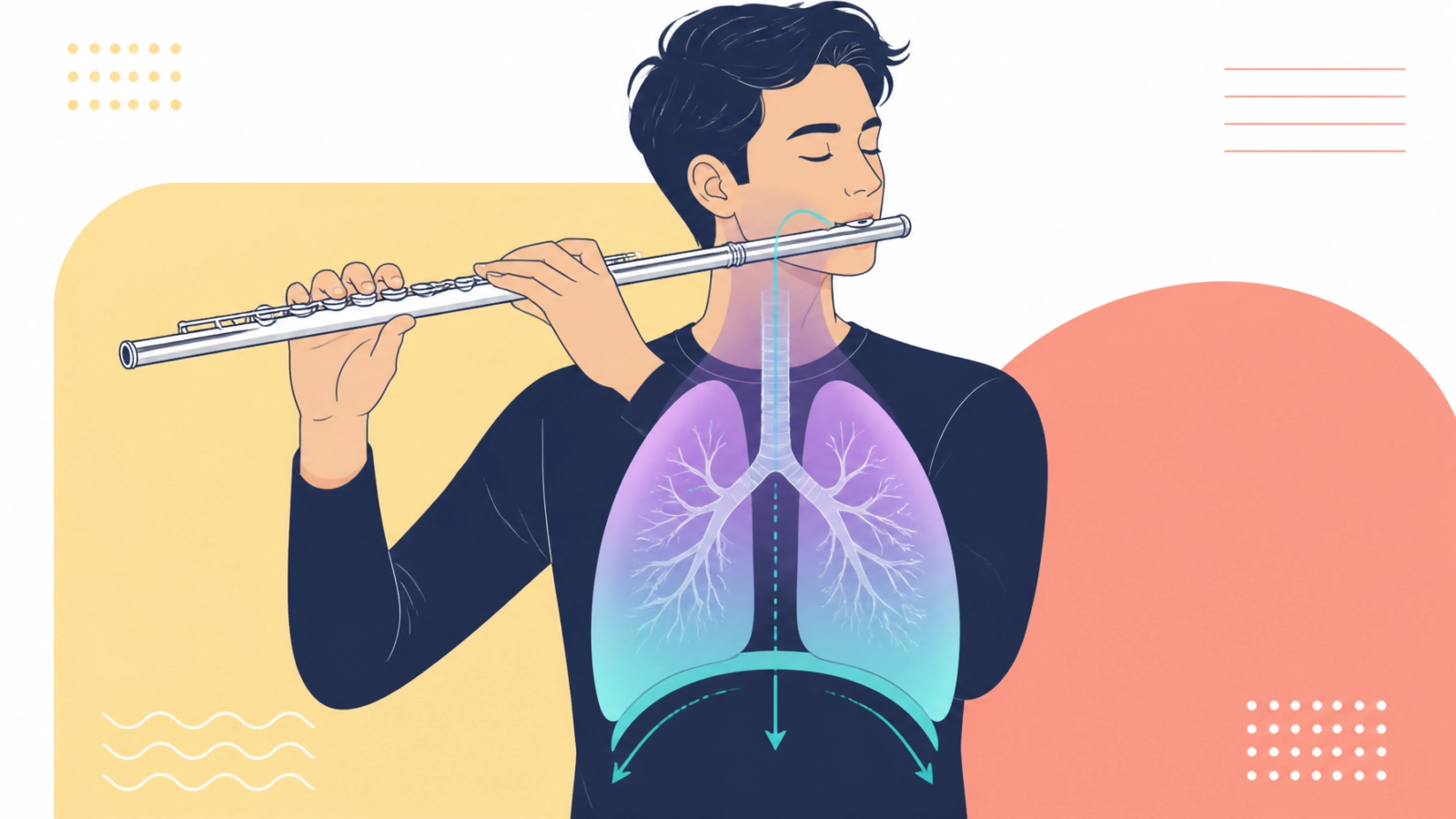
The production of a superior flute tone is not merely an artistic endeavor but a complex physiological process rooted in respiratory mechanics and acoustic physics. For the serious student, understanding the underlying science of breath control is essential for transitioning from a basic sound to a professional, resonant quality. At Allegro Ma Non Troppo, we prioritize an evidence-based approach to music education, ensuring that our students understand the anatomical and physical principles that govern their instruments. Whether you are seeking online flute lessons or attending our studio in person, mastering these mechanics is the first step toward woodwind excellence.
The Physiology of Inhalation: Diaphragmatic Function
The initial phase of flute performance involves efficient inhalation, which is primarily driven by the diaphragm: a large, dome-shaped muscle located at the base of the thoracic cavity. During a quiet breath, the diaphragm is responsible for the majority of air movement, but for woodwind players, this process must be more intentional and expansive.
- When the diaphragm contracts, it moves downward and flattens, increasing the volume of the thoracic cavity.
- This expansion creates a pressure differential: intra-thoracic pressure becomes lower than atmospheric pressure: forcing air into the lungs.
- Proper inhalation for flute playing requires a 360-degree expansion of the lower rib cage and abdominal wall, often described as breathing into the lower back and sides.
- The external intercostal muscles assist by lifting the ribs upward and outward, further maximizing lung capacity.
In our music lessons Ottawa, we teach students to avoid clavicular breathing, or shoulder-lifting, which is inefficient and creates unnecessary tension in the neck and throat. By focusing on diaphragmatic engagement, flautists can achieve the high lung volumes necessary for long phrases without compromising their physical well-on-being.

The Physics of Exhalation: Antagonistic Muscle Activity
While inhalation is an active muscular process, exhalation during normal speech is largely passive, relying on the elastic recoil of the lungs. However, for a flautist, exhalation must be highly regulated. This regulation is achieved through what is known in pedagogy as breath support, or more scientifically as antagonistic muscle activity.
- Flute playing is characterized by high lung volumes but relatively low mouth pressure compared to other woodwinds like the oboe or clarinet lessons Ottawa.
- To maintain a steady air stream at high lung volumes, the inspiratory muscles (such as the external intercostals) must remain partially active to provide a braking mechanism against the expiratory muscles (the abdominal wall and internal intercostals).
- This balance prevents the lungs from collapsing too quickly, allowing for sustained, even airflow.
- The internal intercostals and the four layers of the abdominal wall: the rectus abdominis, external obliques, internal obliques, and transversus abdominis: work together to modulate the pressure of the air column.
This sophisticated coordination ensures that the player can maintain pitch stability and dynamic control throughout a phrase. In our bilingual music lessons, we provide instructions in both English and Spanish (clases de música bilingües) to ensure that these complex physiological concepts are clearly understood by all members of our community.
Acoustic Implications: Pressure, Flow, and Velocity
The air jet produced by the flautist must interact precisely with the edge of the embouchure hole to generate sound. The quality of this sound is determined by three variables controlled by the respiratory system: pressure, flow, and velocity.
- Mouth pressure is the force generated by the respiratory muscles to push air toward the lips.
- Flow refers to the volume of air passing through the instrument per second, which primarily influences the loudness or intensity of the sound.
- Velocity is the speed at which the air jet moves, which is critical for accessing different octaves and maintaining intonation.
Science indicates that professional flautists independently control velocity and flow by adjusting both mouth pressure and the size of the embouchure aperture. This level of control requires a highly developed sense of kinesthetic awareness, which we cultivate through rigorous music theory lessons online and practical application in our studio. Understanding the relationship between air speed and the harmonic series allows students to achieve a clear, centered tone in all registers.

Cognitive and Physical Benefits: Evidence-Based Learning
The mastery of respiratory mechanics offers significant benefits beyond the performance hall. Research in neuroscience and psychology highlights the cognitive advantages of the structured breathing required for woodwind instruments.
- Neural Plasticity: Learning to coordinate the fine motor skills of the fingers with the gross motor skills of the respiratory system strengthens neural pathways and enhances brain plasticity.
- Executive Function: The act of monitoring air levels, reading notation, and maintaining rhythmic precision simultaneously develops executive function, particularly working memory and inhibitory control.
- Auditory Processing: Intensive focus on tone quality and intonation refines the brain's ability to process complex auditory information, a skill that translates to improved language acquisition and communication.
- Respiratory Health: Consistent practice of diaphragmatic breathing can increase vital capacity and promote a state of physiological calm, reducing the impact of performance anxiety.
These benefits are accessible to students of all ages, from children in school bands to adults beginning beginner piano lessons as a way to maintain cognitive health. Our pedagogy is designed to provide the necessary scaffolding for every learner to succeed.

Implementation in Practice: From Theory to Performance
To translate scientific understanding into musical performance, students must engage in deliberate practice. This involves isolating the components of breath control before integrating them into repertoire.
- Focus on long tones to observe the relationship between abdominal tension and pitch stability.
- Utilize breathing exercises away from the instrument to strengthen the diaphragm and intercostal muscles.
- Practice gradual crescendos and decrescendos to master the independent control of air flow and velocity.
- Use a mirror to monitor for any sympathetic tension in the throat or shoulders during inhalation.
Our expert, Master-level teachers provide personalized feedback to ensure that each student develops a healthy and efficient technique. This individualized attention is a cornerstone of our curriculum, whether you are studying the flute, clarinet, or focusing on music theory lessons.
Our Services and Commitment to Excellence
Allegro Ma Non Troppo offers a comprehensive range of music education services designed to meet the needs of the Ottawa community and online learners worldwide. We believe in total transparency regarding our logistics and pricing to ensure a seamless experience for our families.
- Individual Lessons: We offer flexible scheduling with 30, 45, and 60-minute sessions to accommodate various goals and attention spans.
- Trial Lesson: We provide a free trial lesson for all new students to ensure a proper fit with our teaching style.
- Lesson Bundles: Save on your education with our bundle options. A 5-lesson bundle includes a 5% discount, and a 10-lesson bundle includes a 10% discount.
- Pricing Structure: 30 minutes for $40, 45 minutes for $55, and 60 minutes for $70.
- Family Plan: Families with 3 or more members enrolled receive a 10% discount on all lessons.
- Flexibility: Lessons can be conducted online from the comfort of your home or in person at our professional Ottawa studio.
We address the common pain points of modern families by providing bilingual instruction in English and Spanish, making our high-quality music education accessible to a broader demographic. Our environment is one of academic rigor and professional development, ensuring that every note played contributes to your growth as a musician.
Leave A Comment