
 Cart is empty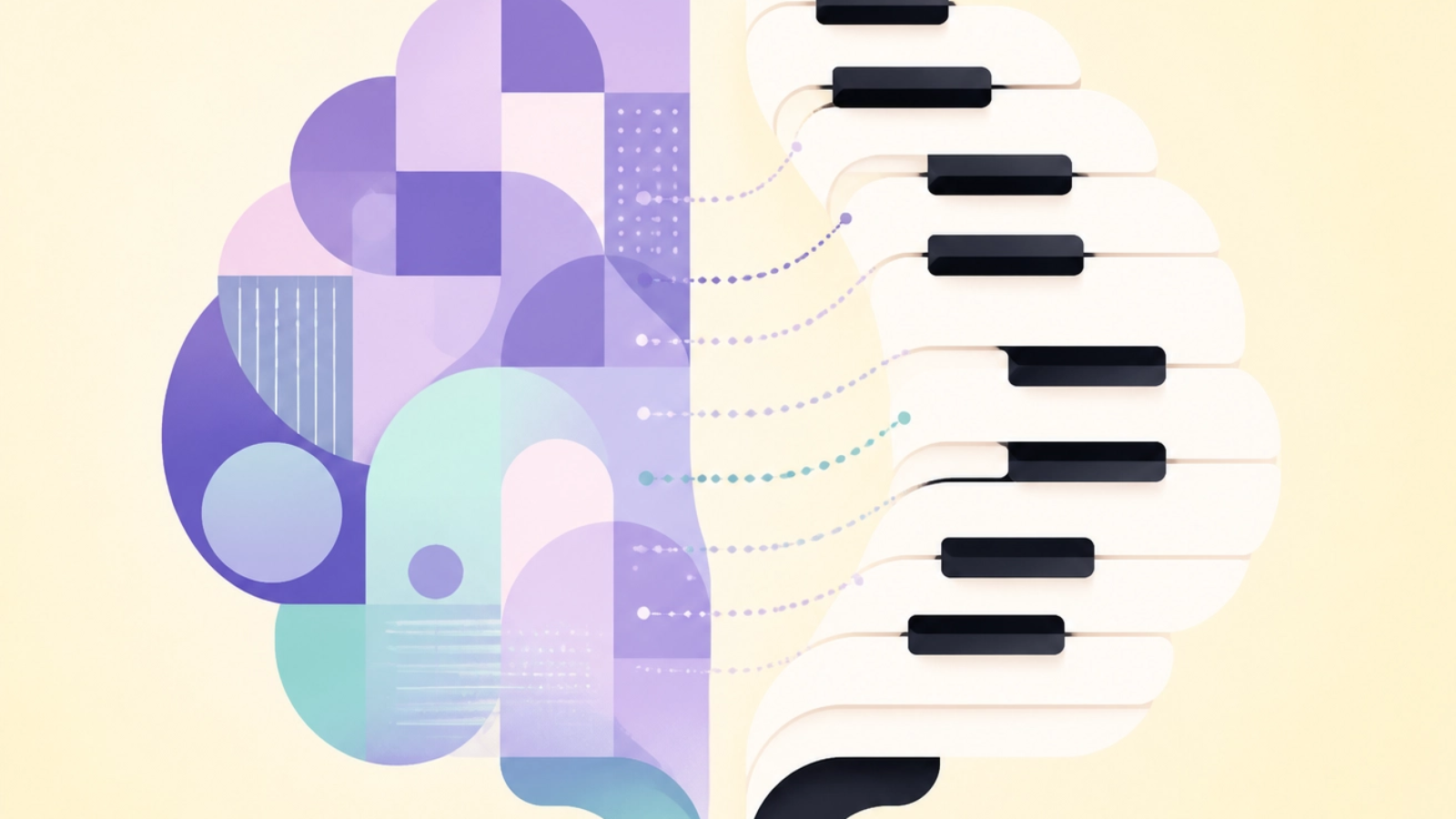
The human brain is a highly adaptive organ, capable of profound structural and functional reorganization in response to complex environmental stimuli. Among the various forms of cognitive and motor training, the initiation of beginner piano lessons serves as a potent catalyst for neuroplasticity. This article examines the neurological mechanisms by which musical training alters the cerebral cortex, drawing on empirical evidence from neuroscience and developmental psychology.
Cortical Plasticity and Grey Matter Density
The cerebral cortex undergoes significant structural modification during the initial stages of musical instruction. Research published in the Journal of Neuroscience (Hyde et al., 2009) demonstrates that children who engage in as little as fifteen months of instrumental training exhibit measurable increases in grey matter volume in several key regions. These include the primary motor cortex, the primary auditory cortex, and the corpus callosum.
In the context of piano lessons Ottawa, students engage in high-frequency bimanual coordination. This requirement for independent finger movement leads to the expansion of the motor maps within the precentral gyrus. The brain allocates more neural resources to manage the fine motor control necessary for complex scales and chord progressions. This phenomenon, known as experience-dependent plasticity, ensures that the cortical representation of the hands becomes more sophisticated and efficient over time.

Interhemispheric Communication and the Corpus Callosum
One of the most striking neurological benefits of learning the piano is the strengthening of the corpus callosum: the thick bundle of nerve fibers that connects the left and right hemispheres of the brain. Piano performance requires the simultaneous execution of distinct tasks: the right hand often manages melodic lines while the left hand provides harmonic accompaniment.
This bimanual complexity necessitates rapid information transfer between hemispheres. Scientific studies, including those conducted at Harvard Medical School (Schlaug et al., 1995), have identified that musicians who begin training at an early age possess a significantly larger anterior corpus callosum. This structural enhancement facilitates superior motor synchronization and executive function, which are critical components of kids music lessons Ottawa.
Auditory-Motor Mapping and Sensory Integration
The process of learning piano is not merely a motor task; it is a complex exercise in sensory integration. The brain must bridge the gap between a visual stimulus (sheet music), a motor action (pressing a key), and an auditory result (the sound of the note). This creates a robust auditory-motor loop.
- The temporal lobe processes frequency and pitch.
- The parietal lobe manages visuospatial information.
- The frontal lobe coordinates the execution of the motor program.
By integrating music theory lessons online, students reinforce these neural pathways. Understanding the mathematical relationships between notes provides a cognitive framework that supports auditory processing. This multimodal approach ensures that the brain becomes more adept at decoding complex signals, a skill that translates to improved language acquisition and mathematical reasoning.

Comparative Efficacy of Digital and In-Person Instruction
The choice between online lessons and in-person instruction at our Ottawa studio involves several pedagogical considerations. Modern neuroimaging suggests that the brain responds to the structural demands of musical training regardless of the medium of delivery, provided the instruction remains personalized and rigorous.
Online instruction offers specific environmental advantages, such as reduced cortisol levels due to the comfort of the home environment. This can optimize the prefrontal cortex for learning by minimizing the stress response. Conversely, in-person lessons provide immediate tactile feedback which is essential for developing proper ergonomics. Whether a student chooses online flute lessons or online clarinet lessons, the core principles of neuroplasticity remain constant.
Logistical Framework and Pricing Transparency
Allegro Ma Non Troppo provides a structured pedagogical path for students of all ages. Our curriculum is designed by expert, Master-level teachers to ensure that every lesson contributes to the student's cognitive and musical development. We offer flexible scheduling to accommodate the diverse needs of the Ottawa community.
- Free Trial Lesson: A complimentary assessment to establish baseline skills.
- 30-Minute Session: $35.00 (Ideal for younger children or beginner focus).
- 45-Minute Session: $50.00 (Standard duration for intermediate progression).
- 60-Minute Session: $65.00 (Recommended for advanced technical development).
We offer strategic savings through lesson bundles and our inclusive Family Plan:
- 5-Lesson Bundle: $166.25 (standard $175.00).
- 10-Lesson Bundle: $315.00 (standard $350.00).
- Family Plan: Significant savings for 3 or more members enrolled concurrently.

Conclusion on Neural Optimization
The evidence is conclusive: piano training is one of the most effective ways to induce structural changes in the cerebral cortex. By challenging the brain to integrate auditory, visual, and motor information, piano lessons enhance executive function, improve memory, and increase the efficiency of neural communication.
At Allegro Ma Non Troppo, we combine this scientific understanding with personalized instruction in a variety of instruments, including ukulele lessons Ottawa and bilingual music lessons in English and Spanish. Our goal is to provide a high-authority learning environment that fosters both musical excellence and cognitive health.
Leave A Comment