
 Cart is empty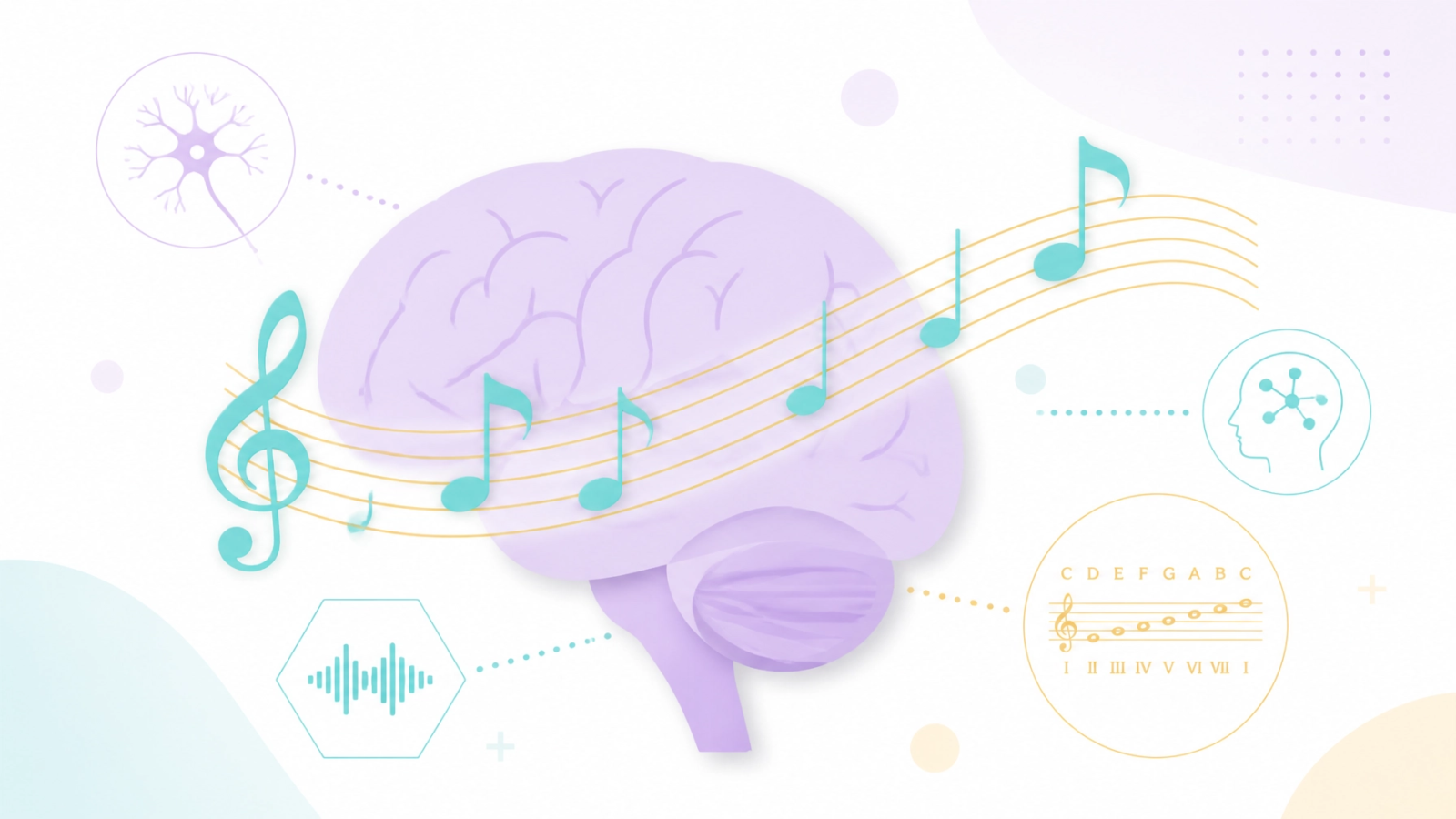
The acquisition of musical proficiency is not merely a matter of repetitive motor practice but is deeply rooted in the cognitive understanding of musical structures. Music theory serves as the fundamental architecture of sound, providing the analytical framework necessary for advanced interpretative and technical skill. By enrolling in music theory lessons, you transition from passive imitation to active, informed creation. This comprehensive guide examines how the scientific application of music theory, particularly through online instructional platforms, optimizes the learning process and accelerates instrument mastery across all disciplines, from flute lessons to piano lessons.
The Neuroscience of Music Theory and Neural Plasticity
At the core of music theory is the systematic study of patterns, intervals, and harmonic relationships. Research in neuroscience indicates that musical training induces significant structural and functional changes in the brain, a phenomenon known as neural plasticity. When you study theory, you are not simply memorizing rules; you are building complex neural pathways that facilitate faster auditory processing and enhanced executive function.
The brain of a musician who understands theory is conditioned to recognize "schemas" or recurring structural models. Instead of processing a piece of music as a sequence of isolated frequencies, the theoretically trained mind perceives "chunks" of information. This process, known as chunking, significantly reduces the working-memory load. For students engaged in music lessons Ottawa, this cognitive efficiency translates to faster repertoire acquisition and superior sight-reading capabilities.

Strategic Pattern Recognition in Instrumental Performance
Mastering an instrument requires the seamless integration of auditory, visual, and motor systems. Music theory provides the symbolic-abstract reasoning necessary to bridge these systems. For instance, a student taking clarinet lessons who understands the harmonic progression of a sonata can anticipate fingering changes before they appear on the page. This predictive processing is a hallmark of master-level performance.
- Pattern recognition: Identifying scales, chords, and cadences at a glance.
- Harmonic memory: Utilizing knowledge of key centers to facilitate long-term memorization.
- Error detection: Developing a sophisticated internal monitor that identifies discrepancies between the intended harmonic structure and the actual sound produced.
By understanding the "why" behind the notes, students can apply scaffolding techniques to their practice. Scaffolding allows learners to build upon existing knowledge, making the transition from beginner to intermediate levels more efficient. This is particularly beneficial for those in school band programs who require technical precision under time constraints.
Accelerating Mastery Through Online Music Theory Lessons
The digital shift in music education has introduced unparalleled advantages for the serious student. Online music theory lessons offer a controlled, focused environment that addresses specific logistical pain points. The comfort of a familiar setting reduces performance anxiety, allowing for higher levels of concentration and better retention of complex theoretical concepts.
- Environmental control: Optimizing your workspace for maximum cognitive engagement.
- Scheduling flexibility: Aligning your lessons with your peak cognitive hours to ensure optimal learning.
- Resource accessibility: Utilizing digital tools and interactive software that provide immediate feedback on interval recognition and harmonic analysis.
Our Ottawa studio offers these online lessons with expert, Master-level teachers who specialize in translating abstract concepts into practical performance gains. Whether you are focusing on ukulele lessons or advanced music theory, the online format ensures that the instructional quality remains high-end and personalized.

Multi-Modal Encoding and Cognitive Benefits
The study of music theory promotes multi-modal encoding, where information is stored through multiple sensory channels. When you analyze a score, you are engaging visual recognition; when you sing an interval, you are engaging auditory processing; and when you apply that interval to your instrument, you are engaging motor skills. This tri-fold approach ensures that musical knowledge is deeply embedded and easily retrievable.
This cognitive development extends beyond the music studio. Studies have shown that the abstract reasoning required for music theory correlates with improved mathematical and linguistic abilities. This is often referred to as "far transfer," where the discipline of music education enhances academic performance and logical thinking. For families in Ottawa, this makes music theory an essential component of a well-rounded educational curriculum.
Bilingual Instruction: Cognitive Advantages in English and Spanish
Allegro Ma Non Troppo provides bilingual instruction in English and Spanish (clases de música en español). Research suggests that bilingualism, much like music, enhances executive function and delays cognitive decline. Learning music theory in a second language adds an additional layer of cognitive challenge that further strengthens neural pathways.
- Language integration: Enhancing terminology comprehension in both English and Spanish.
- Cultural resonance: Broadening the student’s understanding of global musical traditions and theoretical applications.
- Inclusivity: Ensuring that the Hispanic community in Ottawa has access to master-level music education in their native language.
This bilingual approach ensures that our community-focused stance is supported by pedagogical excellence, making high-quality instruction accessible to a diverse range of students.

Logistical Transparency and Instructional Plans
We maintain a proactive and instructional approach to our lesson structures, ensuring total transparency regarding our policies and pricing. Our lesson plans are designed to accommodate varying levels of commitment and developmental goals.
- Lesson Durations: Options for 30, 45, and 60 minutes are available to suit the student's attention span and technical requirements.
- Family Plan: We offer specialized savings for families with three or more members enrolled, promoting a culture of collective learning.
- Bundle Discounts: Significant savings are available when committing to lesson bundles, encouraging the consistency required for mastery.
- Free Trial: We provide a no-cost introductory session to establish a pedagogical fit before any commitment is made.
Pricing Structure and Savings:
- Individual 30-minute session: Standard Rate
- Lesson Bundle (10 sessions):
Standard RateDiscounted Rate Applied - Family Plan (3+ members):
Standard RateSignificant Percentage Reduction
Our teachers utilize a personalized curriculum that aligns with your specific goals, ensuring that every session is optimized for progress.

Conclusion: The Path to Master-Level Proficiency
The journey to instrument mastery is significantly shortened when supported by a rigorous understanding of music theory. By integrating scientific principles of learning with expert-led instruction, students can achieve a level of technical precision and artistic maturity that imitation alone cannot provide. Whether you are a beginner looking to understand the basics of rhythm or an intermediate student preparing for school band competitions, music theory is the key to unlocking your full potential.
Our Ottawa studio and online platform are dedicated to providing the highest caliber of music education. We invite you to experience the difference that expert, research-backed instruction can make in your musical development.
Leave A Comment