
 Cart is empty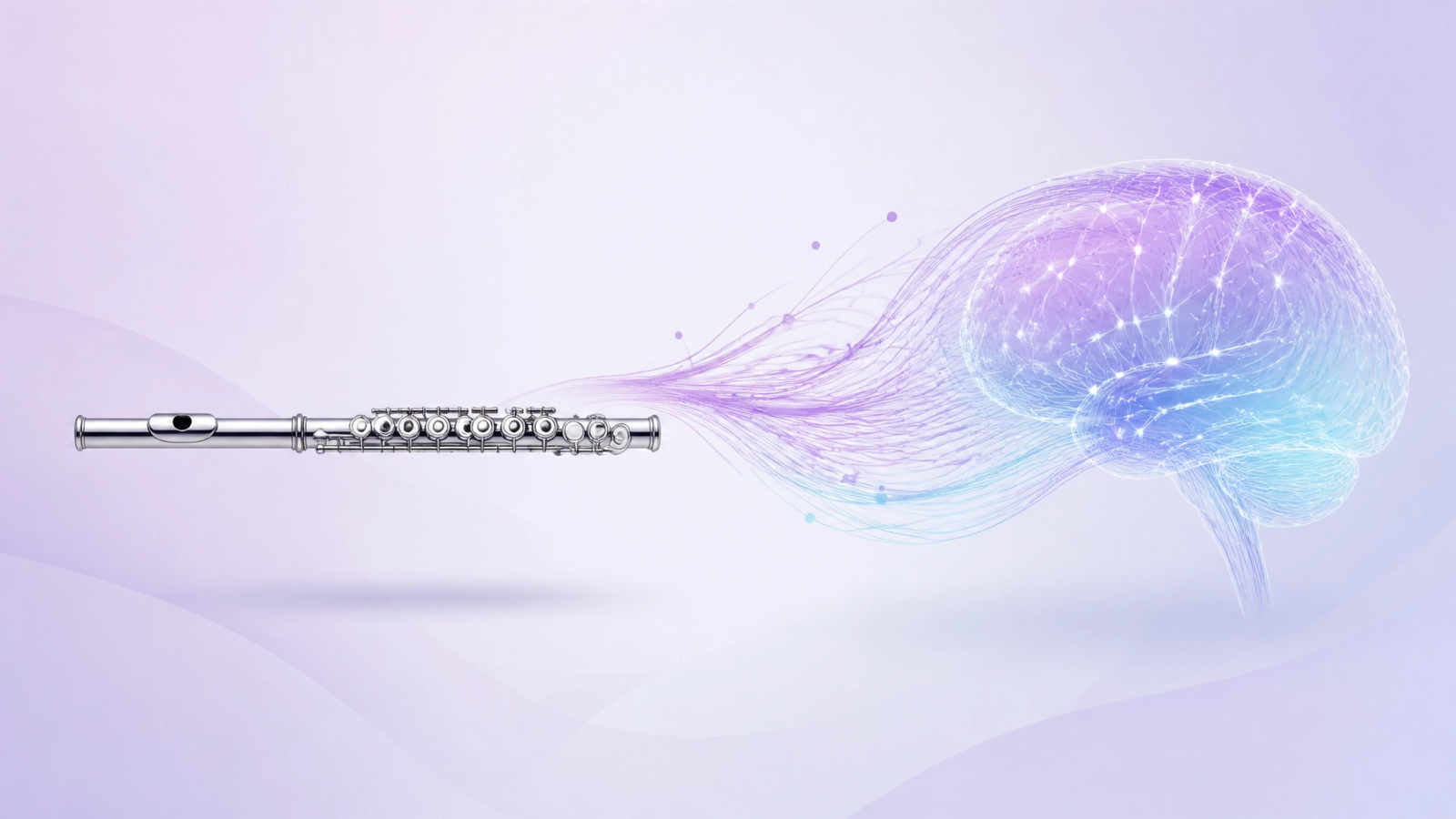
The Neurobiology of Musical Engagement
The human brain possesses an extraordinary capacity for reorganization, a phenomenon known as neuroplasticity. When you engage in the systematic study of a woodwind instrument, you are not merely acquiring a cultural skill; you are actively reconfiguring your neural architecture. Online flute lessons serve as a potent catalyst for experience-dependent plasticity, driving structural and functional changes across distributed networks in the cerebral cortex and subcortical structures.
Research published in the journal Neuron indicates that musical training is one of the most robust models for studying brain plasticity because it requires the simultaneous integration of multi-modal sensory information (Herholz & Zatorre, 2012). As you navigate the complexities of the flute, your brain must synchronize auditory feedback with fine motor output and visual decoding of notation. This multi-sensory demand triggers the strengthening of synaptic connections, a process often described by the Hebbian principle: neurons that fire together, wire together.
At Allegro Ma Non Troppo, our approach to online flute lessons is grounded in these pedagogical and neurological frameworks. Whether you are seeking flute lessons Ottawa based or joining our global community through online flute lessons, the objective remains the same: to leverage the science of music to enhance your cognitive reserve and auditory processing capabilities.
Mechanism 1: Experience-Dependent Neuroplasticity in Woodwind Instruction
The act of playing the flute requires a high degree of bilateral manual coordination and precise oral-motor control, known as embouchure. This combination of tasks leads to significant increases in gray matter volume within the primary motor cortex and the somatosensory cortex. Studies utilizing magnetic resonance imaging (MRI) have demonstrated that musicians who begin training early exhibit greater cortical representation for the fingers of the hands (Wan & Schlaug, 2010).

In the context of online flute lessons, your brain undergoes a process of cortical remapping. As you refine your technique, the area of the brain dedicated to controlling the intricate movements of your fingers expands. This is not limited to physical growth; it involves the optimization of neural efficiency. Expert flute players often demonstrate reduced activation in the motor cortex compared to novices when performing the same task, suggesting that the brain has become more efficient at executing the required motor programs.
Furthermore, the study of music theory lessons online complements this physical training by engaging the prefrontal cortex, which is responsible for executive functions such as working memory and abstract reasoning. By understanding the mathematical relationships between intervals and rhythms, you are providing your brain with a comprehensive cognitive workout that extends beyond the instrument itself.
Mechanism 2: White Matter Integrity and Hemispheric Synchronization
Neural connectivity is not only about the density of neurons (gray matter) but also about the quality of the communication pathways between them (white matter). The corpus callosum, the large bundle of nerve fibers connecting the two hemispheres of the brain, has been found to be significantly larger in individuals with extensive musical training. This enhanced connectivity facilitates rapid communication between the left hemisphere, which typically processes logical and sequential information like rhythm and notation, and the right hemisphere, which is often associated with the melodic and emotional aspects of music.
When you participate in our bilingual music lessons, you add an additional layer of cognitive complexity. Switching between English and Spanish while processing musical syntax provides a unique challenge to the brain's switching mechanisms. This dual-tasking environment promotes higher levels of neural flexibility and may contribute to a delayed onset of age-related cognitive decline.
For families in our community, we offer a Family Plan that encourages this type of development across generations. By enrolling three or more members, you can access a 5% discount on your total tuition, making it more accessible to cultivate a home environment centered on cognitive growth.
Mechanism 3: The Auditory-Motor Loop and Fine Motor Precision
The flute is a unique instrument in that it requires the player to manage air column vibrations while simultaneously executing rapid finger movements. This creates a tight auditory-motor loop. Every time you produce a tone, your auditory system analyzes the pitch and timbre, providing instantaneous feedback to your motor system to adjust the embouchure or finger pressure.

Research from the Auditory Neuroscience Laboratory at Northwestern University suggests that music training enhances the brain's ability to extract speech from noise, a skill known as auditory scene analysis (Kraus & Chandrasekaran, 2010). This benefit is particularly relevant for kids music lessons Ottawa programs, where developing strong auditory processing skills can lead to improved phonological awareness and literacy.
The precise motor demands of the flute also translate well to other instruments. Students who begin with flute often find that the finger dexterity they develop aids them in beginner piano lessons or even online clarinet lessons. The somatosensory map of the hand becomes more detailed, allowing for greater tactile sensitivity and control.
The Efficacy of Online Platforms for Cognitive Development
A common inquiry involves whether online flute lessons can provide the same neurological benefits as in-person instruction. The primary drivers of neuroplasticity are intensity, repetition, and focused attention. The digital medium, when utilized effectively by expert, Master-level teachers, can actually minimize certain distractions and allow for a highly concentrated learning environment.

Online lessons offer several environmental advantages that support the learning process:
- Consistent acoustic environment: Learning in your own space reduces the cognitive load required to adapt to new environments, allowing more neural resources to be allocated to the lesson material.
- Recording capabilities: Many students find that reviewing recordings of their online sessions helps reinforce the auditory-motor feedback loop outside of lesson time.
- Technological integration: Using digital tools for music theory lessons online allows for interactive visual aids that can enhance the scaffolding of complex concepts.
Our Ottawa studio also remains available for those who prefer the tactile nature of in-person flute lessons Ottawa sessions. Regardless of the delivery method, our instructors utilize evidence-based pedagogical models to ensure that every student is challenged at the appropriate level of proximal development.
Logistical Framework and Pricing Transparency
At Allegro Ma Non Troppo, we believe in providing a clear and transparent path to musical and neurological development. Our scheduling is flexible to accommodate the demanding lives of Ottawa families and international students alike.
Our pricing structure is designed to reflect the expertise of our Master-level teachers while offering value through commitment:
- 30-minute private lesson: $35 per session.
- 45-minute private lesson: $50 per session.
- 60-minute private lesson: $65 per session.
To facilitate the initial phase of neural adaptation, we offer a free trial lesson. This allows you to experience our teaching methodology without financial commitment. For those ready to commit to a consistent practice schedule, we offer the following bundle incentives:
- 10-lesson bundle: 5% discount (normally $350, now $332.50 for 30-minute sessions).
- 20-lesson bundle: 10% discount (normally $700, now $630 for 30-minute sessions).
Additionally, our specialized support for school band students ensures that the technical demands of their curriculum are met with scientific precision, helping them excel in their local music programs. If you are also interested in strings, our ukulele lessons Ottawa offerings provide another excellent avenue for motor skill and memory enhancement.
Conclusion: Investing in Your Neural Infrastructure
The decision to pursue music lessons is an investment in your brain's long-term health and functionality. Whether you are interested in piano lessons Ottawa, clarinet instruction, or our specialized flute programs, the science is clear: the disciplined study of music alters the brain in ways that enhance your quality of life.
By choosing Allegro Ma Non Troppo, you are opting for a program that values both the art and the science of music. Our commitment to bilingual instruction and personalized lesson plans ensures that your unique cognitive goals are met with the highest standard of professional care.
Leave A Comment