
 Cart is empty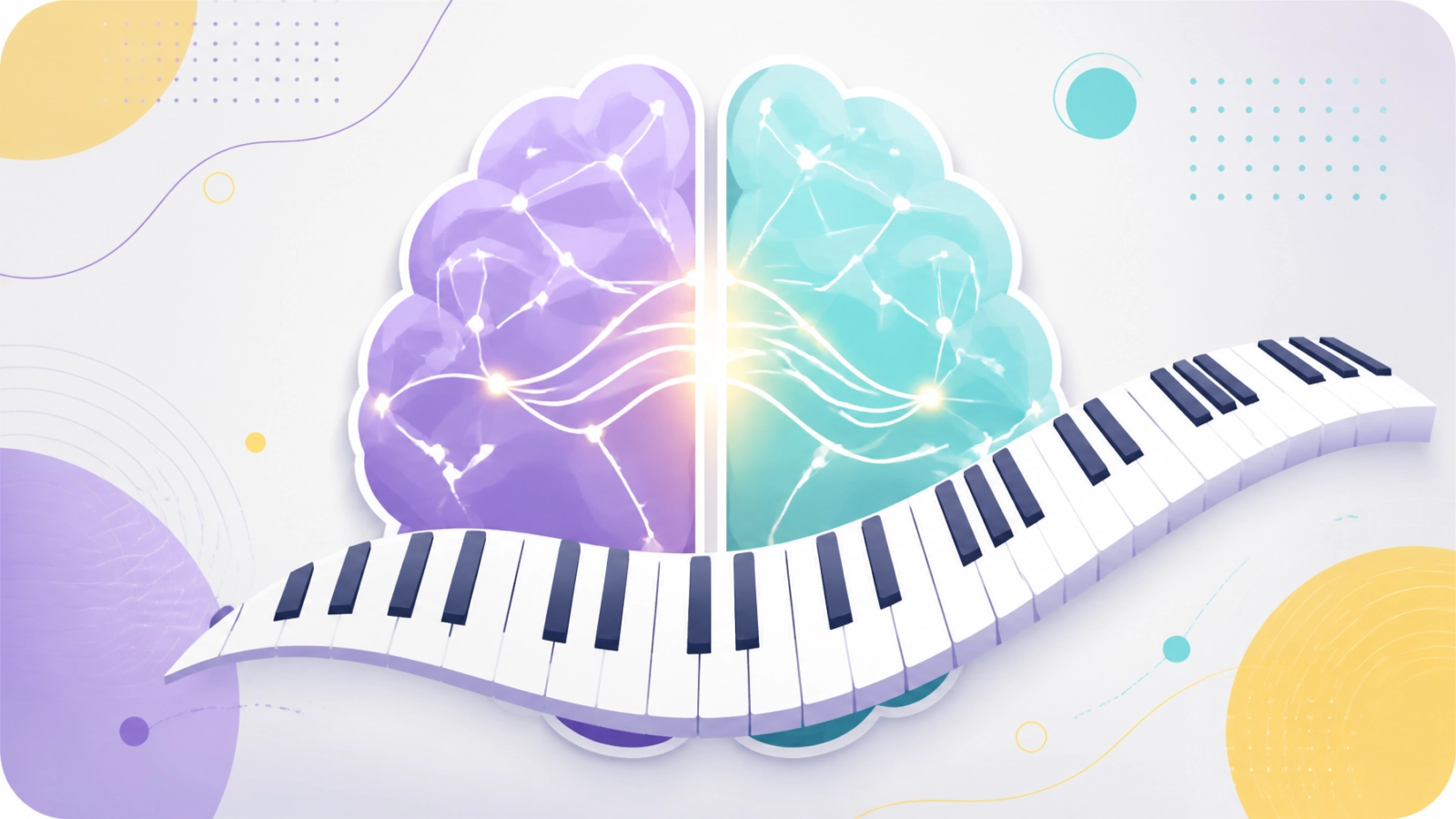
The human brain is a marvel of compartmentalization and connectivity. Divided into two distinct hemispheres, the left side typically governs logical reasoning, linguistic processing, and mathematical computations, while the right side is more closely associated with spatial awareness, face recognition, and musical appreciation. In most daily activities, one hemisphere takes a dominant role. However, the mastery of a musical instrument: specifically through piano lessons Ottawa: demands a level of inter-hemispheric communication that few other activities can replicate. This article examines the neurological mechanisms behind dual-handed coordination and the subsequent synchronization of the brain.
The Neurobiology of Bilateral Coordination
Bilateral coordination is the ability to use both sides of the body in a controlled and organized manner. In the context of piano performance, this requires the primary motor cortex to send simultaneous, yet distinct, signals to each hand. While the left hand may be executing a steady rhythmic bass line, the right hand might be performing complex melodic runs. This independence is not merely a physical feat; it is a neurological achievement.
When a student engages in piano lessons, the brain must manage the motor demands of two hands performing different tasks at different tempos. This leads to the development of the motor cortex and the cerebellum, the latter of which is responsible for timing and precision. Research in neuroscience suggests that long-term musical training results in a more symmetrical motor cortex. In non-musicians, the motor cortex associated with the dominant hand is typically larger and more developed. In pianists, this asymmetry is significantly reduced, indicating that the brain has adapted to provide equal support to both limbs.

Strengthening the Corpus Callosum Through Instrumental Training
The corpus callosum is the thick bundle of nerve fibers that connects the left and right hemispheres of the brain. It serves as the primary conduit for information transfer between the two halves. Studies utilizing Magnetic Resonance Imaging (MRI) have consistently shown that individuals who begin musical training at a young age possess a larger and more robust corpus callosum.
The necessity of processing visual information (reading sheet music), auditory feedback (hearing the notes played), and motor output (pressing the keys) simultaneously forces the corpus callosum to work at peak efficiency. This increased connectivity allows for faster and more efficient transmission of signals. For a student in Ottawa seeking to optimize their cognitive potential, this structural change translates to improved executive function and higher-order problem-solving skills. The synchronization of the hemispheres through piano and woodwinds, such as through flute lessons in Ottawa, ensures that the brain operates as a unified, highly efficient system rather than two separate processing units.
Neural Plasticity and the Multi-Instrumentalist: From Ukulele to Piano
Neural plasticity, or the brain's ability to reorganize itself by forming new neural connections throughout life, is the foundation of all learning. While piano is a primary driver of bilateral synchronization, other instruments offer unique benefits to the developing brain. For instance, ukulele lessons Ottawa provide an excellent entry point for younger students to begin the process of "rewiring."
Playing stringed instruments requires different types of motor control for each hand: one for fretting and one for strumming. This asymmetry in task-type still requires high levels of coordination and sensory integration. The auditory processing involved in tuning and pitch discrimination on the ukulele prepares the brain for the more complex harmonic structures found in piano music. By starting with a smaller instrument, students can build the foundational neural pathways required for later, more intensive study. This scaffolding approach ensures that the brain is not overwhelmed, allowing for steady, evidence-based cognitive development.

Cognitive Advantages of Bilingual Auditory Processing
At Allegro Ma Non Troppo, our pedagogical approach is unique in its incorporation of bilingual instruction. Offering music lessons in both English and Spanish provides a secondary layer of cognitive stimulation. The intersection of music and language processing is a significant area of interest in psychology and neuroscience.
Research indicates that bilingual individuals often exhibit enhanced auditory processing. Because they must distinguish between different phonetic structures and tonal nuances in two languages, their brains are finely tuned to auditory shifts. When this is combined with musical training, the effect is compounded. Students who receive instruction in multiple languages while learning an instrument show increased gray matter density in the auditory cortex. This "bilingual auditory advantage" assists not only in musical pitch discrimination but also in speech-in-noise perception: the ability to focus on a single voice in a crowded environment.
Executive Function and the Architecture of Music Theory
The study of music theory lessons online or in-person is essentially a study in mathematical and structural logic. Executive function refers to a set of cognitive processes including working memory, flexible thinking, and inhibitory control. Music theory requires a student to hold complex patterns in their working memory while simultaneously analyzing the structural "grammar" of a piece.
- Working memory: Retaining the sequence of chords or the rules of a specific scale.
- Inhibitory control: Avoiding the impulse to play a familiar pattern when the music requires a variation.
- Cognitive flexibility: Switching between different time signatures or key centers.
These skills are directly transferable to academic performance. The ability to focus on a complex task for an extended period is a core component of musical training that benefits students in every area of their education. By engaging in music theory lessons Ottawa, students are not just learning about notes; they are training their brains to manage complex systems of information.

Biofeedback and Proprioceptive Learning
Proprioception is the brain's ability to sense the position and movement of the body in space. In music education, this is often refined through real-time feedback. Whether through online flute lessons or in-person sessions, the teacher provides immediate external feedback that the student must then internalize.
This process involves a biofeedback loop: the student produces a sound, perceives the result, compares it to the intended outcome, and adjusts their motor movements accordingly. This constant correction loop enhances the precision of the primary motor cortex and the somatosensory cortex. Over time, these movements become automated, allowing the student to focus on higher-level interpretive elements of the music. This high-efficiency learning is a hallmark of the expert instruction provided by Master-level teachers.

Logistical Framework for Ottawa-Based Music Education
Understanding the cognitive benefits is only the first step. Implementing a consistent practice schedule is essential for the physical manifestation of neural changes. Allegro Ma Non Troppo provides a structured environment designed to facilitate this long-term growth.
- Flexible Scheduling: We offer 30, 45, and 60-minute sessions to accommodate different developmental stages and attention spans.
- Instructional Modalities: Lessons are available in-person at our Ottawa studio or via a high-quality online platform, ensuring environmental comfort and flexibility.
- Family Plan: For households with three or more members, a Family Plan is available to ensure that musical enrichment is accessible to the entire unit.
- Specialized Support: We provide targeted instruction for school band students, helping them integrate their individual progress with ensemble requirements.
Our pricing structure is designed with transparency and value in mind. We offer a free trial lesson to assess the student's current cognitive and motor baseline before any commitment is made. Subsequent lesson bundles are available at various price points, often including incentives for long-term enrollment:
- 30-minute trial:
$35.00$0.00 - 10-lesson bundle (30 min): $350.00
- 10-lesson bundle (45 min): $525.00
- 10-lesson bundle (60 min): $700.00
These prices are inclusive of our bilingual instruction and the personalized curriculum development that ensures each student reaches their specific goals, whether they are preparing for Royal Conservatory of Music (RCM) exams or pursuing personal enrichment.
The evidence is clear: the study of music is a significant driver of brain development. By synchronizing the hemispheres, strengthening the corpus callosum, and enhancing executive function, music lessons provide a cognitive foundation that lasts a lifetime. Whether you are interested in the precision of the clarinet or the polyphonic complexity of the piano, the path to a more connected brain starts with a single note.
Leave A Comment