
 Cart is empty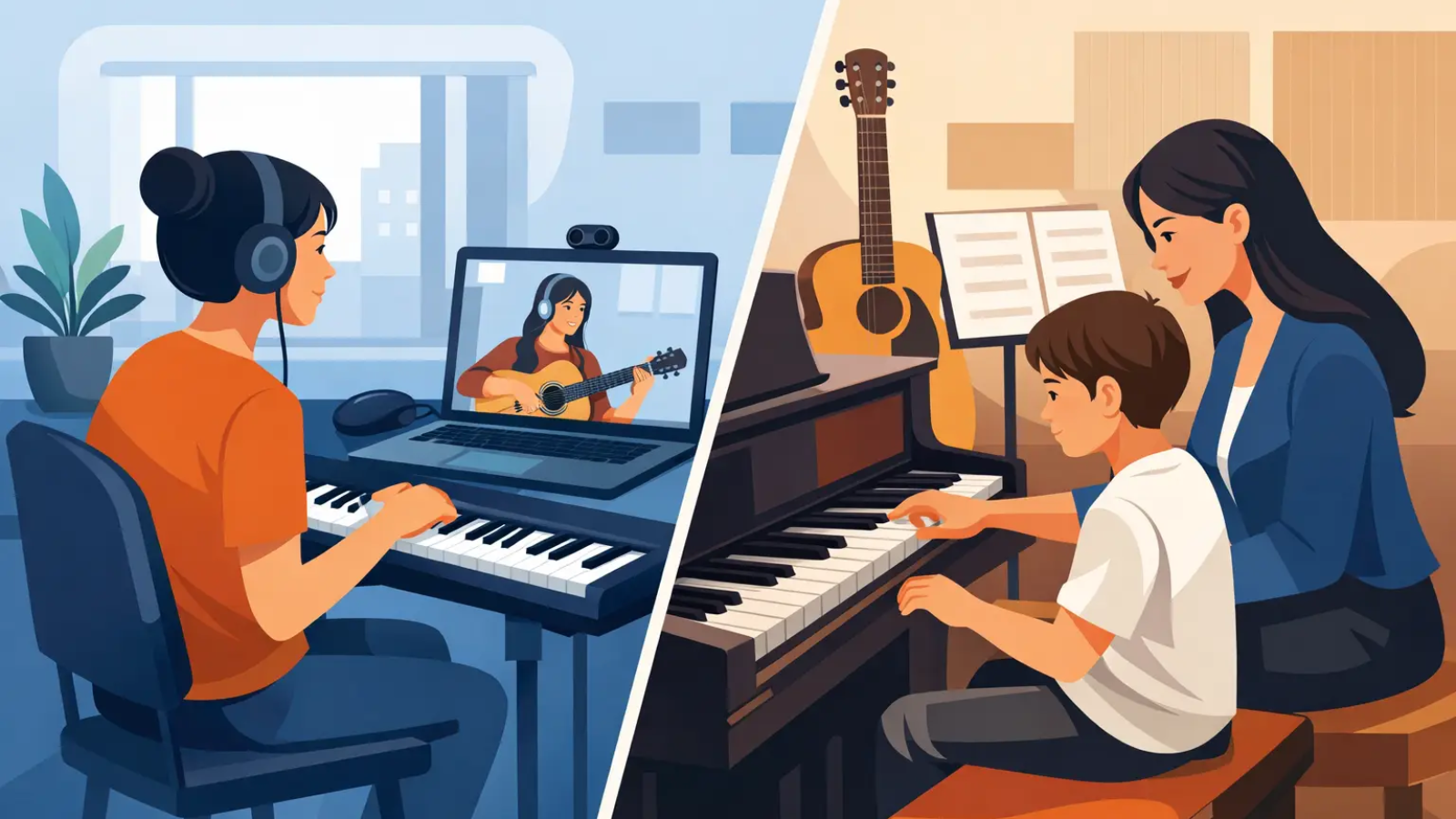
A missed lesson because of traffic, a rushed dinner before band rehearsal, a child who feels more relaxed at home than in a new room – these small details often shape music progress more than people expect. When families ask about virtual lessons versus studio lessons, they are usually not asking which option is universally better. They are asking which one will help this student stay motivated, improve consistently, and enjoy making music.
That is the right question.
In music education, the best format is the one that supports steady practice, clear instruction, and a positive connection between student and teacher. Some students thrive in a studio setting where the environment is focused and separate from home life. Others make faster progress online because the lesson fits more naturally into their routine. Both can be excellent. The difference comes down to learning style, instrument needs, age, goals, and schedule.
Virtual lessons versus studio lessons: what really changes?
The core of a strong private lesson does not change with location. A good teacher still listens carefully, adjusts to the student, chooses repertoire thoughtfully, builds technique step by step, and keeps the lesson encouraging while maintaining high standards. What changes is the learning environment.
In studio lessons, the teacher and student share the same physical space. That allows for immediate visual modeling, easier page turning, quick posture adjustments, and a clear sense of shared attention. For many learners, especially younger children or students who benefit from hands-on demonstration, that physical presence feels reassuring and direct.
Virtual lessons create a different kind of structure. The student learns in their own home, on their own instrument, in the same space where they will usually practice. That can actually be a major advantage. Instead of playing beautifully in a lesson and struggling alone later, the student builds habits in the exact environment where real practice happens. Teachers can also help students solve home-based issues right away, such as music stand placement, camera angle, lighting, and room setup.
So the real comparison is not quality versus compromise. It is one learning context versus another.
When studio lessons have the edge
For some students, in-person instruction is simply easier. There are fewer technology variables, fewer distractions from home, and a stronger feeling that lesson time is special and protected. Walking into a studio can help a student shift mentally into learning mode.
This can be especially helpful for young beginners who are still developing attention span and routine. A teacher in the room can notice subtle changes in breathing, hand shape, posture, and coordination instantly. For instruments like flute and clarinet, where embouchure and air use matter so much, that real-time observation can feel very efficient.
Studio lessons can also be valuable for students preparing for auditions, festivals, or school performances. If a learner needs detailed feedback on projection, stage presence, or physical ease while performing, being in the room adds another layer of insight. The teacher can hear balance and tone in a more direct acoustic way and help the student become more comfortable playing for someone live.
There is also a practical emotional benefit. Some students focus better when they leave home. Home can be cozy, but it can also be full of interruptions. Siblings, pets, devices, and the temptation to multitask are real challenges. A studio setting reduces that noise.
When virtual lessons may be the better fit
Virtual instruction shines when consistency is the main challenge. A family with a full weekly schedule may find that online lessons remove the hardest part of music study – getting there. No commute means no extra transition time before or after the lesson. For many households, that difference is what makes regular lessons sustainable.
Weather matters too, especially in places where winter travel can become stressful. A student who would otherwise cancel due to snow, icy roads, or dark early evenings can often continue learning without disruption online. Over months, fewer missed lessons usually means stronger progress.
Virtual lessons are also excellent for independent teens and adults. These students often appreciate the efficiency of logging in, learning intensely for their scheduled time, and then returning to work, homework, or family responsibilities. Adults in particular tend to value a format that respects limited time and still offers professional guidance.
There is another benefit that many people do not expect. Online lessons can strengthen student responsibility. Because the teacher is not physically adjusting every detail, students often become more aware of how to set up their instrument, organize materials, and self-monitor. With good guidance, that can build confidence and long-term musicianship.
For bilingual learners or families seeking a comfortable communication style, virtual learning can also widen access to the right teacher. That matters. Feeling understood during a lesson supports both confidence and clarity.
Virtual lessons versus studio lessons for different ages
Age does not decide everything, but it does influence what kind of support a student needs.
For young children, studio lessons often provide stronger structure. The room, the routine, and the teacher’s physical presence can help with attention and participation. Still, virtual lessons can work very well if a parent helps with setup and the teacher uses an engaging, age-appropriate approach.
For middle school and high school students, either format can be very successful. This is often the stage where individual personality matters most. A school band student working on flute or clarinet may benefit from studio lessons before a major performance, but online instruction can be perfect for weekly maintenance, repertoire coaching, and theory support.
Adults are often the least tied to one format. Many do beautifully online because they are motivated and able to follow detailed verbal instruction. Others prefer the energy and accountability of meeting in person. Neither preference is more serious or more musical. It is simply a matter of what helps them keep going.
What about sound quality and technique?
This is where people tend to worry most about online learning, and it is a fair concern. Music is sound, and digital platforms do affect how sound is transmitted. A teacher may not hear every nuance in exactly the same way as in person.
But that does not mean virtual lessons are ineffective for tone and technique. Far from it. An experienced teacher adapts. They listen for what can be heard clearly, ask the student to demonstrate from different angles, use targeted verbal imagery, and assign follow-up work that develops listening skills between lessons. In many cases, students become more thoughtful because they are asked to describe what they feel and hear, not just imitate.
Studio lessons do offer a more complete acoustic picture, which can be helpful for advanced tone refinement and performance preparation. If a student is working at a high level on color, projection, or subtle phrasing, in-person feedback may feel more immediate. But for most beginners and developing musicians, virtual teaching can still address posture, rhythm, note reading, articulation, musical expression, and healthy technique very effectively.
Choosing the right format for your family
Instead of asking which lesson style is best in general, try asking a few more useful questions. Where does this student focus best? What usually causes missed practice or missed lessons? Does travel add stress to the week, or does leaving home improve concentration? Is the student a beginner who needs extra structure, or an older learner who values flexibility?
It also helps to think about goals. If the priority is building a joyful routine, both formats can work beautifully. If the student is preparing for a live event, a mix of virtual and studio instruction may be ideal. If consistency has been the main obstacle, online lessons can remove a major barrier overnight.
At Allegro Ma Non Troppo, this is why personalized teaching matters so much. The format should serve the student, not the other way around. A strong lesson plan takes into account attention span, repertoire preferences, technical needs, family rhythm, and the kind of encouragement that helps each musician grow.
The best lesson format is the one a student will keep
Music learning is not built on one perfect lesson. It is built on steady, supported progress over time. A student who attends regularly, feels comfortable, and connects with their teacher will usually grow more than a student in the theoretically ideal format who keeps canceling or feeling discouraged.
That is why the conversation around virtual lessons versus studio lessons is worth having with care. One student may blossom in a focused studio environment. Another may practice more, miss fewer lessons, and feel more confident learning from home. Sometimes the answer changes over time, and that is completely normal.
The good news is that music study does not have to fit one mold to be serious, creative, and deeply rewarding. When the format matches the student, lessons feel less like another obligation and more like a real part of life – something a learner can look forward to, grow through, and carry with them for years.
Leave A Comment