
 Cart is empty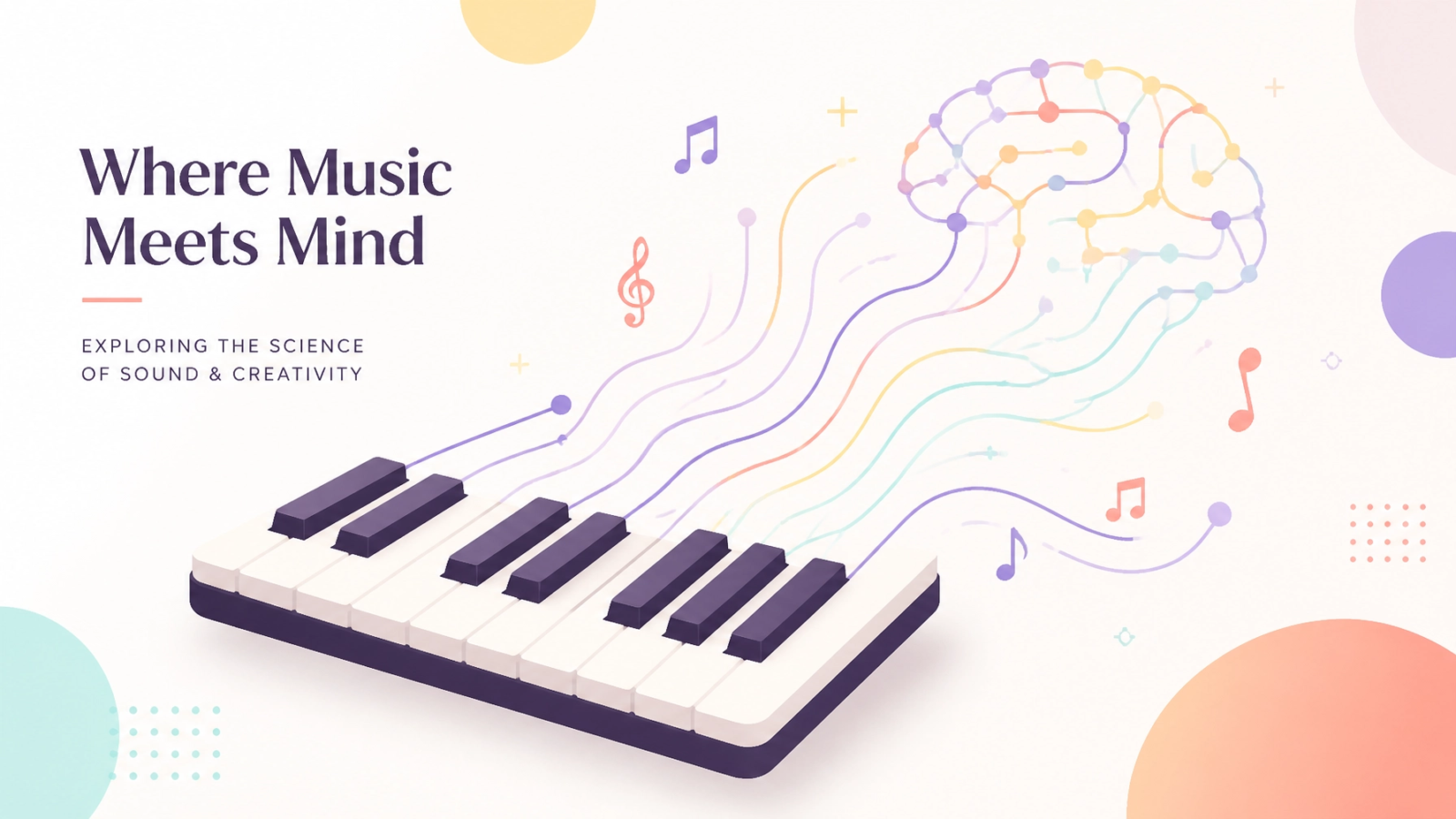
The human brain is characterized by its remarkable capacity for structural and functional reorganization in response to environmental demands, a phenomenon known as neuroplasticity. Within the realm of cognitive development and neurobiology, the acquisition of musical skills: specifically through beginner piano lessons: is recognized as one of the most potent stimuli for neural modification. Unlike many other cognitive tasks, playing the piano requires the simultaneous integration of visual, auditory, and motor information, coupled with high-level executive control and emotional processing.
Recent longitudinal studies have demonstrated that even a few months of piano training can induce measurable structural changes in the cerebral cortex. This article examines the specific neurological adaptations that occur when you begin your musical journey, providing a scientific foundation for why beginner piano lessons are more than a cultural pursuit; they are a transformative biological process.
Structural Remodeling of the Primary Motor Cortex
The primary motor cortex (M1) is the region of the brain responsible for the planning and execution of voluntary movements. In piano performance, the requirement for independent finger dexterity and bimanual coordination is exceptionally high. Research conducted by Hyde et al. (2009) at Harvard Medical School utilized magnetic resonance imaging (MRI) to track structural changes in children receiving weekly piano lessons over a 15-month period.
The findings revealed significant increases in the gray-matter volume of the primary motor cortex in the group receiving training compared to the control group. This structural expansion is attributed to the proliferation of dendrites and the strengthening of synaptic connections: a process called synaptogenesis: which facilitates the fine motor skill development required to execute complex scales and chords. This refinement of the motor map ensures that the neural representation of each finger becomes more distinct, allowing for the precise control necessary for expressive performance.

Auditory Processing and Cortical Thickness
While the motor cortex handles the physical execution, the auditory cortex is responsible for processing the resulting sound. Beginner piano lessons require students to engage in active listening, distinguishing between subtle variations in pitch, timbre, and rhythm. This consistent auditory stimulation leads to increased cortical thickness in the bilateral superior temporal gyrus, the location of the primary auditory cortex.
Evidence suggests that musical training enhances auditory processing through a mechanism known as subcortical and cortical tuning. By learning to map specific finger movements to corresponding auditory frequencies, the brain optimizes its ability to filter sound and recognize patterns. This adaptation is not limited to childhood; a study by Bermudez et al. (2009) indicated that adult musicians also exhibit greater gray-matter density in these regions, highlighting the potential for piano lessons Ottawa to facilitate neural growth throughout the lifespan.

Inter-Hemispheric Communication and the Corpus Callosum
One of the most profound structural changes observed in pianists occurs in the corpus callosum, the large bundle of white-matter fibers that connects the left and right hemispheres of the brain. Because piano playing requires the simultaneous use of both hands: often performing different rhythms or melodic lines: it necessitates a high degree of inter-hemispheric communication.
Longitudinal research has shown that the anterior portion of the corpus callosum, which links the motor and premotor areas of both hemispheres, becomes larger and more densely packed with myelin in individuals who practice piano. This increase in white-matter integrity enhances the speed and efficiency of signal transmission between hemispheres. This structural optimization supports the bimanual coordination essential for kids music lessons Ottawa and adult learners alike, enabling the seamless integration of diverse cognitive functions.

Executive Function and the Prefrontal Cortex
The prefrontal cortex is the seat of executive functions, including working memory, cognitive flexibility, and inhibitory control. During piano training, a student must constantly monitor their performance, plan future sequences of notes, and adjust their movements based on auditory feedback. This process engages the lateral prefrontal cortex, which acts as a central hub for translating musical rules into motor commands.
A study published in the journal Cerebral Cortex identified that the left lateral prefrontal cortex becomes more efficiently recruited as a result of musical training. By engaging in music theory lessons online, students learn to decode complex symbolic notation, which challenges the brain to perform high-level structural analysis. This cognitive scaffolding not only improves musical proficiency but also translates to better performance in non-musical tasks that require focus and problem-solving.

Preservation of White Matter in Older Adults
The benefits of piano lessons extend significantly into later life, offering protection against the natural structural decline associated with aging. Research published in Frontiers in Aging Neuroscience demonstrated that healthy older adults who engaged in six months of beginner piano training showed stabilized white-matter microstructure in the fornix, a tract critical for episodic memory.
In the control group, which did not receive piano training, researchers observed a significant decline in fiber density over the same period. This suggests that the multifaceted nature of piano instruction: combining motor practice, auditory feedback, and cognitive engagement: serves as a powerful neuroprotective intervention. By participating in online flute lessons or piano lessons, older adults can bolster their cognitive reserve and mitigate the effects of age-related neural atrophy.
Scientific Pedagogy at Allegro Ma Non Troppo
At Allegro Ma Non Troppo, our instructional methodologies are designed to maximize these neurological benefits through structured, expert-led training. Our teachers hold Master-level qualifications and apply evidence-based pedagogical strategies to ensure that every session contributes to your cognitive and musical development. We offer a comprehensive suite of services tailored to meet the needs of the Ottawa community and beyond.
- Piano lessons Ottawa: Available for children and adults at beginner or intermediate levels.
- Music theory lessons online: Strengthening the prefrontal cortex through symbolic analysis and harmonic understanding.
- Online flute lessons and online clarinet lessons: Focusing on respiratory physiology and fine motor control.
- Ukulele lessons Ottawa: An accessible entry point for developing string instrument proficiency.
- Bilingual music lessons: Instruction offered in English and Spanish to engage diverse neural networks and foster cognitive flexibility.
Logistical Framework and Enrollment
We prioritize accessibility and transparency in our scheduling and pricing to ensure that high-quality music education is available to all. Whether you prefer in-person instruction at our Ottawa studio or the convenience of online learning, we offer flexible lesson lengths to accommodate your goals.
- Trial Lesson: 30 minutes – $0.00
- Single Session: 30 minutes – $35.00
- Single Session: 45 minutes – $50.00
- Single Session: 60 minutes – $65.00
- 5-Lesson Bundle (30 min):
$175.00$166.25 (5% savings) - 10-Lesson Bundle (30 min):
$350.00$315.00 (10% savings) - Family Plan: 15% discount for 3 or more members from the same household.
Our billing is automated through a secure monthly subscription model, providing a frictionless administrative experience. All students benefit from our specialized support for school band programs and have the opportunity to participate in creative workshops and group projects that further enhance the learning experience.
The structural changes in your cerebral cortex begin with the first note. By committing to regular practice and expert instruction, you are not merely learning an instrument; you are re-engineering your brain for greater efficiency, resilience, and analytical power.
Leave A Comment