
 Cart is empty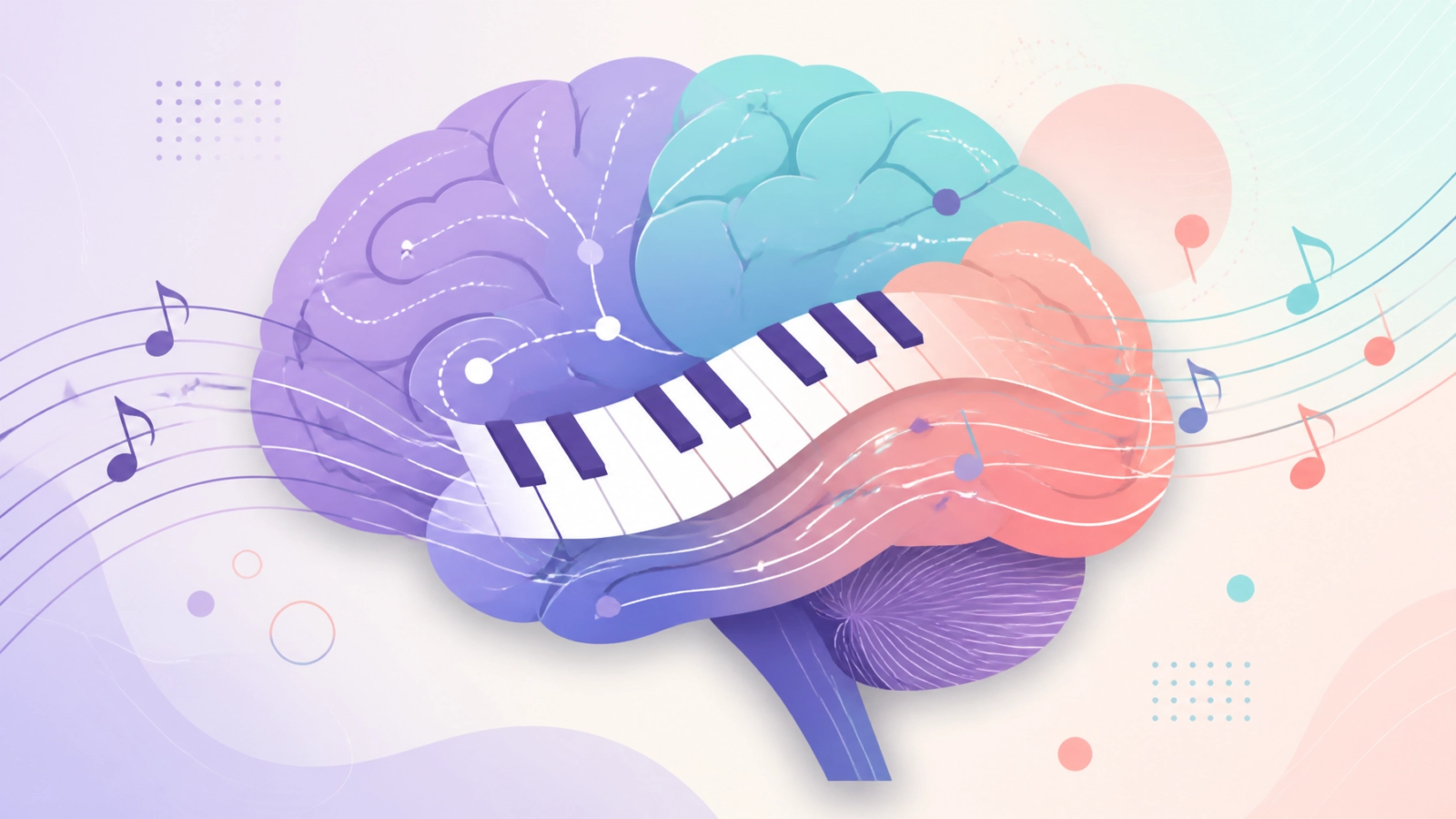
The human brain is a highly adaptive organ, capable of profound structural and functional reorganization in response to complex sensory and motor stimuli. This phenomenon, known as experience-dependent neuroplasticity, is nowhere more evident than in the process of learning a musical instrument. When you begin beginner piano lessons, you are not merely acquiring a new hobby; you are initiating a cascade of neurological adaptations that fundamentally alter the architecture of your cerebral cortex. Research from institutions such as Harvard Medical School and the Max Planck Institute for Human Cognitive and Brain Sciences has demonstrated that the multi-modal nature of piano performance: requiring simultaneous auditory, visual, and motor processing: serves as a powerful catalyst for neural development.
The complexity of piano playing necessitates the integration of disparate cortical regions. You must decode a visual symbolic system (musical notation), translate these symbols into complex motor commands, and monitor the resulting acoustic output for pitch and rhythmic accuracy. This closed-loop system of feedback and feed-forward mechanisms drives the brain to optimize its efficiency. For residents seeking piano lessons Ottawa provides a unique environment where expert instruction can facilitate these structural changes through disciplined, evidence-based pedagogical practices.
Structural Plasticity in the Primary Motor Cortex
One of the most significant changes observed in individuals undertaking beginner piano lessons is the expansion of the primary motor cortex (M1). The primary motor cortex is responsible for the planning and execution of voluntary movements. In piano playing, the requirement for independent finger control: particularly the development of the non-dominant hand: exerts a substantial demand on the motor circuits. Longitudinal studies using magnetic resonance imaging (MRI) have shown that even short-term piano training can lead to an increase in gray matter volume in these regions (Gaser & Schlaug, 2003).

This increase in volume is attributed to several factors at the cellular level, including dendritic branching, synaptogenesis, and the proliferation of glial cells. As you practice scales and chords at our Ottawa studio or through online lessons, the neural representation of your fingers in the motor homunculus undergoes a spatial reorganization. This process of cortical mapping ensures that the neural resources allocated to fine motor tasks are optimized, leading to greater dexterity and precision. The structural changes are not limited to the motor cortex; they also extend to the premotor area and the supplementary motor area, which are critical for the sequencing and timing of complex movements.
Auditory Cortex Reorganization and Frequency Perception
Beyond motor control, piano lessons Ottawa significantly impact the auditory system. The superior temporal gyrus, which houses the primary auditory cortex, undergoes structural refinement as a result of intensive pitch and timbre discrimination. When you engage in music theory lessons online, you are training your brain to identify specific frequencies and harmonic intervals with greater accuracy. This training leads to an increase in the density of neurons in the auditory cortex that are tuned to musical frequencies.
Research published in the Journal of Neuroscience indicates that musical training enhances the brain's ability to encode the temporal and spectral features of sound (Zatorre et al., 2012). This enhancement is not restricted to musical contexts; it also improves your ability to process speech, especially in noisy environments. The auditory-motor coupling that occurs during piano lessons ensures that your brain can predict the sound it is about to produce, a process known as auditory-to-motor mapping. This predictive coding is a hallmark of an efficient nervous system and is a key focus of our kids music lessons Ottawa programs.

Interhemispheric Communication and the Corpus Callosum
The piano is uniquely demanding among instruments because it requires high levels of bimanual coordination. Each hand often performs independent rhythmic and melodic tasks, necessitating constant communication between the left and right hemispheres of the brain. The primary bridge for this communication is the corpus callosum, a thick bundle of nerve fibers. In professional musicians and dedicated students who participate in long-term music lessons Ottawa, the anterior portion of the corpus callosum is significantly larger than in non-musicians (Schlaug et al., 1995).
This structural adaptation facilitates faster and more efficient transfer of information between the hemispheres. Enhanced interhemispheric connectivity is associated with improved executive function, spatial reasoning, and creative problem-solving. Whether you are pursuing online flute lessons or clarinet lessons, the requirement for coordinated finger movements and breath control similarly stimulates these neural pathways. However, the piano’s requirement for independent hand movements makes it an especially potent tool for corpus callosum development.

Executive Function and the Prefrontal Cortex
The prefrontal cortex is the seat of executive functions, including working memory, cognitive flexibility, and inhibitory control. Learning the piano at Allegro Ma Non Troppo involves significant scaffolding: a pedagogical technique where complex tasks are broken down into manageable components. As you learn to read music, you must maintain musical information in your working memory while simultaneously planning the next motor sequence. This cognitive load strengthens the neural circuits within the prefrontal cortex.
Studies from the Massachusetts Institute of Technology (MIT) have suggested that the cognitive benefits of music training translate to academic performance. Children who participate in kids music lessons Ottawa often demonstrate superior attention spans and better emotional regulation compared to their peers. These advantages are a direct result of the prefrontal cortex’s role in monitoring and correcting errors during practice. The bilingual music lessons we offer further enhance these benefits, as dual-language instruction provides an additional layer of cognitive challenge that promotes neural density.
The Role of Myelination and White Matter Integrity
The structural changes in the brain are not limited to gray matter. White matter, which consists of myelinated axons that connect different brain regions, also undergoes significant changes. Myelin is a fatty substance that insulates nerve fibers, increasing the speed at which electrical impulses travel. Musical training has been shown to increase the integrity of white matter tracts, particularly those involved in motor and auditory processing.
This increased white matter integrity, often measured using Diffusion Tensor Imaging (DTI), ensures that the various parts of the brain involved in piano playing can communicate with minimal latency. This is crucial for maintaining the precise timing required for musical performance. For adult learners, these changes contribute to cognitive reserve, potentially delaying the onset of age-related cognitive decline. Our flexible scheduling for 30, 45, and 60 minute lessons allows for the consistent practice necessary to maintain and enhance these white matter connections.

Pedagogical Efficacy and Local Implementation
At Allegro Ma Non Troppo, our instructional methodology is grounded in the science of learning. We recognize that the brain requires structured, repetitive, yet varied stimuli to achieve optimal neural reorganization. Our master-level teachers provide the expert guidance necessary to ensure that your practice sessions are efficient and neurobiologically productive. By offering both in-person piano lessons Ottawa and online flute lessons or online clarinet lessons, we accommodate the diverse needs of the community while maintaining a rigorous academic standard.
The inclusion of music theory lessons online further supports this development by providing the cognitive framework for understanding the structures being played. This combination of practical skill and theoretical knowledge ensures a comprehensive development of the cerebral cortex. Our family plan and lesson bundle discounts are designed to facilitate long-term engagement, which is essential for the stabilization of structural brain changes.
- Structural reorganization of the motor cortex occurs within weeks of beginning training.
- Auditory processing becomes more refined, improving frequency and speech perception.
- Interhemispheric connectivity is enhanced through the enlargement of the corpus callosum.
- Prefrontal cortex development leads to improved executive function and cognitive flexibility.
- Myelination of white matter tracts increases the speed of neural communication.
The evidence is clear: the act of learning the piano is one of the most effective ways to promote brain health and cognitive development across the lifespan. By engaging in beginner piano lessons, you are investing in the long-term structural integrity and functional efficiency of your brain.
Leave A Comment