
 Cart is empty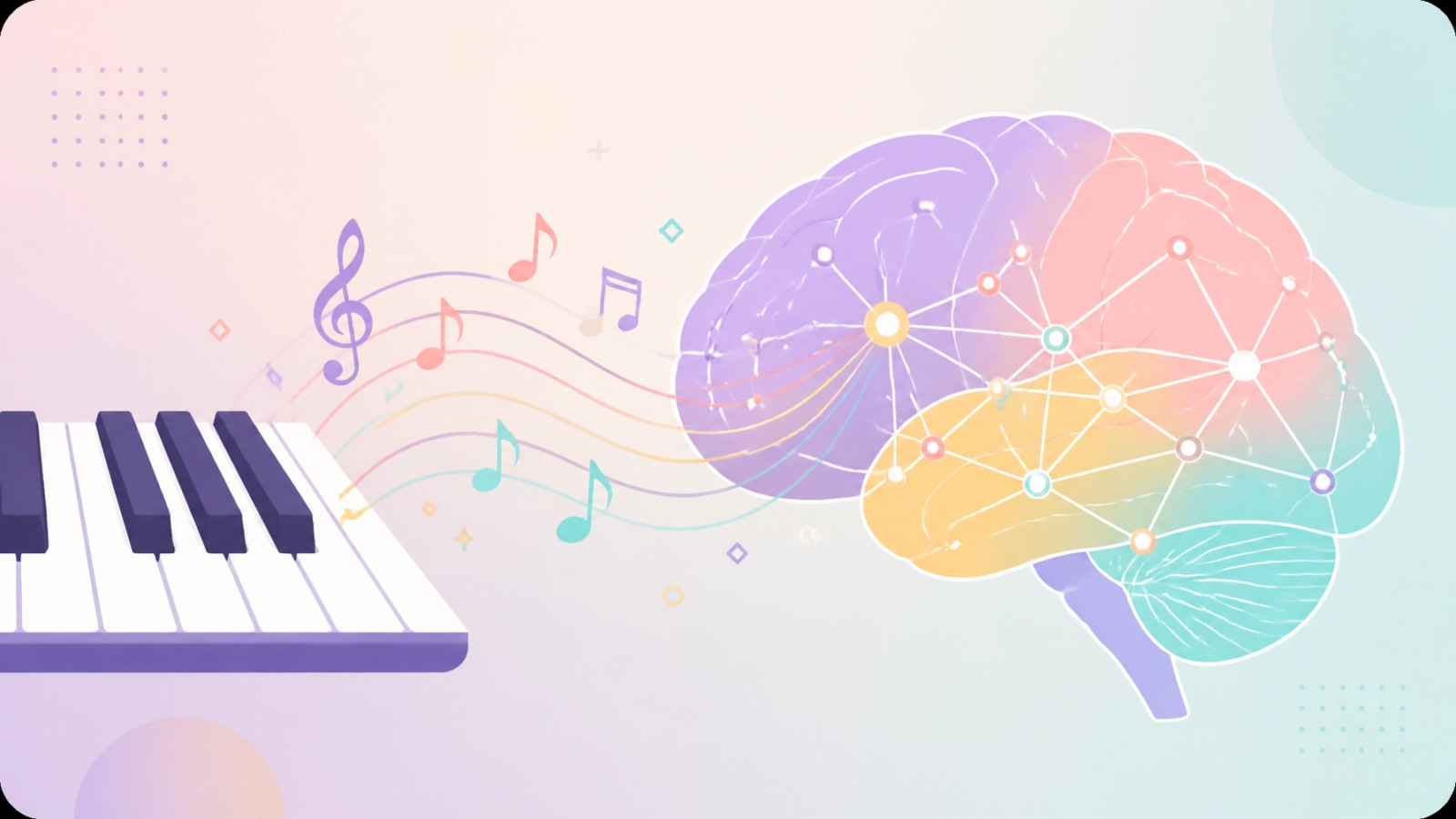
The human brain is a highly adaptive organ, capable of profound structural and functional reorganization in response to systematic environmental stimuli. When you engage in beginner piano lessons, you are not merely acquiring a new cultural or artistic skill; you are initiating a cascade of neuroplastic changes that reshape the very architecture of your cerebral cortex. Decades of research in neuroscience and pedagogy have demonstrated that musical training is one of the most effective ways to promote neural plasticity, affecting regions responsible for motor control, auditory processing, and executive function.
This article examines the evidence-based benefits of piano instruction, focusing on the structural adaptations observed in the brain after relatively short periods of training. By understanding the biological mechanisms at play, you can better appreciate how piano lessons Ottawa serve as a powerful tool for cognitive development and neurological health across the lifespan.
Structural Adaptations in the Cerebral Cortex
The cerebral cortex is the outer layer of neural tissue that plays a critical role in memory, perception, and voluntary physical action. Research conducted at Harvard Medical School and Boston Children’s Hospital has provided significant insights into how this tissue responds to instrumental training. In a seminal longitudinal study by Hyde et al. (2009), children with no prior musical experience were followed over a period of 15 months while receiving weekly piano or string lessons.
The results, published in the Journal of Neuroscience, revealed measurable growth in several key areas. Specifically, the researchers observed increased volume and thickness in the primary motor cortex and the auditory cortex. These changes are not accidental; the act of playing the piano requires the precise, independent movement of fingers on both hands while simultaneously processing complex auditory feedback. This multimodal engagement forces the brain to allocate more neural resources to these tasks, leading to the physical expansion of the relevant cortical regions.
- Primary Motor Cortex: The area responsible for executing voluntary movements. Piano training demands a level of manual dexterity that is rarely required in other daily activities.
- Auditory Cortex: The region where sound features such as pitch, timbre, and rhythm are decoded. Beginners show enhanced sensitivity to frequency changes, which correlates with structural density in this area.
- Somatosensory Cortex: Responsible for processing tactile information. The physical sensation of the keys provides constant feedback that refines the brain's internal map of the body.
For those seeking kids music lessons Ottawa, these findings emphasize that early exposure to music is a foundational investment in cognitive infrastructure.

White Matter Integrity and the Corpus Callosum
Beyond the gray matter of the cerebral cortex, the underlying white matter: the "cabling" of the brain: also undergoes significant optimization. One of the most prominent structures in the brain is the corpus callosum, a massive bundle of nerve fibers that connects the left and right hemispheres, enabling inter-hemispheric communication.
Piano playing is inherently a bimanual activity, requiring the synchronization of both hands to perform different rhythmic and melodic patterns. Steele et al. (2013) demonstrated that individuals who began musical training before the age of seven exhibited enhanced white-matter connectivity in the corpus callosum. This increased connectivity facilitates faster and more efficient transfer of information between the motor regions of both hemispheres.
This structural enhancement is particularly relevant for those pursuing beginner piano lessons. The systematic training of the non-dominant hand alongside the dominant one creates a balanced neural environment that is unique to keyboard instruments. While other instruments like online flute lessons or online clarinet lessons also offer significant cognitive benefits through specialized respiratory and motor control, the piano remains a gold standard for developing inter-hemispheric synchronization.
Rapid Microstructural Changes in Adult Beginners
A common misconception is that neuroplasticity is a phenomenon exclusive to childhood. However, recent studies utilizing Diffusion Tensor Imaging (DTI) have shown that the adult brain remains remarkably responsive to musical training. Tavor et al. (2020) conducted research that revealed microstructural changes in the brain after as little as 45 minutes of piano practice.
In adult subjects, researchers observed a reduction in mean diffusivity in the left premotor cortex and the superior cerebellum. This reduction indicates an increase in the organization of white-matter tissue, suggesting that the brain begins to rewire itself almost immediately upon encountering a new complex motor task. For adults in the Ottawa community interested in ukulele lessons Ottawa or piano, this evidence confirms that it is never too late to benefit from the cognitive sharpening that comes with learning an instrument.
Furthermore, a 2022 study published in Frontiers in Aging Neuroscience followed healthy older adults who took six months of beginner piano lessons. The researchers found that musical training stabilized the microstructure of the fornix, a white-matter tract essential for episodic memory. While memory typically declines with age, the piano-training group showed no such decline, suggesting that music lessons provide a form of "cognitive reserve" that protects against age-related neurodegeneration.

Cognitive Benefits and Executive Function
The structural changes discussed above translate into tangible improvements in executive function. Executive function refers to a set of cognitive processes that include working memory, inhibitory control, and cognitive flexibility. Learning to read music and translate symbols into physical movements is a rigorous exercise in scaffolding, a pedagogical concept where new knowledge is built upon existing structures.
Integrating music theory lessons online with practical piano practice enhances logical-mathematical reasoning and spatial-temporal skills. When you study theory, you are learning to recognize patterns and structures, which directly impacts the prefrontal cortex: the seat of complex planning and decision-making.
At Allegro Ma Non Troppo, our instructional model is designed to maximize these cognitive gains. By offering bilingual music lessons in English and Spanish, we provide an additional layer of cognitive challenge. Dual-language instruction requires the brain to switch between different linguistic sets, further enhancing the executive control network and providing a broader neurological advantage.

Practical Implementation and Logistics
If you are considering music lessons Ottawa, it is important to understand the logistical framework that supports these scientific benefits. Our studio provides a structured yet flexible environment tailored to the unique goals of each student.
- Flexible Scheduling: We offer 30, 45, and 60-minute lesson options to accommodate different attention spans and developmental stages.
- Trial Accessibility: A free trial lesson is provided to all prospective students, allowing for an initial assessment of the student's current cognitive and motor baseline.
- Financial Incentives: We offer discounts on lesson bundles to encourage the consistency required for long-term neural change.
- Family Plan: For households with three or more members enrolled, we provide specialized savings, recognizing the community and social benefits of collective learning.
- Instructional Quality: Our lessons are conducted by expert, Master-level teachers who utilize evidence-based pedagogical strategies.
Whether you prefer in-person instruction at our Ottawa studio or the convenience of online learning, the neurological impact of beginner piano training remains consistent. The transition from conscious gesture to automatized skill: known as muscle memory: is a biological milestone that signifies the permanent integration of musical ability into your neural circuitry.
By choosing to study piano, you are engaging in a comprehensive workout for your brain. The combination of tactile stimulation, auditory discrimination, and complex pattern recognition creates a unique environment for neural growth. The evidence is clear: the brain you have today is not the brain you will have after a year of dedicated piano study.
Leave A Comment