
 Cart is empty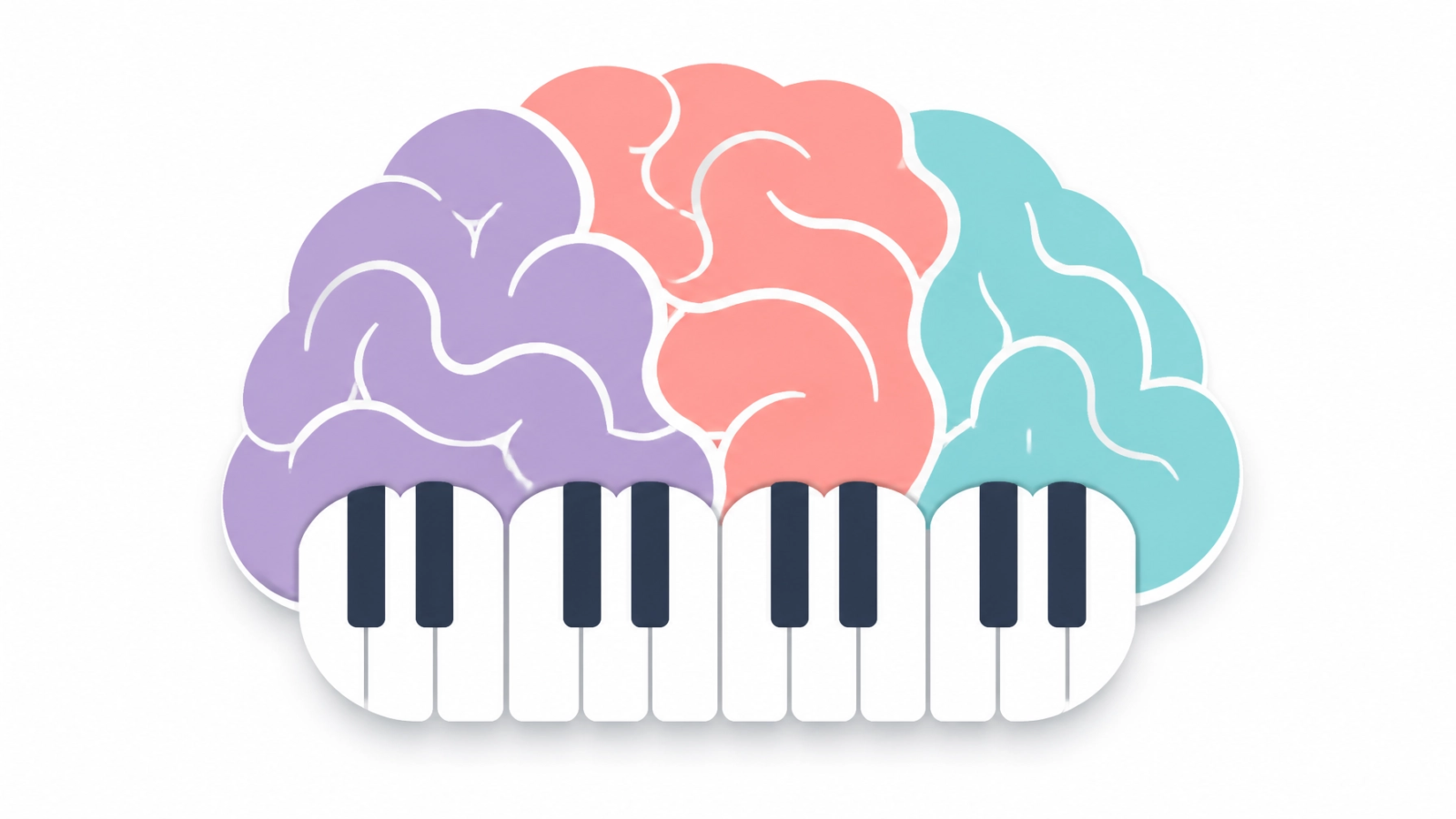
The human brain is a highly plastic organ, capable of profound structural reorganization in response to systematic training. While various activities stimulate cognitive processes, few engage the central nervous system as comprehensively as beginner piano lessons. Current research in neuroscience indicates that the simultaneous processing of visual notation, auditory feedback, and complex motor coordination triggers measurable changes in the cerebral cortex. This phenomenon, known as experience-dependent neuroplasticity, suggests that the architecture of the brain is not static but is instead sculpted by the demands of musical practice.
In this analysis, the neurological impact of piano instruction is examined through the lens of structural brain imaging and behavioral data. By understanding the mechanisms behind these changes, students and families can appreciate the long-term cognitive advantages that extend far beyond the keyboard.
Cortical Remodeling in the Auditory Cortex
The primary auditory cortex, located within the superior temporal gyrus, is the first destination for auditory information processing. In individuals undergoing beginner piano lessons, this region exhibits significant structural adaptation. Longitudinal studies, such as those conducted by Hyde et al. (2009), have demonstrated that even fifteen months of consistent keyboard training in young children leads to an increase in the volume of the Heschl’s gyrus. This area is critical for pitch discrimination and the processing of complex spectral patterns.
The structural changes observed are not limited to childhood. Recent data from Worschech et al. (2022) indicates that older adults who engage in six months of piano practice show increased cortical thickness in bilateral auditory structures. This suggests that the brain retains its capacity for cortical remodeling throughout the lifespan. By refining the auditory cortex, piano students develop a heightened sensitivity to frequency and timbre, which often correlates with improved speech perception and linguistic processing.

Structural Adaptation of the Primary Motor Cortex
Piano playing requires the execution of independent, asynchronous finger movements, often involving high levels of temporal precision. This demand is processed primarily in the precentral gyrus, or the primary motor cortex. Neuroimaging research shows that the cortical representation of the hands expands as a student progresses through their technical exercises.
The motor system undergoes a process of optimization where neural circuits are refined to reduce redundant activity, leading to greater manual dexterity. This is particularly evident in the development of the corticospinal tract, which transmits signals from the brain to the muscles. The refinement of these pathways is a cornerstone of the pedagogy at Allegro Ma Non Troppo, where piano lessons Ottawa focus on the ergonomic and mechanical efficiency of the hands. Such training not only facilitates musical proficiency but also enhances fine motor control that can be applied to other complex tasks, from surgical procedures to engineering.

Interhemispheric Connectivity and the Corpus Callosum
One of the most striking findings in the neuroscience of music is the impact on the corpus callosum: the thick bundle of nerve fibers that connects the left and right cerebral hemispheres. Playing the piano requires the integration of information across both sides of the body and both hemispheres of the brain. The left hemisphere typically manages the analytical and rhythmic components, while the right hemisphere processes melodic and harmonic nuances.
Research involving beginner music students has revealed that systematic instruction leads to an enlargement of the corpus callosum. This structural change facilitates faster and more efficient communication between hemispheres. Enhanced interhemispheric connectivity is associated with improved executive functions, such as problem-solving, cognitive flexibility, and information processing speed. These benefits are particularly pronounced in kids music lessons Ottawa, where early intervention can establish a robust foundation for lifelong neural connectivity.

Cognitive Reserve and Long-Term Neurological Benefits
The structural changes induced by beginner piano lessons contribute to what psychologists call cognitive reserve. This refers to the brain's ability to improvise and find alternate ways of getting a job done, making it more resilient to aging and neurological decline. By engaging multiple sensory and motor systems simultaneously, piano practice builds a dense network of neural connections.
Furthermore, the study of music theory lessons online often accompanies practical piano training, providing a secondary layer of cognitive stimulation. The analytical requirement of deciphering musical syntax and structure mirrors the logical-mathematical reasoning found in complex academic disciplines. This multimodal approach ensures that the brain is challenged across several domains, fostering a high level of neural plasticity. Whether through online flute lessons or in-person clarinet training, the integration of theory and practice is vital for maximizing these structural outcomes.
Piano Lessons in Ottawa: A Systematic Approach
Allegro Ma Non Troppo provides a structured environment designed to facilitate these neurological changes through expert instruction. Our programs are tailored to the individual, ensuring that the cognitive load is appropriate for the student's developmental stage. This personalized scaffolding is essential for promoting the synaptic remodeling necessary for skill acquisition.
We offer various modalities to suit the logistical needs of families and individuals:
- In-person instruction at our Ottawa studio for direct, tactile feedback.
- Bilingual music lessons in English and Spanish, which provide additional cognitive benefits through dual-language processing.
- Flexible durations including 30, 45, and 60-minute sessions to accommodate different attention spans and schedules.
- Comprehensive support for school band students to reinforce academic and performance standards.
The transition from a beginner to an intermediate level involves the automatism of motor gestures and the refinement of auditory-motor loops. This progression is systematically tracked to ensure that the student is consistently operating within their zone of proximal development, a pedagogical concept that optimizes learning and brain growth.
Pricing and Logistical Transparency
The following information outlines our current fee structure and lesson options. We prioritize transparency to ensure students can plan their educational journey effectively.
- Trial Lesson: 1 session (30 minutes) : $0 (Limited to one per new student)
- Standard 30-Minute Plan: 4 lessons : $140
- Extended 45-Minute Plan: 4 lessons : $210
- Comprehensive 60-Minute Plan: 4 lessons : $280
Savings opportunities are available for those committed to long-term development:
- Lesson Bundles: Purchase 10 lessons and receive a 5% reduction in total cost.
- Family Plan: Families with three or more members enrolled receive a 10% discount on all tuition fees.
Our curriculum also extends beyond the piano to include online clarinet lessons, ukulele lessons Ottawa, and flute lessons Ottawa, ensuring a wide range of instrumental options for the local community. Each instrument offers unique physiological and neurological benefits, from respiratory optimization in wind instruments to the spatial-temporal reasoning developed in string training.
By choosing Allegro Ma Non Troppo, you are investing in a scientifically grounded education that reshapes the brain for future success. The structural changes in the cerebral cortex are not merely a byproduct of practice; they are the foundation of a more connected, efficient, and resilient mind.
Leave A Comment