
 Cart is empty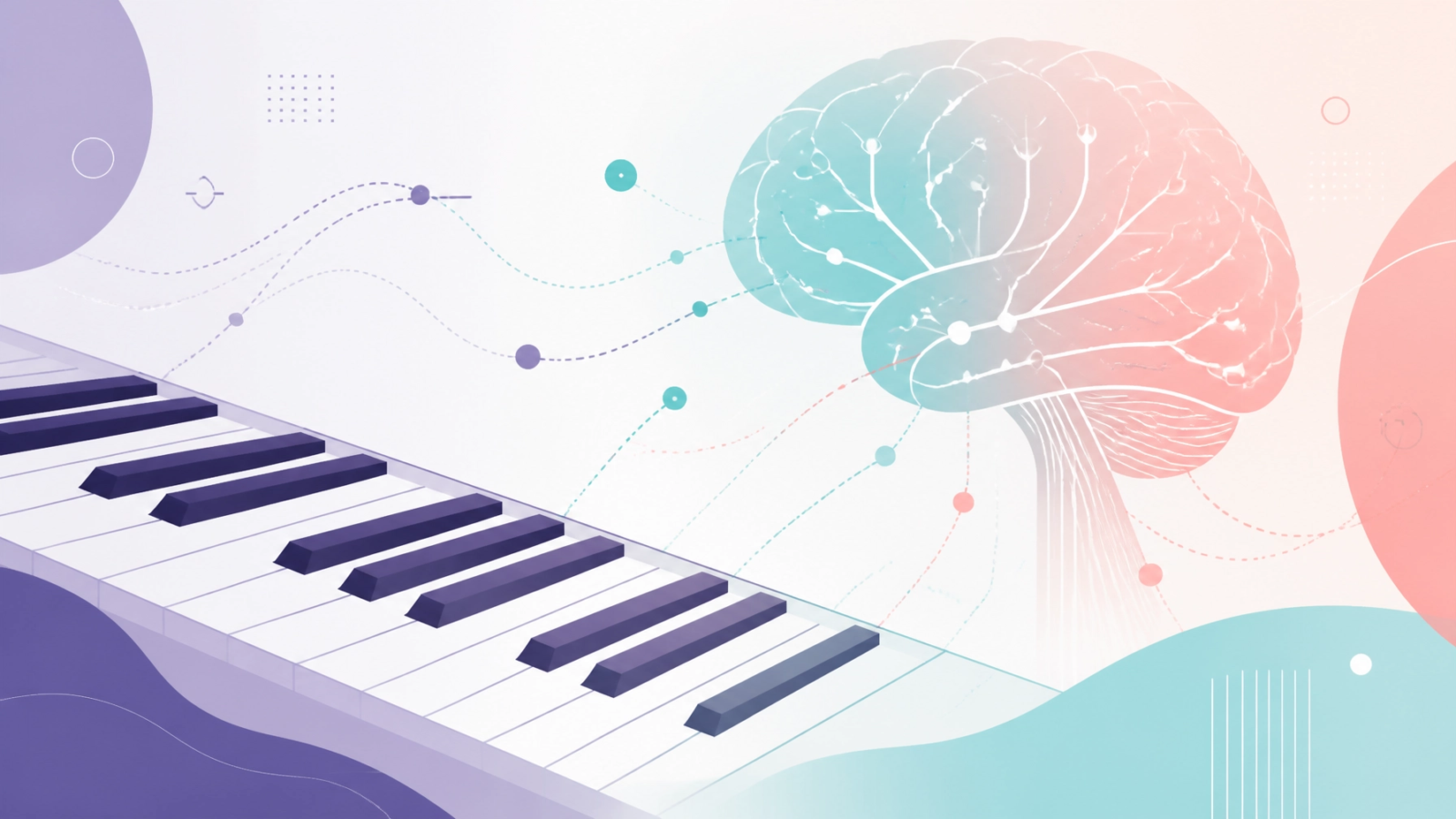
The human brain possesses an extraordinary capacity for adaptation known as neuroplasticity. This biological phenomenon refers to the nervous system's ability to change its activity in response to intrinsic or extrinsic stimuli by reorganizing its structure, functions, or connections. While many activities trigger neural changes, few are as comprehensive or rapid as the acquisition of musical skills. Research within the fields of neuroscience and pedagogy increasingly highlights that beginner piano lessons serve as a potent catalyst for structural remodeling within the cerebral cortex. This article examines the evidence-based cognitive and physiological transformations that occur when you begin the process of learning an instrument.
Neural plasticity is not a monolithic process but a complex series of events involving synaptic pruning, myelination, and cortical thickening. When you engage in piano lessons Ottawa, your brain must simultaneously process visual information from musical notation, execute precise motor movements with both hands, and monitor auditory feedback to correct errors in real-time. This multimodal integration demands significant resources from the prefrontal cortex and the primary motor areas, leading to measurable changes in gray matter volume and white matter integrity.
Macroscopic Remodeling of the Motor and Auditory Cortex
One of the most cited longitudinal studies in the neuroscience of music was conducted by Hyde et al. (2009) at Harvard Medical School. The researchers investigated the impact of fifteen months of instrumental music training on the developing brains of children. Using structural magnetic resonance imaging (MRI), the study compared a group of musically naïve children who began weekly keyboard lessons with a control group. The results demonstrated significant structural brain plasticity in the musical group, specifically in the primary motor and auditory areas.
The researchers observed an increase in cortical thickness and gray matter volume in regions responsible for hand representation and pitch processing. These structural changes were not merely incidental; they directly correlated with the participants' performance on motor and auditory tasks. This suggests that the brain physically expands the neural real estate dedicated to the specific demands of the instrument. For residents seeking music lessons Ottawa, this research provides a scientific foundation for the efficacy of early and consistent training in reshaping the fundamental architecture of the brain.

White Matter Integrity and Signal Efficiency
While gray matter represents the processing centers of the brain, white matter serves as the communication network that connects these regions. White matter consists of myelinated axons that facilitate high-speed electrical signaling. Research utilizing diffusion tensor imaging (DTI) has shown that beginner piano lessons lead to enhanced microstructural organization in key fiber tracts, such as the corticospinal tract and the arcuate fasciculus.
The arcuate fasciculus is a critical tract that connects the temporal and frontal lobes, facilitating the integration of sound and movement. In a study by Gaser and Schlaug (2003), it was found that professional musicians exhibit significantly higher fiber density in these areas compared to non-musicians. Crucially, even short-term training in adult beginners has shown to stabilize these tracts, preventing the natural age-related decline in white matter integrity. This indicates that beginner piano lessons are beneficial across the lifespan, from kids music lessons Ottawa to adult enrichment programs.
The increased myelination resulting from practice essentially reduces the noise in neural communication. This results in faster reaction times and higher precision in fine motor control. When you practice scales or complex chords, you are not just training your muscles; you are refining the insulation of your neural wiring to ensure that the motor commands from your brain reach your fingertips with maximum efficiency.
The Cognitive Scaffolding of Music Theory
The structural changes observed in the motor and auditory cortex are further supported by the intellectual framework provided by music theory lessons online. Learning to read music and understanding the mathematical relationships between intervals and rhythms engages the parietal cortex, which is responsible for spatial reasoning and symbolic processing. This cognitive scaffolding allows the brain to organize musical information more effectively, reducing the cognitive load during performance.
By integrating music theory lessons online into your practice, you create a more robust neural network that bridges the gap between abstract concepts and physical execution. This dual approach: combining technical piano lessons Ottawa with theoretical study: optimizes the structural changes within the brain. It ensures that the neural pathways formed are not just repetitive motor loops but are part of a larger, more flexible cognitive system capable of advanced problem-solving and creative expression.

Auditory Processing and Language Acquisition
The benefits of beginner piano lessons extend beyond the instrument itself. The sharpening of the auditory cortex has a profound impact on how the brain processes sound in general, including speech. Dr. Nina Kraus and her team at Northwestern University have extensively researched the link between musical training and auditory processing. Their findings suggest that musicians have a superior ability to distinguish speech in noisy environments, a skill governed by the brainstem's subcortical response to sound.
This enhancement in auditory processing is particularly relevant for those interested in bilingual music lessons. The bilingual brain already possesses specialized neural pathways for managing multiple linguistic systems. When music lessons are conducted in both English and Spanish, as offered at our Ottawa studio, the brain's executive function is further challenged. This results in increased cognitive reserve, which has been shown to delay the onset of neurodegenerative symptoms in later life. The synergy between musical and linguistic syntax fosters a highly plastic and resilient cerebral environment.
Environmental Factors and Pedagogical Efficacy
The environment in which learning occurs significantly influences the rate of neural adaptation. Factors such as comfort, flexibility, and a personalized approach serve to reduce cortisol levels, which can otherwise inhibit neuroplasticity. Allegro Ma Non Troppo provides an optimal learning environment whether you choose our Ottawa studio or online flute lessons, online clarinet lessons, or piano instruction.
The ability to engage in lessons from the comfort of your own home reduces the logistical stress associated with commuting, allowing the brain to enter a state of focused attention more readily. This focus is essential for the long-term potentiation of synapses. Furthermore, the specialized support for school band students and the expertise of Master-level teachers ensure that the pedagogical methods used are based on sound scientific principles, such as scaffolding and graduated difficulty.

Scientific Evidence in Older Adults
It is a common misconception that neural plasticity is only significant in childhood. However, research into geriatric neuroscience shows that the adult brain remains remarkably adaptable. A study involving healthy elderly individuals who began piano lessons for the first time showed stabilized white matter microstructure in the fornix: a tract vital for episodic memory. While the control group showed the expected age-related decline in this region over six months, the piano group maintained their neural integrity, which correlated with better memory performance (Zheng et al., 2021).
These findings highlight that beginner piano lessons are a viable intervention for maintaining cognitive health. The multi-sensory nature of the piano: requiring visual, auditory, and tactile coordination: provides a full-brain workout that few other activities can match. Whether you are pursuing ukulele lessons Ottawa for leisure or intensive piano lessons Ottawa for cognitive development, the neurological benefits are substantiated by data.
Logistical Information and Professional Standards
Allegro Ma Non Troppo offers a structured approach to music education that respects both the scientific and practical needs of our students. We provide bilingual instruction in English and Spanish, catering to the diverse community in Ottawa and our global online students. Our instructors are Master-level experts dedicated to providing a high-end, personalized experience.
The following pricing and scheduling options are available to facilitate your entry into musical training:
- Free Trial Lesson: 30 minutes to evaluate our methodology and instructor compatibility.
- Single 30-Minute Lesson: $35.00.
- Single 45-Minute Lesson: $50.00.
- Single 60-Minute Lesson: $65.00.
- 5-Lesson Bundle (30 min):
$175.00$166.25 (5% savings). - 10-Lesson Bundle (30 min):
$350.00$315.00 (10% savings). - Family Plan: Special rates apply for 3 or more family members to encourage community learning.
Our curriculum is designed to be flexible, offering 30, 45, and 60-minute sessions to accommodate various attention spans and goals. This flexibility is crucial for maintaining the consistent practice required to induce permanent structural changes in the brain.

Conclusion: The Path to Neural Optimization
The decision to begin piano lessons is a decision to invest in the long-term health and efficiency of your brain. From the thickening of the motor cortex to the fortification of white matter tracts, the evidence from neuroscience is clear: music changes you. These changes facilitate better motor control, sharper auditory processing, and enhanced executive function. By choosing a professional and expert-led program like Allegro Ma Non Troppo, you ensure that your journey is guided by pedagogical excellence and scientific insight.
Whether you are interested in flute lessons Ottawa, clarinet lessons Ottawa, or the transformative power of the piano, our bilingual and flexible programs are designed to meet your specific cognitive and musical goals. The structural remodeling of your brain begins with the first note.
Leave A Comment